
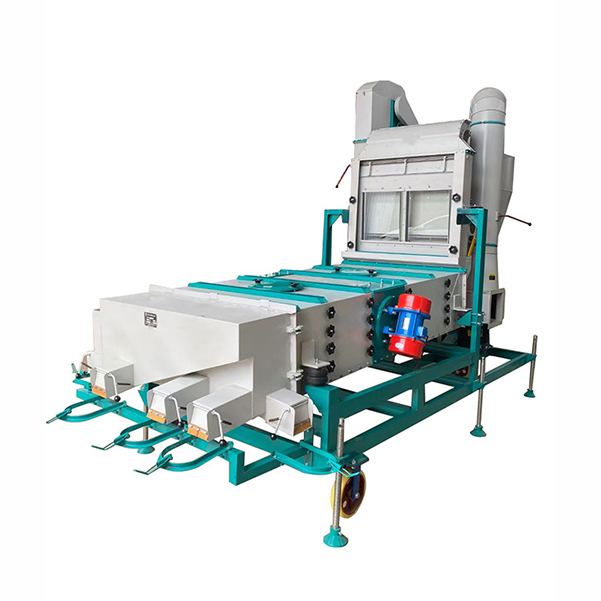
Flaxseeds are small, flat, and have a mucilaginous surface. Raw flaxseed stock is often mixed with contaminants such as capsule husks, short straw, dust, weed seeds, fine sand, and small soil clods—some of which are similar in size to the seeds themselves. The air-screen cleaner performs pre-processing by combining a dual-air-channel pneumatic separation system with multi-layer vibrating screens; it serves as the primary core cleaning equipment in the production line, feeding into a downstream gravity separator for further purification.
Complete Workflow of the Flaxseed Air-Screen Cleaner
1. Uniform Feeding
Flaxseeds are conveyed into the machine’s feed hopper. An adjustable feeding mechanism ensures the material is spread evenly and thinly, preventing localized piling. This ensures the flat seeds do not stack or bridge, thereby optimizing the subsequent air separation and screening performance.
2. Primary Pre-Air Separation (First Air Channel)
As the material falls through the intake air channel, airflow differentials separate out light impurities. Most dust, fine powder, capsule husks, broken straw fragments, and lightweight weed seeds are suctioned away; dust and debris are collected in a cyclone settling chamber to prevent dust leakage. Being denser, the flaxseeds fall via gravity into the vibrating screen box.
3. Multi-Layer Vibrating Screening (Size-Based Sorting)
The screen box undergoes reciprocating vibration and is fitted with punched screens featuring elongated slots tailored to flaxseed dimensions. Grading and impurity removal are achieved across two screen layers:
Upper Coarse Screen: Retains large impurities—such as long straw, clustered capsules, and large soil clods—which are discharged through the large-debris outlet; flaxseeds and smaller impurities pass through the screen openings to the lower layer.
Lower Fine Screen: Features openings smaller than the flaxseeds, allowing fine sand, soil particles, and tiny weed seeds to pass through; qualified flaxseeds remain on the screen surface and are conveyed forward to the secondary air channel. 4. Secondary Post-Screening Air Separation (Secondary Suction)
After initial screening, the flaxseeds pass through a secondary vertical air duct. This stage extracts residual short/broken capsule husks, straw fragments, and lightweight or shriveled seeds, further reducing the content of light impurities and minimizing the risk of clogging the downstream gravity separator.
5. Split Discharge
Flaxseeds processed by the air-screen system exit through the main discharge port and are conveyed to the gravity separator for precision sorting. Large impurities, fine impurities, and light husks/dust are discharged through separate outlets, ensuring that the different types of impurities do not mix.
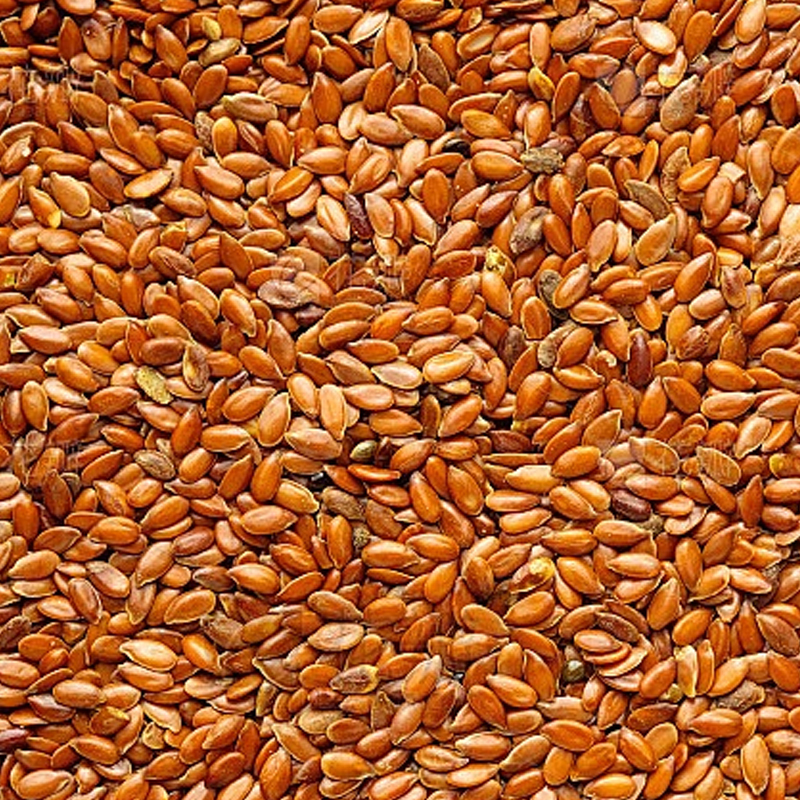
I. Air-Screen Cleaner Operational Efficiency
The air-screen cleaner is a piece of grain pre-processing equipment; its efficiency is measured across two dimensions: throughput capacity and cleaning/purification efficiency. Because the equipment relies solely on size and terminal velocity (suspension speed) for separation, it cannot separate stones of similar size but higher specific gravity or damaged grains of the same size; these tasks are handled by a downstream gravity separator.
II. Purification and Cleaning Efficiency
Impurities effectively removed:
Stalks, leaves, dust, husks, large clods, and fine sand/soil; removal efficiency for these types of impurities can reach 90–96%. Post-processing material purity typically ranges from 92% to 94%, significantly reducing the load on the downstream gravity separator and preventing screen clogging.
III. Key Factors Affecting Operational Efficiency
1. Raw Material Condition
High impurity content, dampness/clumping, or stickiness in the raw material can cause screen apertures to clog, leading to a simultaneous drop in throughput and cleaning quality. Efficiency degradation is particularly pronounced with flat materials like flaxseed when moisture content is high.
2. Screen Configuration
Incorrect aperture selection, screen wear, or clogged apertures directly reduce screening efficiency; for small-grain oilseeds, slotted (oblong-hole) screens should be used to minimize seed jamming.
3. Airflow, Amplitude, and Screen Inclination
Insufficient airflow fails to remove light impurities, while excessive airflow causes the loss of good grain. Improper amplitude or inclination angles disrupt material flow—moving too fast results in inadequate screening, while moving too slow causes material buildup—leading to a significant drop in efficiency.
4. Feed Uniformity
Inconsistent feed rates or excessively thick material layers prevent the material from spreading out properly, impairing both air separation and screening performance; this is the most common cause of efficiency loss in actual operations.
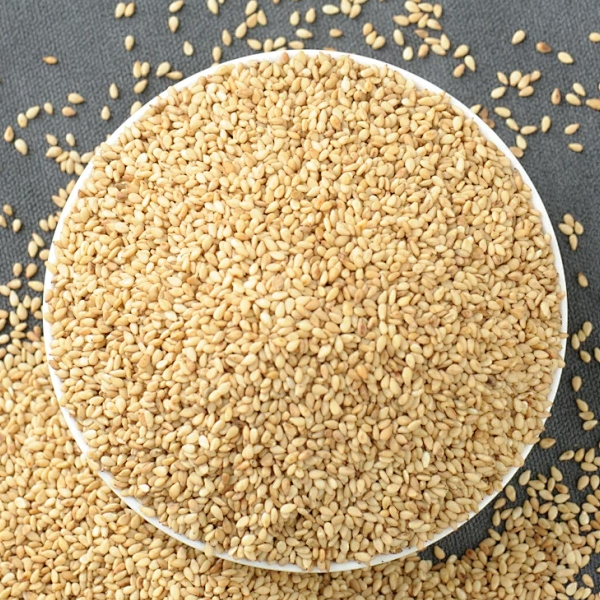
Cleaning Performance of the Air-Screen Cleaner on Flaxseeds
1. Removal of the majority of bulky impurities
It removes all long stalks, boll husks, leaf fragments, dust, fine sand, and large soil clods. By effectively clearing visible stalks and husk debris from the raw material, it reduces the workload on the gravity separator, prevents mesh clogging on the gravity table caused by husk fragments and chaff, and ensures the stable operation of the entire production line.
2. Removal of most lightweight impurities
The dual-stage air system removes the vast majority of lightweight, shriveled seeds and light weed seeds, thereby reducing the impurity content of the raw material. However, it cannot separate small stones similar in size to flaxseeds, weed seeds of similar density, or distinguish between plump and shriveled seeds; these impurities must be handled by the gravity separator.
3. Material specifications after pre-treatment
Following air-screen cleaning, the purity of the flaxseed material generally reaches 92–94%, with removal rates for dust and husk-type impurities exceeding 95%. However, stones and defective seeds of similar density remain; the material cannot be sold as a finished product directly and requires a subsequent gravity separation process to meet the 99.5% purity standard required for commercial or export-grade products.
4. Protection of downstream equipment and reduction of losses
Removing sand, soil, and husk fragments reduces wear and tear on the gravity table, downstream oil-pressing equipment, and color sorters, while also minimizing the formation of oil sludge. Additionally, it reduces friction-induced breakage of the flaxseeds, preserving seed integrity and oil quality.
Post time: Aug-27-2026