
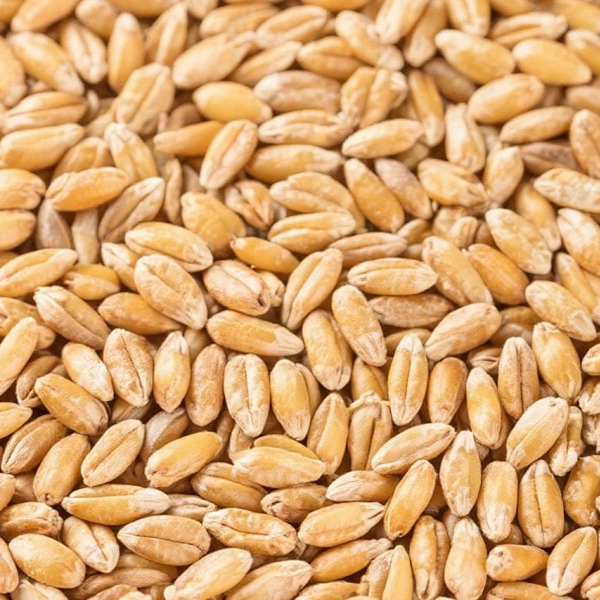
Cleaning wheat using an air screen cleaner with gravity separator is a critical, high-tech, and highly effective step in grain processing and seed cleaning. After harvesting, wheat is often mixed with various impurities that must be removed: light materials such as weed seeds, chaff, glumes, dust, and shriveled or empty grains; foreign grains and diseased kernels that are similar in size to wheat but differ in specific gravity; and heavy, hard debris like stones, clods of earth, mud lumps, and metal fragments. Failure to remove these impurities not only compromises the wheat’s processing quality and flour ash content but also significantly shortens the service life of downstream milling, color-sorting, and packaging equipment. The air screen cleaner with gravity separator achieves thorough wheat cleaning within a continuous workflow by synergistically combining three physical separation methods: air separation, screening, and gravity separation.
In terms of structure, the air screen cleaner with gravity separator is essentially a multi-stage cleaning machine. It typically comprises a feeding mechanism, a material distribution system, multi-stage air separation channels, a vibrating screen assembly (featuring two or more layers), a gravity separation deck, and supporting dust extraction and drive systems. The cleaning process is not a single action but a sequential, progressive workflow; this distinguishes it fundamentally from equipment that relies solely on screening or air separation.
Let us look at the workflow. Raw wheat enters the machine through a feed hopper, with the intake volume regulated by a flow control device. A distribution mechanism—commonly a vibrating feed plate or a uniform distributor—then spreads the wheat evenly across the screen surface or into the air separation zone. Ensuring a thin, uniform material flow is essential for the effectiveness of all subsequent separation steps; uneven feeding or an excessively thick material layer would compromise the precision of both air separation and gravity separation.
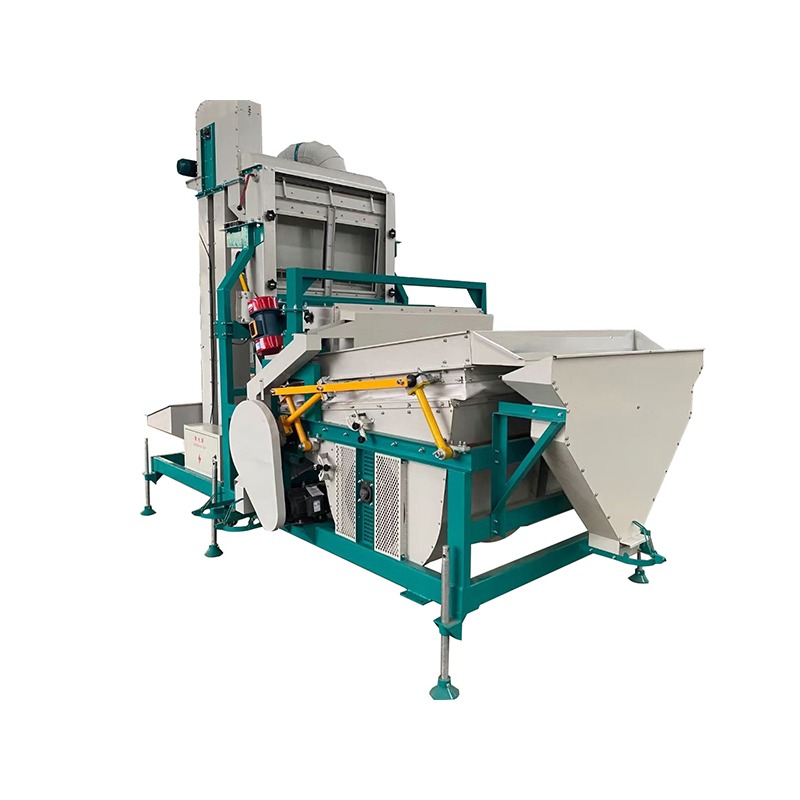
Subsequently, the material enters the first stage of air separation. In this phase, an airflow from a fan passes through the falling or spread-out stream of wheat; lighter materials—such as weed seeds, chaff, glumes, dust, and shriveled grains—are carried away by the air into dust collection or settling units, while the heavier wheat grains continue moving forward under the influence of gravity. This stage primarily addresses “light impurities.” Immediately following this, the material enters the screening zone. A vibrating screen assembly moves back and forth at a specific amplitude and frequency, featuring screens with varying aperture sizes: the upper screen has apertures slightly larger than the wheat grains, retaining impurities larger than the grain (such as large stones, clods of earth, long stalks, and oversized foreign seeds) for discharge, while the lower screen has apertures smaller than the wheat, allowing fine sand, soil, and broken fragments to fall through for removal, with the wheat remaining on the screen surface to proceed further. This stage handles both “large” and “small” impurities while simultaneously grading the wheat by particle size.
After screening, the wheat enters the most critical step: specific gravity separation—specifically, the removal of stones or impurities based on density. The material falls onto a gravity separation deck—an inclined bed surface featuring “fish-scale” perforations or a woven mesh—where upward airflow from a fan combines with the deck’s reciprocating vibration. Under the combined action of air suspension and vibration, the material layer on the deck undergoes automatic stratification: denser stones and soil clods sink to the bottom of the layer and are discharged via the lowest point of the bed or a designated impurity outlet; wheat grains of moderate density become suspended and flow along the bed toward the discharge end; and lighter shriveled or broken grains float on the upper layer and are pushed toward a separate outlet. This step resolves the issue of “density-based impurities”—particularly stones and soil clods that are similar in size to the wheat grains and cannot be removed by conventional screening, but can be effectively eliminated through gravity-based separation. Throughout the process, the stages of air separation, screening, and gravity separation do not operate in isolation but function in coordination through material transfer and airflow circulation. Light impurities are extracted in the initial stage; the intermediate stage sorts material by size through screening; and the final stage separates components by weight based on specific gravity. This multi-layered approach ensures that the wheat discharged at the end is clean, uniform, and meets purity standards.
Let us revisit the working principles. The air-screen gravity cleaner achieves the aforementioned cleaning primarily by exploiting the distinct movement patterns of materials under the combined influence of airflow, vibration, and gravity; it transforms differences in material properties into separable differences in movement trajectories.
First is the principle of air separation. Wheat grains, shriveled kernels, and weed seeds possess different suspension velocities (critical velocities) in an airflow: plump wheat grains have high suspension velocities and resist being carried away, whereas shriveled kernels and light impurities have low suspension velocities and are easily entrained by the air. By adjusting airflow volume and velocity, the system carries away only light impurities with suspension velocities below the set threshold while allowing plump wheat grains to fall, thereby separating light materials from heavy ones.
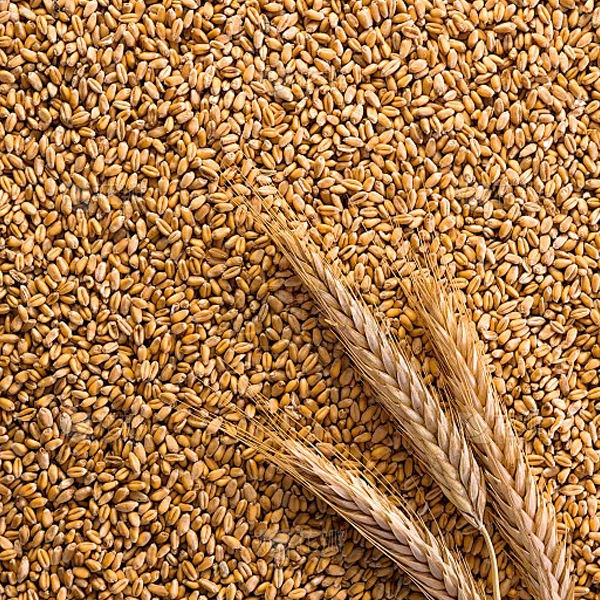
Second is the principle of screening. A vibrating screen body induces relative motion and automatic stratification of the material on the screen surface; particles smaller than the screen apertures pass through (undersize material), while those larger than the apertures remain on the surface (oversize material). A strategic combination of screen aperture sizes allows for the removal of both large and small impurities, enabling precise grading based on particle size.
Third is the principle of gravity separation, which offers the highest level of cleaning precision. Material on the gravity separation deck is “lifted” into a fluidized state by an upward airflow, while the deck’s reciprocating vibration causes the material to stratify. Due to differences in particle density and surface shape, high-density particles settle to the bottom of the material layer and are pushed toward the impurity discharge side by the vibration, whereas low-density particles float on the surface and are conveyed outward along the direction of the airflow and deck movement. Thus, the combined effects of fluidization and vibration amplify density differences into distinct separation trajectories, effectively separating out stones and clods of earth that are similar in size to wheat grains but heavier. These three principles operate sequentially and complement one another within a single machine to form a comprehensive cleaning process.
In terms of purity, multi-stage air separation removes the vast majority of wheat chaff, husks, dust, and shriveled grains; screening eliminates large impurities and fine soil; and specific gravity separation removes stones, soil clods, and metal particles of similar size. Consequently, impurity and sand content in the finished wheat drop significantly, with purity consistently reaching 99.5% or higher—meeting the strict standards required for flour milling and seed quality. The cleaned wheat features uniform particle size and plump kernels, facilitating subsequent tempering and milling processes while effectively lowering flour ash content and improving both flour extraction rates and whiteness.
In summary, using an air-screen gravity cleaner for wheat constitutes a comprehensive system that integrates three separation principles: air separation for light impurities, screening for size classification, and gravity separation for heavy impurities. By combining these physical separation methods into a highly efficient cleaning workflow, the equipment ensures wheat purity and processing quality while balancing grain loss control and equipment longevity, making it an indispensable component of modern wheat processing and seed cleaning lines.
Post time: Oct-12-2026