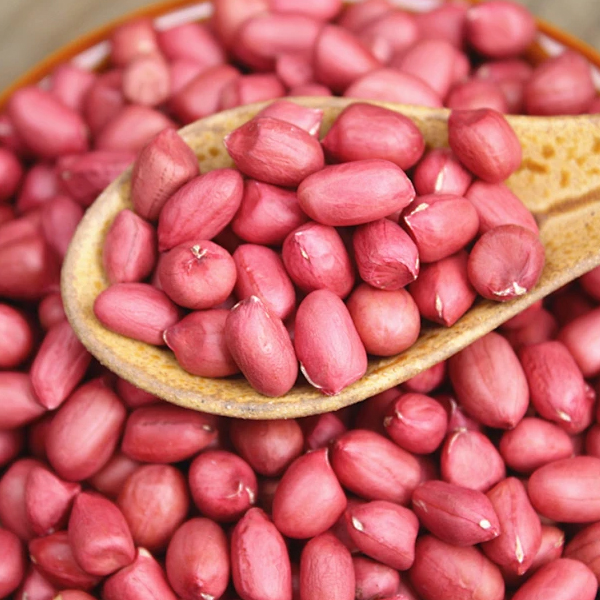
I. Impurities found in harvested unshelled peanuts fall into five main categories: light impurities, large impurities, small impurities, heavy impurities of similar size (specific-gravity-dependent), and defective pods:
1. Light impurities: Peanut vines, broken stalks, leaves, weeds, plastic mulch fragments, dust, and shell fragments;
2. Large impurities: Soil clods, grass roots, and large mud clumps (larger than standard peanut pods);
3. Fine impurities: Fine sand/soil, crumbled mud particles, and small stones (smaller than peanut pods);
4. Heavy impurities of similar size: Stones and hard mud clods with dimensions similar to peanut pods; these cannot be separated by standard screens and are the most difficult to remove;
5. Defective peanut pods: Shriveled pods, empty shells, moldy pods, insect-damaged pods, and sprouted pods; these resemble sound pods in size but have a lower overall density.
Characteristics: The wrinkled shells of peanut pods tend to trap soil; stones and mud clods often match the size of the pods, meaning standard vibrating screens—which sort primarily by size—cannot separate stones or shriveled pods that share similar dimensions with good pods.
II. Working Principle of the Air-Screen and Gravity Separator for Peanut Pods
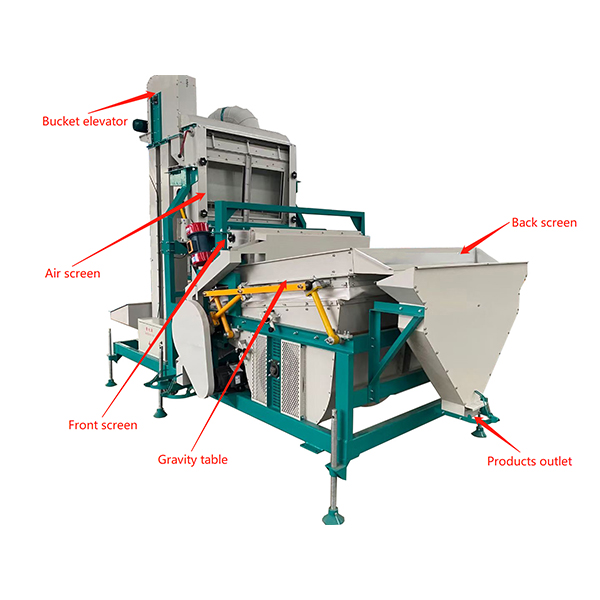
This equipment integrates air separation, vibrating screening, and gravity separation into a single system, comprising a front-end air-screen unit and a rear-end gravity precision separation unit, allowing materials to undergo multiple sequential sorting stages.
1. Air-Screen Unit (Air Separation + Vibrating Screening)
Peanut pods are fed evenly into the machine and first pass through a vertical or cross-flow air channel, where airflow from a fan blows away all lightweight impurities such as stalks, leaves, dust, and shell fragments.
The material then falls onto multi-layer vibrating screens, where separation occurs based on differences in particle geometry: the upper screen retains large stalks and clods, discharging them through the large-debris outlet, while the lower screen allows fine sand, soil, and small pebbles to pass through; qualified peanut pods pass through the screen layers to the gravity separation deck.
The air-screen unit addresses differences in size and weight; however, it cannot separate stones or shriveled pods that are similar in size to good peanut pods. These are subsequently fed into the gravity separation unit for precision sorting.
2. Gravity Precision Separation Unit (Airflow + Deck Vibration & Fluidized Layering)
Peanut pods pre-treated by the air-screen unit are evenly distributed across a porous gravity separation deck. The deck undergoes directional reciprocating vibration while a bottom fan blows air upwards, causing the peanut pods to form a fluidized, suspended material layer.
- High Density: Plump, high-quality pods, stones, and hard clods settle to the bottom of the material layer, resting against the screen surface; driven by the vibration, they climb toward the high end of the deck. Stones and clods are discharged through the heavy-impurity outlet, while plump peanut pods flow out through the finished-product outlet.
- Low Density: Shriveled pods, empty shells, and moldy or insect-damaged pods are lifted and suspended in the upper layer by the airflow without touching the screen; they slide down the inclined deck toward the low end and are discharged through the light-impurity outlet.
III. Role of the Air-Screen Gravity Cleaner in Peanut Pod Cleaning
1. Multi-stage removal of common impurities
Air separation removes stems, leaves, dust, and shell fragments; vibrating screens sift out large debris and fine soil/sand. This preliminary purification reduces the load on the subsequent gravity separation unit, prevents debris from clogging the gravity screen mesh, and ensures the stable operation of the entire system.
2. Separation of stones and soil clods to protect downstream equipment
Stones and soil clods of similar size to the peanuts—which cannot be removed by air screening—are separated by the gravity unit. If stones enter the sheller, they cause wear on shelling rollers and damage the pods, significantly increasing losses; the gravity unit removes these heavy impurities at the source, protecting the shelling equipment.
3. Sorting out inferior pods to enhance product quality
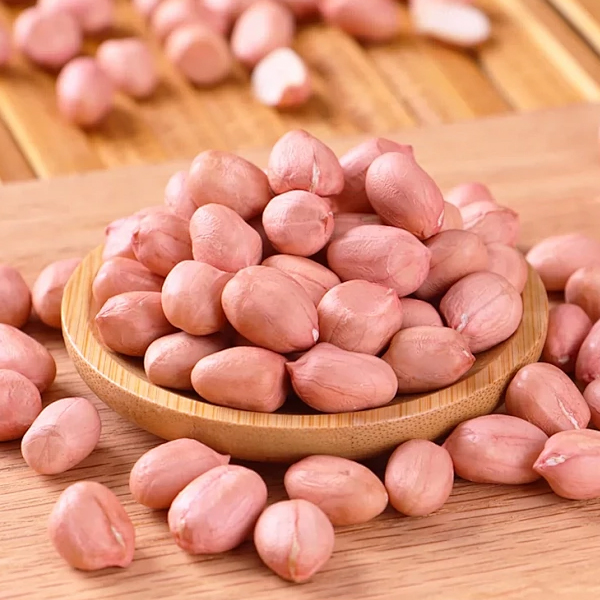
Removes shriveled pods, empty shells, and moldy or insect-damaged pods. For commercial peanuts, this improves the visual grade; for seed peanuts, removing inferior pods increases germination rates.
4. Density grading to boost economic returns
Separates in-shell peanuts into premium full-kernel pods and secondary shriveled pods, allowing for separate discharge and graded sales. Mixed material can be recirculated for secondary refining, minimizing product loss.
5. Achieving high purity to meet trade standards
After processing through the combined air-screen and gravity system, peanut purity reaches 99.5%. Reduced stone and damaged-pod content ensures the raw material meets standards for oil pressing, food processing, and seed export.
6. Reducing the burden on downstream processes
Cleaned peanut pods entering the shelling stage result in lower breakage rates. It also reduces the processing load on subsequent color sorters, thereby lowering the consumption of sorting consumables.
Post time: Aug-26-2026