
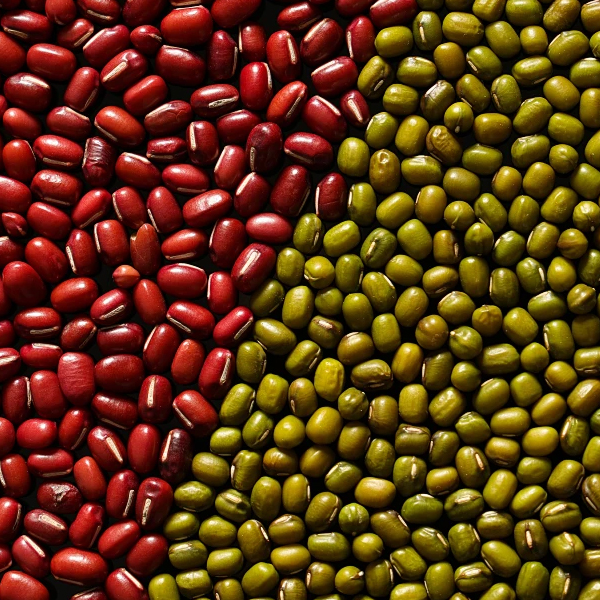
The air-screen gravity separator is a core piece of equipment for adzuki bean processing and seed sorting. It integrates three key functions—air separation, multi-layer screen grading, and gravity separation—to remove light impurities, large and small debris, stones of similar size, shriveled grains, and insect-damaged beans in a single pass. This process enhances the purity and commercial grade of the final product and is also suitable for the precision selection of adzuki bean seeds. The machine achieves impurity separation through the synergistic action of airflow, screen grading, and gravity-based stratification, making it well-suited to the material characteristics of adzuki beans, which feature rounded grains and distinct density differences.
Material is fed into the upper inlet via a bucket elevator, where a feeding mechanism ensures a uniform and stable material layer thickness, preventing uneven sorting caused by bean accumulation. The material first undergoes air separation; an internal adjustable-airflow duct directs an upward negative-pressure airflow through the falling stream of beans. Lighter impurities—such as stalks, skins, dust, shriveled beans, and fragments—are carried away by the airflow and collected at the light-impurity outlet, while plump beans and heavy impurities fall due to gravity, completing the initial removal of light debris. Airflow can be fine-tuned based on the beans’ moisture content and grain size; excessive airflow risks carrying away sound beans, while insufficient airflow results in incomplete removal of light impurities.
After air separation, the material falls onto a multi-layer vibrating screen assembly, where screens are arranged by aperture size from top to bottom. The top screen, featuring large apertures, captures impurities larger than the adzuki beans—such as stones, clods of earth, and stalks—and discharges them through the large-debris outlet. The middle screen retains the qualified adzuki beans, while the bottom screen, with small apertures, sifts out fine soil, broken beans, and weed seeds that are smaller than the adzuki beans. An eccentric mechanism drives the screen assembly to vibrate reciprocally, slowly moving the material across the screen surface; the beans tumble continuously, allowing fine impurities to pass thoroughly through the mesh. The screen inclination angle and vibration frequency are adjustable to accommodate the flow characteristics of the adzuki beans and prevent screen clogging.
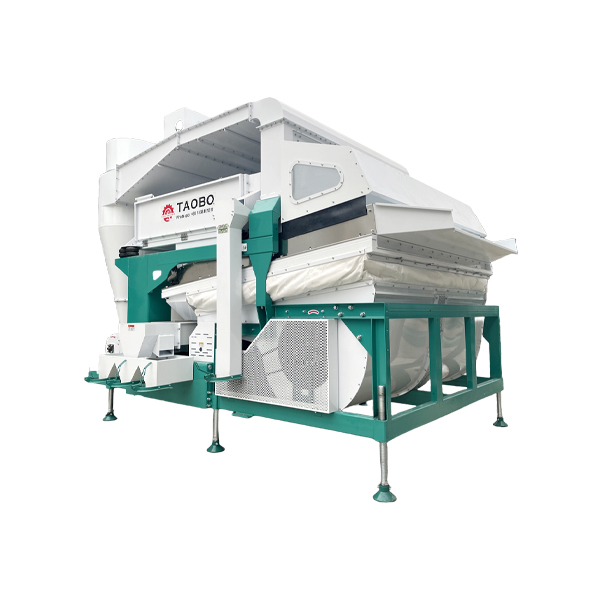
After undergoing screening and grading, the adzuki beans enter the core gravity separation deck. This deck is inclined and undergoes reciprocating vibration while a low-pressure airflow is continuously blown from beneath; the air passes through the material layer, causing the beans to enter a fluidized, suspended state. The material automatically stratifies based on density: dense, plump beans stay close to the deck surface and move toward the higher end under the force of vibration, while lighter, shriveled, insect-damaged, or moldy beans float in the upper layer and flow toward the lower end. Stones and soil clumps—which are significantly denser than the beans—adhere firmly to the deck and are discharged through the heavy impurity outlet. This step is crucial for cleaning adzuki beans, as it separates stones that are similar in size to the beans—and thus cannot be removed by standard screens—thereby solving one of the most difficult impurity challenges in adzuki bean processing.
Once stratified, materials of different qualities are discharged through their respective outlets. High-quality adzuki beans enter the finished product bin; shriveled and insect-damaged beans are collected separately as secondary material; and stones and heavy soil impurities are discharged through the heavy impurity outlet. The entire process is continuous and automated, performing air separation, screening, and precision gravity separation simultaneously in a single pass, achieving a product purity of up to 99.5%.
During operation, the feed rate must be controlled to ensure a thin, uniform material layer, while maintaining stable air pressure. If the moisture content of the adzuki beans is high, fluidity decreases; in such cases, the vibration amplitude of the deck must be increased to prevent the material from caking. This versatile machine can process not only adzuki beans but also kidney beans, chickpeas, soybeans, wheat, and other grains and legumes. Widely used in coarse grain processing plants and seed companies, and exported to markets in South America and Africa, it serves as the primary cleaning equipment for adzuki bean export processing lines.
# Selection Method for Screen Apertures in Air-Screen Gravity Cleaners
Screen selection is primarily based on material particle size and impurity type, aligned with the cleaning objectives for crops like adzuki beans. The system comprises three screen levels: an upper screen for large impurities, a middle screen for precision grading, and a lower screen for small impurities. It is essential to distinguish between the applications of round-hole and slotted (long-hole) screens and to allow for adjustments to accommodate beans from different origins and with varying moisture content.
The upper screen targets large impurities—such as soil clods, bean stalks, large soil fragments, and clumped bean skins—that are larger than the finished product. Round-hole screens are preferred, with apertures larger than the maximum diameter of the finished beans. For adzuki beans, which typically have a diameter of 3.8–4.8 mm, the upper screen’s round holes should be 5.0–5.5 mm; this ensures intact beans pass through while large impurities remain on the screen surface and are conveyed to the large-impurity outlet. Apertures must not be too large, or large impurities will fall through to the gravity separator, increasing its load; conversely, if apertures are too small, beans cannot pass, leading to clogging or material overflow on the screen surface. If impurities consist mainly of long stalks, a slotted screen may be used; the slot width should be slightly larger than the bean diameter, while the length facilitates the separation of elongated impurities.
The middle screen controls the particle size of the finished product, retaining qualified material while allowing fine fragments to pass through. For adzuki beans, round holes of 3.5–3.8 mm are selected. Qualified, intact adzuki beans remain on this screen and are conveyed to the gravity separation table, while broken beans and small weed seeds smaller than this size pass through. This layer is critical for size grading: if apertures are too large, small, broken, or inferior beans mix into the finished product; if too small, intact small beans are screened out, reducing the final yield.
The lower screen removes fine soil, dust, tiny weed seeds, and bean fragments; its apertures must be smaller than the minimum particle size of the finished product. For small red beans, a screen with 2.5–3.0 mm round perforations is typically selected; this allows fine impurities to pass through while preventing significant loss of the product itself.
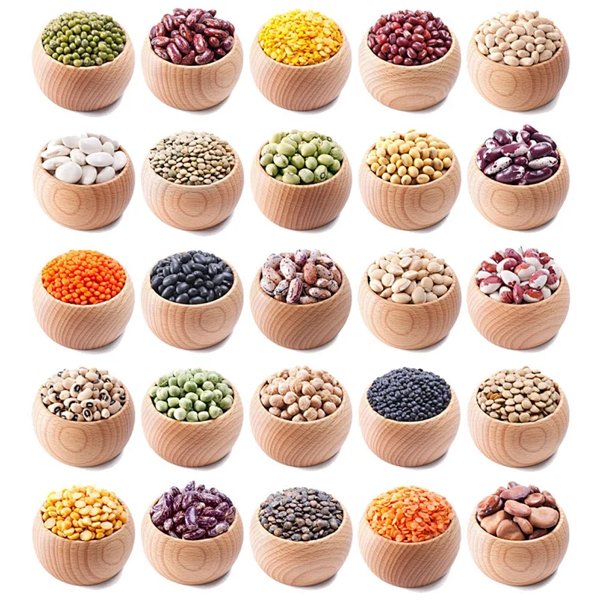
Next, consider the principles for selecting perforation shapes. Round-hole screens are suitable for roughly spherical grains—such as small red beans, soybeans, kidney beans, and round corn kernels—with the size selected based on grain diameter. Elongated-hole screens are suited for slender grains like wheat, oats, and barley, with selection based on grain thickness; these screens are more effective at separating broken grains and slender weed seeds.
Selection should also be adjusted based on operating conditions. If the material has high moisture content, causing grains to clump, the screen aperture can be increased by 0.2–0.3 mm, and the screen inclination angle raised to prevent clogging. If the raw material contains high levels of impurities—particularly broken beans and fine soil—the aperture of the lower screen should not be too large; this prevents fine debris from entering the gravity separator and disrupting its fluidization process. Variations in the raw material’s origin can lead to differences in grain size—for instance, between Northeast Chinese small red beans and imported varieties—so it is advisable to conduct a screening test on samples before processing to determine the optimal combination of aperture sizes.
Post time: Sep-14-2026