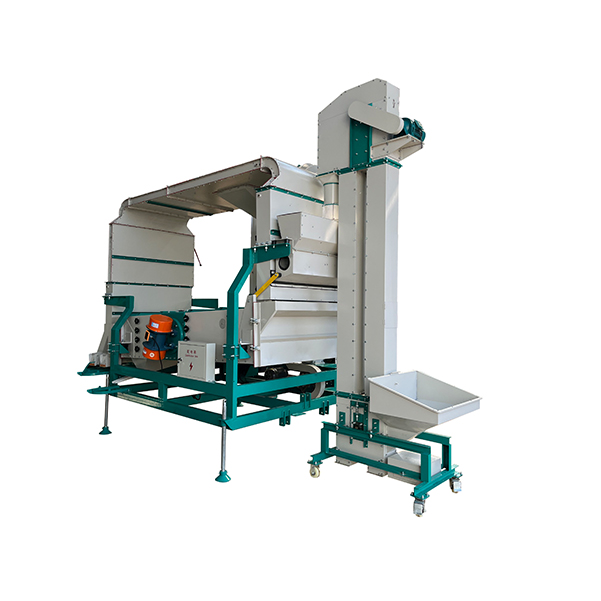
Argentina is a traditional agricultural powerhouse, primarily cultivating grain and legume crops such as soybeans, corn, wheat, sorghum, and barley. Soybeans are Argentina’s most important crop and a leading global oilseed crop. In the 2023-2024 season, production reached 48.21 million tons, accounting for approximately 10% of global production. In 2024, soybean and by-product exports totaled US$19.624 billion, representing 24.6% of total exports. Soybean cultivation is mainly concentrated in Buenos Aires Province, Córdoba Province, and Santa Fe Province.
Soybean harvest often results in a variety of impurities, which can affect subsequent cleaning, processing, storage, and export quality. These impurities require targeted removal and can be mainly categorized into three types: organic impurities, inorganic impurities, and specific harmful impurities.
Organic Impurities:
Plant Impurities:Soybean stalks, pods, weed stems, and withered leaves mixed in during harvest. These impurities are large and can easily clog conveyor equipment and screens, increasing humidity during soybean storage and leading to mold.
Grain Impurities: Shriveled soybeans, broken soybeans, immature small soybeans, and mixed seeds from other crops (such as weed seeds, wheat kernels, and corn kernels). Weed seeds, in particular, reduce the purity of soybeans and affect export grade determination.
Inorganic Impurities:
Soil Impurities: Soil clods, silt, and dust introduced during harvest. Soil clods can wear down the screens and components of processing equipment, while silt adheres to the soybean surface, affecting the quality of the finished product after oil extraction or food processing. Dust can also cause dust pollution during cleaning and processing.
Hard impurities: Stones, pebbles, gravel, etc., found in the field. These impurities are hard and, if they enter subsequent equipment such as crushers and rolling mills, will severely wear down equipment parts and may even cause equipment malfunctions.
Special hazardous impurities:
Metallic impurities: Nails, wires, metal scraps, etc., mixed in during harvesting and transportation. These impurities not only severely damage processing equipment but may also pose safety hazards in subsequent food processing stages. They must be removed in advance using magnetic separation equipment.
Moldy and insect-damaged beans: Moldy or insect-damaged beans caused by damp storage or pests after harvest. These beans contain mycotoxins, which can contaminate normal soybeans, affecting their safety for consumption and oil extraction. They need to be removed through color sorting or manual picking.
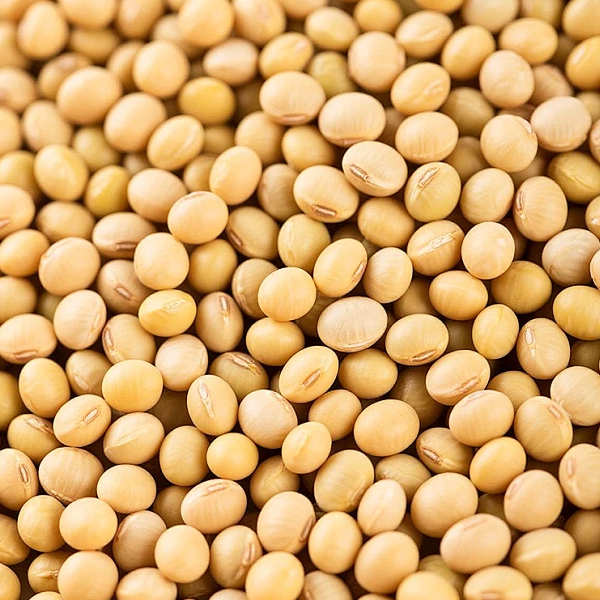
The air-screen cleaner plays a dual role in soybean impurity treatment, combining grading and air separation for purification. It effectively removes different types of impurities from soybeans, making it a core piece of equipment for ensuring soybean purity and improving subsequent processing efficiency. Its specific functions are as follows: Removing impurities of varying sizes: Utilizing 2-4 layers of screens with different apertures built into the machine, grading is achieved through vibration: The upper layer, with larger apertures, intercepts large impurities such as straw, pods, large clods of soil, and weed stems, preventing these impurities from clogging subsequent conveying and oil extraction equipment; The lower layer, with smaller apertures, removes small impurities such as small stones, sand particles, broken beans, and fragments of shriveled beans, reducing the sand content and the proportion of ineffective seeds in the soybeans.
Separating Light Impurities by Weight Difference
Utilizing the directional airflow generated by a blower, the weight difference between soybeans and light impurities is used for separation:
The airflow carries away light impurities such as dust, shriveled beans, bean shell fragments, and weed seeds mixed in with the soybeans. These impurities are then collected by a dust removal system, preventing dust from spreading and polluting the processing environment.
Some high-end models have a secondary air separation stage that further separates impurities with a specific gravity similar to soybeans but lighter in particle size, improving cleaning accuracy.
Improving Soybean Quality and Adaptability to Subsequent Processing
The cleaned soybeans have significantly improved purity, meeting raw material standards for various scenarios such as export, oil extraction, and food processing. For example, Argentine soybean exports require an impurity content of less than 0.5%, which can be achieved by adjusting the screen and airflow speed.
Removing hard impurities such as stones and metal fragments protects components of subsequent equipment such as crushers and rolling mills, reducing equipment wear and the probability of failure, and lowering processing costs.
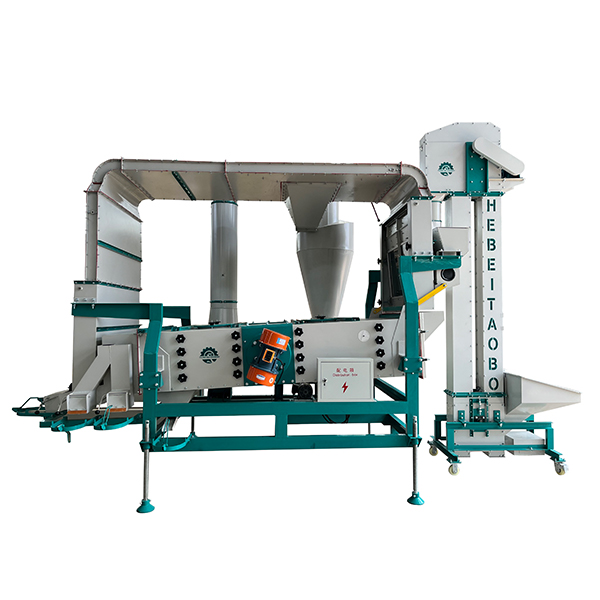
Adaptable to both large-scale and flexible processing needs
The air-screen cleaner can flexibly adjust parameters to suit different scales of soybean processing in Argentina: Large models can process up to 10 tons/hour, meeting the impurity removal needs of continuous production lines in large oil mills; Small and medium-sized mobile models can operate in farm fields, quickly cleaning harvested soybeans and reducing secondary contamination of impurities during transportation.
Post time: Dec-16-2025