
Complete Sesame Cleaning and Processing Line
1. Feeding and Conveying Equipment
Bucket Elevator: Fully enclosed with low breakage rates; transfers sesame between processing stages while preventing spillage and dust emissions, feeding material sequentially into each primary cleaning machine.
Receiving/Buffer Hoppers: Includes raw material, intermediate buffer, and finished product hoppers; ensures stable feeding and balances capacity between upstream and downstream equipment to prevent material shortages or flow instability.
2. Primary Cleaning Equipment
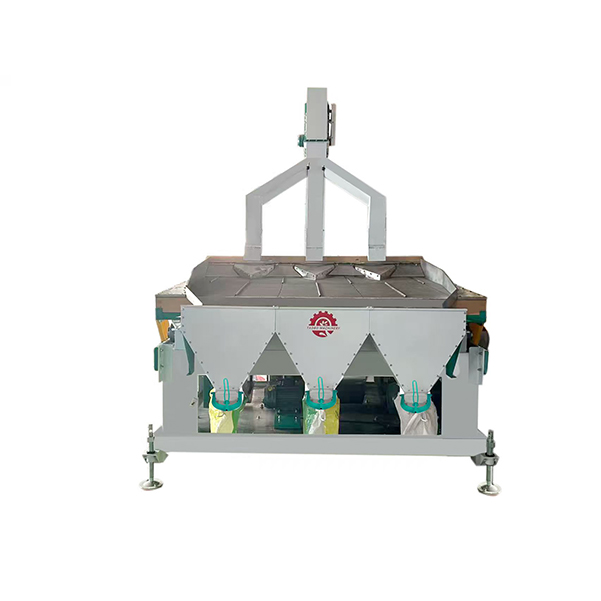
Air-Screen Cleaner (Dual-Screen/Dual-Airflow): Performs initial coarse cleaning; uses vibrating screens and multi-stage air separation to remove stalks, large clods, leaf fragments, dust, fine soil, empty hulls, and small weed seeds, achieving preliminary grading and impurity removal.
Magnetic Separator: Attracts and removes metallic impurities such as soil clods containing iron, nails, and filings; ensures food safety and protects downstream equipment from damage caused by hard objects.
3. Precision Cleaning and Impurity Removal Equipment
Specific Gravity Destoner: Precisely separates stones, mud clods, and heavy soil particles that are similar in size to sesame seeds; utilizes density differences to remove stones—a core component of sesame processing.
Specific Gravity Separator (Gravity Grader): Removes shriveled, insect-damaged, moldy/lightweight, and immature seeds; selects high-quality raw material based on seed plumpness to upgrade the final product.
Vibrating Grading Screen: Sorts sesame seeds by size (large, medium, and small) to meet specific customer grading requirements.
4. High-End Refining Equipment
Color Sorter: Uses optical recognition to remove black seeds, yellowed seeds, and discolored or moldy seeds; boosts purity to 99.95% to meet high-end export standards.
5. Packaging and Dust Collection Equipment
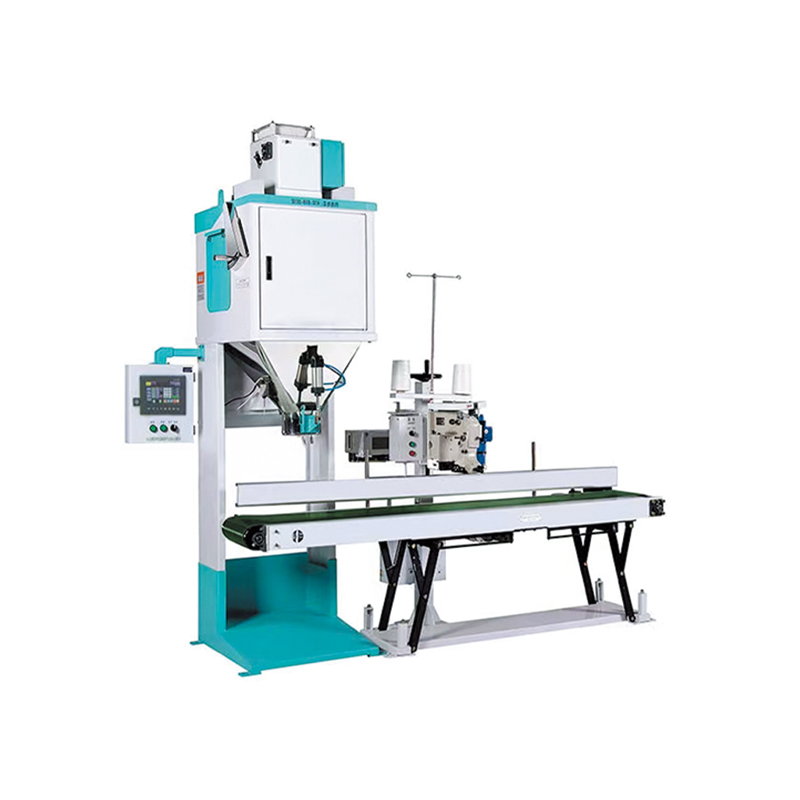
Automatic Quantitative Packaging Scale: Performs precise weighing and filling; paired with a bag-sewing conveyor for automated packaging.
Pulse Bag Dust Collector: Centralized dust collection for the entire line; controls workshop dust levels for eco-friendly, dust-free production.
PLC Control Cabinet: Centralized control for the entire production line; features one-touch start/stop and enables automated, continuous production.

II. Automatic Quantitative Packaging Scale for Sesame Seeds
1. Working Principle
Utilizing load cells and an intelligent PLC control system, the machine employs a two-stage (fast and slow) gravity feeding mode to perform dynamic weighing and packaging. Clean sesame seeds flow from the hopper into the feeding mechanism; the coarse feed gate opens first for rapid filling, reaching 90%–95% of the target weight. As the weight approaches the set point, the coarse feed gate closes and the fine feed gate opens for precision topping-up. Once the preset weight is reached, the gate closes immediately, and the system verifies weight stability. A worker places a bag over the spout, and a pneumatic clamping mechanism secures the bag opening; the weigh hopper then automatically discharges the product. After discharge, the bag is released onto a conveyor belt leading to the sewing machine, while the equipment automatically resets to zero to begin the next cycle. A “drop compensation” function corrects weighing deviations caused by the falling sesame seeds.
2. Key Functions
Precise quantitative weighing: Strictly controls the net weight of each bag with minimal measurement error, meeting requirements for foreign trade orders and standardized packaging while minimizing losses due to underweight or overweight bags.
Automated filling: Saves labor by replacing manual weighing and bagging, significantly increasing packaging speed—ideal for large-scale sesame processing and export production lines.
Reduced spillage: Features a fully enclosed discharge and bag-clamping filling structure that prevents fine sesame seeds from scattering or splashing during the filling process, thereby reducing product loss.
Standardized output: Ensures uniform packaging specifications, facilitating warehouse stacking, container loading, and trade delivery, while complying with food export regulations.
III. Finished Product Silo (Buffer Silo at the End of the Sesame Cleaning Line)
1. Working Principle
Cleaned sesame—having undergone air-screen cleaning and gravity-based destoning—is conveyed by a bucket elevator into a sealed, conical storage silo, where it flows downward under its own weight. The silo bottom is equipped with a manual or pneumatic discharge gate; some models feature a vibration-based anti-bridging device to prevent the fine, smooth sesame seeds from forming arches or clogs, ensuring a steady, continuous downward flow to the packaging scale. The silo serves to temporarily store material and stabilize the flow rate.
2. Core Functions
Process buffering and capacity balancing: Upstream cleaning equipment can operate continuously without stopping; short pauses at the packaging station—such as for bag changes or maintenance—do not require a shutdown of the entire line, resolving speed mismatches between cleaning equipment and packaging machines.
Flow stabilization and weighing accuracy: A steady, uniform discharge flow prevents the fluctuating feed rates caused by intermittent elevator discharge, thereby minimizing weighing errors and ensuring consistent weight across every package of sesame.
Sealed dust protection and quality preservation: The food-grade stainless steel silo isolates the product from dust and moisture, preventing re-contamination of the cleaned sesame and maintaining its purity, while also reducing airborne dust in the production workshop.
Temporary storage and inventory holding: Cleaned sesame can be temporarily stored in the silo for centralized packaging, facilitating continuous batch processing and boosting overall production efficiency; the discharge gate can be closed to retain material during maintenance.
How do you choose the right sesame cleaning production line equipment?
First, determine the hourly processing capacity and production scale. Small oil mills or facilities processing raw materials for individual clients typically opt for a simple, standalone setup with an hourly capacity of 300–500 kg; medium-sized trading and processing plants often use continuous production lines with a capacity of 3–5 tons per hour; large factories select fully automated, integrated lines capable of processing 5–30 tons per hour. When selecting equipment, allow for extra capacity to handle peak seasons—do not configure the system based solely on minimum daily output—to avoid insufficient capacity during periods of high order volume.
Second, analyze the impurity characteristics of the raw sesame. If the raw material contains mostly stalks, dust, empty husks, and large clods of dirt, the core configuration should be based on a compound air-screen cleaner and a magnetic separator. If the content of stones and mud clumps is high, a high-precision gravity destoner must be added. If there are many moldy or discolored (black) seeds, a color sorter will be required later in the process. If the client requires sorting by size (large, medium, small), a grading screen should be added. Sesame from African regions often has high levels of sand and stone impurities, so the process flow should include multi-stage gravity separation steps.
Third, clarify the acceptance criteria for the finished product and distinguish between product grades. For ordinary sesame intended for in-house oil pressing, impurity standards are lenient, and a basic dry cleaning setup suffices. For domestic commercial-grade sesame, which requires a purity of around 99%, the configuration should include air-screening, magnetic separation, gravity destoning, and polishing. For export-grade food sesame, purity requirements range from 99.5% to 99.95%, with zero tolerance for stones, mold, or discolored seeds; the complete production line must include a color sorter, and all material-contact parts must be made of 304 food-grade stainless steel to comply with export inspection and food hygiene regulations. If the sesame is to be hulled later, additional equipment for washing, dewatering, and drying is required.
Fourth, configure the production line using a modular approach, allowing for the flexible addition or removal of equipment. Basic entry-level setup: Raw material silo, bucket elevator, air-screen cleaner, and magnetic separator for preliminary impurity removal. Standard commercial setup: Raw material silo, bucket elevator, dual-stage air-screen cleaner, magnetic separator, gravity destoner, finished product buffer silo, and automatic packaging scale—suitable for domestic wholesale. High-end export setup: Builds upon the standard configuration by adding a precision gravity separator, grading screen, color sorter, pulse dust collection system, and centralized PLC control, enabling fully automated, continuous production with minimal manual labor. The entire system utilizes enclosed Z-type bucket elevators to minimize sesame breakage and reduce material loss caused by airborne dust.
Fifth, verify factory space, power supply, and supporting infrastructure. Measure the workshop’s dimensions (length, width, and height) to facilitate the creation of equipment layout drawings; confirm the 380V industrial power capacity; designate space for dust extraction ducting; and, for washing-inclusive setups, account for water supply and wastewater treatment requirements. If the budget is tight, equipment can be purchased in phases: start with the core cleaning machinery and add color sorting and automatic packaging units later as order volumes grow to upgrade the production line.
Sixth, evaluate the equipment manufacturer’s capabilities. Prioritize factories that own their production facilities and possess the expertise to design and commission complete production lines; confirm that the manufacturer allows for material testing on-site to verify cleaning performance; and clarify details regarding spare part specifications, warranty periods, on-site installation and commissioning, and operator training. For export operations, prioritize manufacturers with a track record of international projects and CE certification to ensure reliable long-term maintenance and spare parts supply.
Post time: Aug-31-2026