
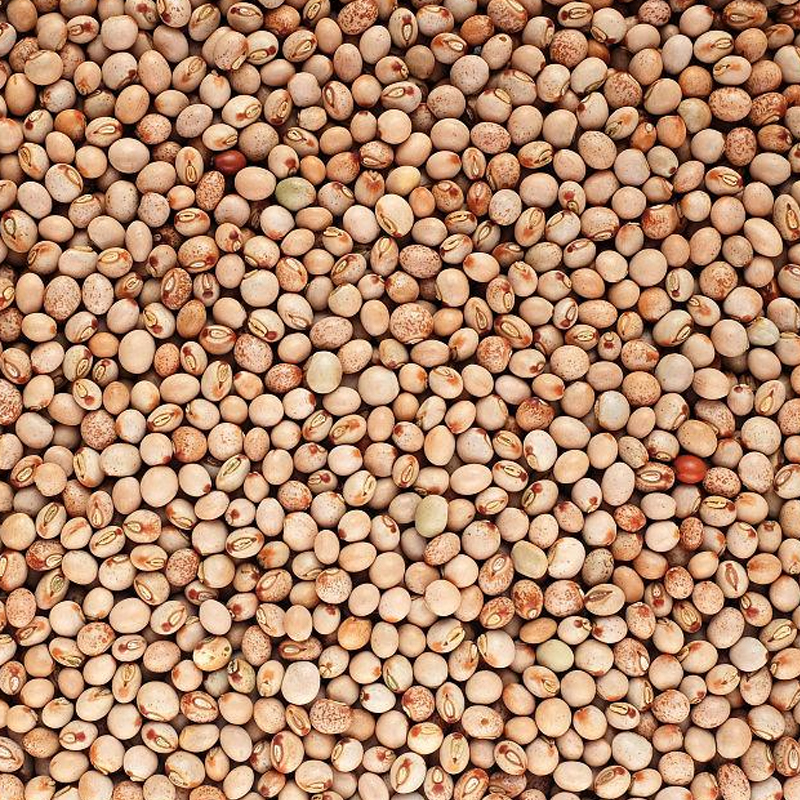
Overview of Pigeon Pea Cultivation in Tanzania
I. Core Cultivation Scale
Cultivation Area
Nationwide area remains stable at 220,000–260,000 hectares, with continuous expansion over the past decade; among all legumes in Tanzania, it ranks second only to common red kidney beans in cultivation scale and is the leading legume export.
Total Production
Total output in normal years is 150,000–180,000 tonnes (industry average: 165,000 tonnes); output drops to a minimum of 120,000 tonnes during drought years and can exceed 190,000 tonnes in seasons with abundant rainfall.
Yield Levels
Traditional smallholder intercropping with maize (dominant model): 1,000–1,200 kg/ha
Plots using improved varieties and minimal water/fertilizer management: 1,400–2,100 kg/ha
Optimal plots in southern coastal irrigation zones: Up to 3 tonnes/ha (representing a very small proportion)
Production and Distribution Breakdown
Approximately 63% of total production is exported (annual exports of 90,000–110,000 tonnes), with over 90% sold to India for processing into split peas (dal); the remaining 37% is used domestically for human consumption, seed stock, and livestock feed.
II. Distribution of Core Production Areas
1. Southern Coastal Production Area (Core source for exports; accounts for 41% of total cultivation)
Includes Mtwara, Lindi, and Ruvuma. Features a tropical semi-arid climate with sandy soil and abundant sunlight. Cultivation is large-scale and contiguous. Impurities consist mainly of sand and small stones; this is a hub for large-scale purchasing and processing plants.
2. Central Plateau Production Area (Largest cultivation belt in the country; accounts for nearly 60% of the total)
Includes Dodoma, Singida, Tabora, and Manyara. Located in a tropical dry savanna zone; farmers rely heavily on the crop’s drought tolerance. It is exclusively intercropped with maize, resulting in high levels of impurities such as stalks, soil clods, and weed seeds.
Minor/Scattered Production Areas: Morogoro and Mwanza; cultivation is mostly by smallholders for personal use, with low marketable volume.
III. Climate, Soil, and Growth Characteristics
Climate Suitability
Pigeon pea is highly drought-tolerant, making it suitable for Tanzania’s semi-arid zones with annual rainfall of 600–1000 mm. It thrives at altitudes below 1,600 meters, with optimal yields below 1,400 meters. The ideal growth temperature range is 18–34°C, allowing for cultivation across the vast majority of the country’s agricultural regions.
Soil
Tolerant of poor-quality sandy soils, red soils, and clay soils; adaptable to pH levels between 5.0 and 7.5. Its nitrogen-fixing root system improves soil health, making it a preferred crop for crop rotation and the rehabilitation of barren sloping land.
Phenological Cycle
Sowing: Early rainy season (December to the following February); sown concurrently with maize.
Maturation and Harvest: May to July of the following year; single annual harvest.
Pigeon pea is a shrub-like legume reaching heights of 1–3 meters. Its deep root system provides drought resistance, allowing for multi-year regrowth from the same stubble; however, Tanzanian farmers typically harvest once a year before tilling the land and replanting.
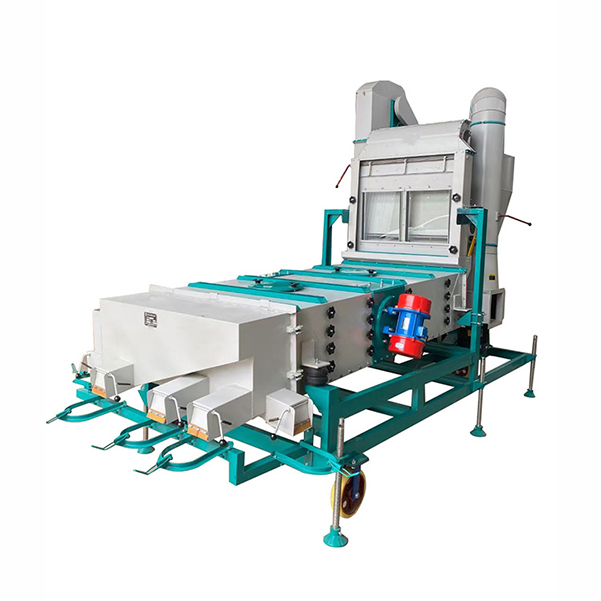
Complete Cleaning Equipment for Tanzanian Pigeon Peas
Characteristics of Tanzanian Pigeon Pea Raw Material: Intercropped with maize by smallholder farmers, resulting in high impurity levels—including significant amounts of sand and soil, stones of similar size to the peas, maize stalks, weed seeds, shriveled or irregularly shaped peas, insect-damaged or moldy peas, metal fragments from farm machinery, and soil clods. The seeds are slender with significant variation in length. Exports to India require strict adherence to standards regarding grain size, purity, and color. Two configuration options are available: a simple line for small-scale domestic sales and a fully automated production line meeting export standards.
I. General Conveying Equipment
Bucket Elevator
Features staged feeding and a fully enclosed design to prevent dust emissions. Given the brittle nature of pigeon peas, specialized low-breakage buckets are used to prevent skinning or damage; one unit is installed at both the inlet and outlet of each main processing machine.
II. Pre-treatment/Primary Cleaning Section (Removal of Large Impurities)
Air-Sieve Vibratory Pre-cleaner
Combines multi-layer vibrating screens with dual-sided air separation for simultaneous impurity removal:
Upper coarse screen: Removes maize stalks, plant vines, large soil clods, and gravel;
Lower fine screen: Removes fine sand/soil, weed seeds, and broken pea fragments;
Air channel: Extracts light/shriveled grains, pea skins, and airborne dust.
Features custom-designed elongated screen perforations specifically for slender pigeon pea grains; this is the core piece of equipment for processing plants in Africa.
III. Intermediate Heavy Impurity Separation (Removal of stones, defective beans, and irregularly shaped beans—essential for pigeon peas)
1. Specific Gravity Destoner (Removes stones and mud clods of similar size)
Pigeon peas from central and southern Tanzania are often grown in sandy soil containing many stones and mud clods similar in size to the beans themselves—impurities that standard screens cannot separate. This machine uses gravity-based stratification: heavy stones sink and are discharged, while clean pigeon peas float and are conveyed forward.
2. Length Grading Screen (Key equipment distinguishing pigeon peas from kidney beans)
Pigeon peas vary significantly in length, with mixtures of whole long grains, broken halves, slender weed seeds, and tiny shriveled seeds. A length-grading indented cylinder is essential:
Long indentations capture intact, high-quality pigeon peas;
Short indentations discharge broken beans, weed seeds, and small, shriveled grains;
Export-oriented plants require at least one unit; high-end processing lines often employ two-stage grading to ensure uniform grain size and meet Indian import standards.
3. Gravity Separator
Sorts material based on density, discharging three streams:
1) Heavy fraction: Plump, high-quality pigeon peas (export-ready product);
2) Light fraction: Insect-damaged, moldy, hollow/shriveled, and immature green beans;
3) Intermediate fraction: Mixed lower-quality beans (can be re-processed for recovery);
Significantly reduces the proportion of moldy and hollow beans, directly increasing the product’s market value.
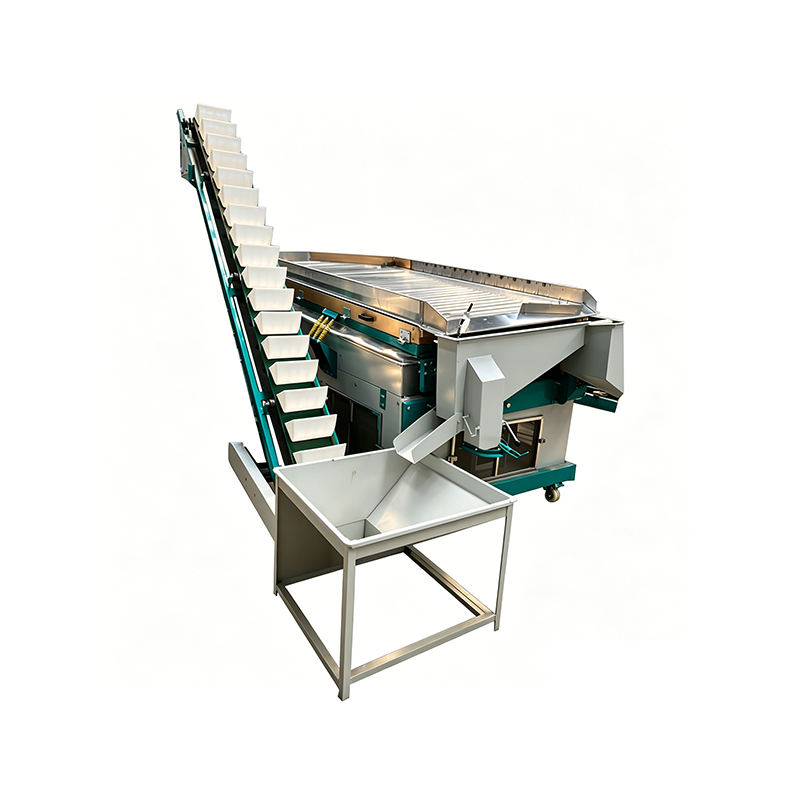
IV. Post-Processing / Finishing
1. Pulse Polishing Machine (High-spec configuration for pigeon peas destined for Tanzania)
Pigeon pea surfaces often have adhering dry mud, black spots, and skin fragments; the polisher gently rubs the beans to remove surface dust and enhance their color, significantly reducing the false-rejection rate of the subsequent color sorter. This step is generally not required for bulk pigeon peas sold on the domestic market.
2. Specialized Color Sorter for Pigeon Peas
High-definition CCD identification and rejection of: blackened/moldy beans, green grains, spotted/damaged beans, off-colored foreign beans, and insect-damaged beans. Indian buyers have extremely low tolerance for off-colored beans, making this equipment essential for export lines; it allows for the separation of premium-grade export stock from secondary-grade domestic stock.
V. Complete Process Configurations for Two Types of Production Lines
Option 1: Small-scale Cooperative (1–3 t/h)
Pigeon pea elevator → Air-screen cleaner → Magnetic separator → Destoner → Grading screen → Automatic packaging scale
Application: Supplies the domestic Tanzanian market; removes only stones, stalks, and weed seeds without intensive precision sorting.
Option 2: Standard Line for Large-scale Export Processing Plants (5–10 t/h; primary market: India)
Pigeon pea elevator → Storage hopper → Air-screen cleaner → Magnetic separator → Destoner → Grading screen → Gravity separator → Polisher → Color sorter → Grading screen → Automatic packaging scale
Completely removes all light and heavy impurities, irregularly shaped beans, and moldy or discolored grains; the purity of the finished product meets international export standards for pulses.
Post time: Jun-16-2026