
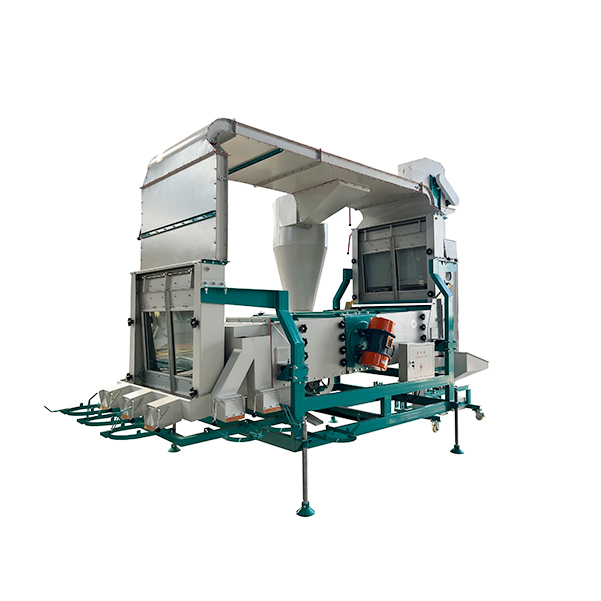
Sesame seeds are small and lightweight; harvested raw material often contains various impurities such as stalks, weed seeds, soil clods, stones of similar size, shriveled seeds, metal fragments, and discolored seeds. Standard standalone machines struggle to achieve high-standard impurity removal in a single pass. Sesame cleaning production lines utilize a series of specialized machines to remove impurities stage-by-stage through processes including pre-cleaning, air-screen cleaning, destoning, gravity separation, magnetic separation, and color sorting. This ensures high oil quality and meets purity standards for food-grade and export-grade sesame. The complete line can boost finished sesame purity to over 99.5% and is widely used in sesame oil plants, hulled sesame processing facilities, and export-oriented sesame enterprises. Key components include bucket elevators, air-screen cleaners, gravity destoners, gravity separators, magnetic separators, dust removal systems, and color sorters, supported by buffer silos and electrical control systems. Each piece of equipment has a distinct role, and the processes are seamlessly coordinated to achieve continuous, automated production.
Serving as the material transport hub for the entire line, the bucket elevator—typically a stainless steel Z-type model—lifts raw material from the ground-level silo to the next piece of equipment. Its enclosed structure minimizes dust leakage and prevents seed breakage during transport. Given the small size and brittle nature of sesame seeds, the elevator’s operating speed is carefully controlled to prevent damage from high-speed impact or crushing. It ensures continuous material transfer between machines and a steady, uniform feed rate for the line, while eliminating the risk of secondary contamination associated with manual feeding; it is the foundational equipment for material flow throughout the production line.
The air-screen cleaner is the core machine of the sesame cleaning line, performing the dual tasks of pre-cleaning and fine screening by combining vibrating screen separation with a circulating air separation system. The air-separation section utilizes differences in suspension velocities among materials; lighter elements—such as plant debris, dust, shriveled seeds, and seed coats—are carried away by the airflow into a dust collection system. The vibrating screen assembly features multiple specialized layers: the top layer, with large apertures, captures coarse impurities like stalks, soil clumps, and large weed seeds; the middle layer retains the high-quality sesame seeds; and the bottom fine-mesh layer sifts out fine sand, broken seeds, and minute dust particles. To accommodate sesame’s specific material properties, the equipment allows for the adjustment of airflow, screen inclination, and vibration amplitude, ensuring compatibility with raw sesame of varying moisture content and origins. Processing through this air-and-screen cleaner removes the vast majority of coarse, light, and fine impurities, significantly reducing the workload for downstream destoning equipment; this serves as the primary core purification step in the sesame cleaning process. Equipped with a pulse dust collection system, the machine centrally collects and processes the dust and broken husks separated during air classification; this not only improves the workshop environment but also prevents dust from recirculating and re-contaminating the cleaned sesame, making it an essential piece of auxiliary equipment for the production line.
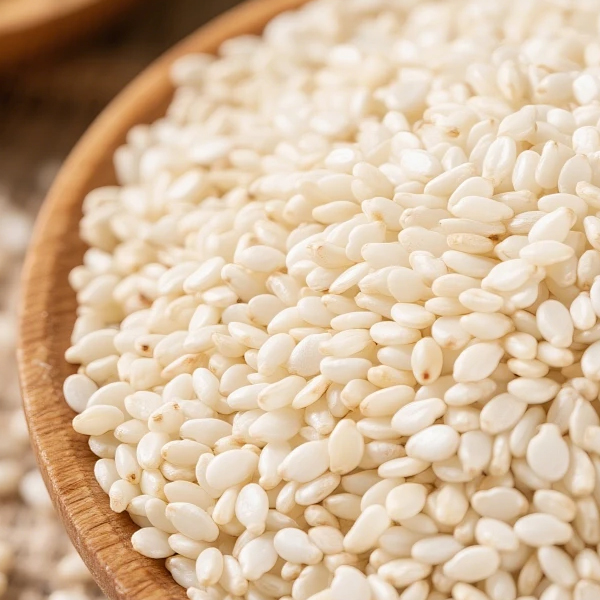
The gravity destoner is specifically designed to tackle the most difficult impurity in sesame cleaning: stones of similar size to the seeds. Since these stones cannot be removed via standard screening, they pose a major risk, causing a gritty texture in the finished product and damaging oil-pressing equipment. The machine utilizes a vibrating deck combined with an upward airflow to fluidize and stratify the material. Heavier stones and soil clods sink to the deck surface and move toward the high end of the deck due to vibration, eventually discharging through the stone outlet; meanwhile, the lighter sesame seeds float on the surface layer and flow down the slope to the next processing stage. In a sesame processing line, material is fed directly into the gravity destoner after air-screen cleaning, removing over 98% of heavy impurities like sand and stones. Precise adjustment of air pressure and vibration amplitude is required to minimize product loss—preventing good seeds from being discharged along with the stones. This equipment is essential for export-grade sesame lines to eliminate the risk of stones contaminating the final product.
While the gravity separator and the gravity destoner operate on similar principles, their processing objectives differ significantly. The gravity destoner focuses on removing heavy foreign impurities such as stones and soil clods, whereas the gravity separator focuses on grading and sorting the sesame seeds themselves, separating plump, intact seeds from shriveled, insect-damaged, or moldy ones. After destoning, the sesame enters the separation deck, where it undergoes full fluidization and stratification; high-quality, dense, and plump seeds flow out through the qualified product outlet, while lower-density materials—such as shriveled seeds, broken pieces, and immature grains—are separated and discharged. Gravity separation not only enhances the purity of the finished product but also increases the oil content of the raw material, making it highly valuable for sesame oil pressing and the processing of premium edible sesame. Consequently, many seed processing and export-oriented sesame lines incorporate gravity separation as a critical step to further elevate product quality. The primary function of the magnetic separator is to remove soil clumps and ferrous metal impurities from the raw material. Soil clods, iron nails, metal filings, and similar particles can be introduced during field harvesting, transportation, or through equipment wear; if these enter downstream oil-pressing or dehulling machinery, they can easily cause mechanical damage and pose food safety risks. Equipped with high-intensity magnetic rollers or permanent magnetic plates, the separator allows the sesame material to flow evenly through the magnetic field, where all ferromagnetic impurities are captured by magnetic attraction; the accumulated metal impurities can then be removed through periodic cleaning. Typically positioned after gravity separation and before color sorting as a protective safety measure, the magnetic separator is compact and easy to install. It is an essential component of food processing lines, ensuring the safety of downstream equipment and the final food product.
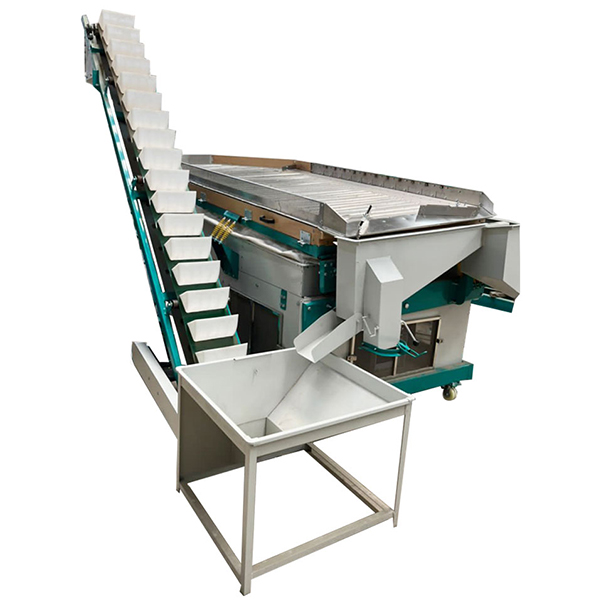
A color sorter is a precision processing unit within the production line, widely used in the processing of sesame seeds—including hulled and export-grade varieties—and optionally integrated into standard oil-pressing lines. The machine utilizes high-speed optical CCD cameras to capture images of the material, identifying moldy or scorched grains, discolored weed seeds, and other impurities based on color differences; high-speed air nozzles then precisely eject the substandard particles. While standard screening and gravity-based equipment struggle to distinguish impurities that share similar size and density but differ in color, color sorting bridges this gap by removing blackened, grayish, or moldy seeds. This optimizes the product’s appearance and meets the rigorous standards for color and quality demanded by high-end markets; it is an indispensable step in hulled white sesame processing, effectively removing dark, unhulled seeds to ensure a uniform final color.
The workflow of a comprehensive sesame cleaning line follows a logical progression: moving from coarse to fine processing, removing large impurities before small ones, and performing physical size sorting prior to gravity and color sorting. First, raw sesame is loaded into a receiving hopper and lifted by a bucket elevator into an air-screen cleaner for initial pre-cleaning, which removes stalks, leaves, dust, soil clumps, and fine sand, with dust collected by a pulse dust removal system. Second, the air-screened sesame is fed directly into a gravity destoner to thoroughly separate heavy impurities—such as stones and soil clods—and eliminate the vast majority of grit and gravel. Third, the destoned material is conveyed to a gravity separator to distinguish shriveled or insect-damaged grains from plump ones, thereby sorting and grading the seeds. Fourth, the material passes through a magnetic separator to capture iron filings and metallic debris, ensuring the safety of both the equipment and the product. Finally, depending on the product specifications, the material is conveyed to a color sorter for optical sorting to remove moldy, scorched, or discolored seeds. Finally, the cleaned sesame seeds enter a buffer silo, from which they can be directly metered and bagged by packaging equipment or routed to subsequent processing stages such as dehulling, roasting, and oil extraction. The entire process operates continuously within a closed system, minimizing manual intervention and reducing the risk of secondary contamination.
When selecting equipment for actual production, the configuration must be adjusted based on factors such as raw material impurity levels, production capacity, and intended product use. For standard oil-extraction sesame, a setup comprising a bucket elevator, air-screen cleaner, gravity destoner, and dust removal system is sufficient. However, high-end sesame destined for export, direct consumption, or dehulling requires a comprehensive suite of equipment, including gravity separators, magnetic separators, and color sorters. Precise calibration of operating parameters is crucial; given the lightweight and thin nature of sesame seeds, the airflow in the air-screen cleaner must be carefully regulated to avoid blowing away intact, high-quality seeds along with light impurities. Gravity separation equipment requires settings—such as deck inclination and vibration frequency—that align with the physical properties of sesame, alongside controlled material bed depth to ensure effective stratification. Furthermore, screen apertures must be correctly matched to the sesame seeds; an incorrect screen choice will directly compromise cleaning efficiency. Once properly calibrated, the production line consistently reduces raw material impurities to extremely low levels, thereby extending the service life of downstream processing equipment and ensuring the taste, quality, and safety of the sesame products—meeting the stringent quality standards required for both domestic food processing and export markets.
Post time: Sep-16-2026