
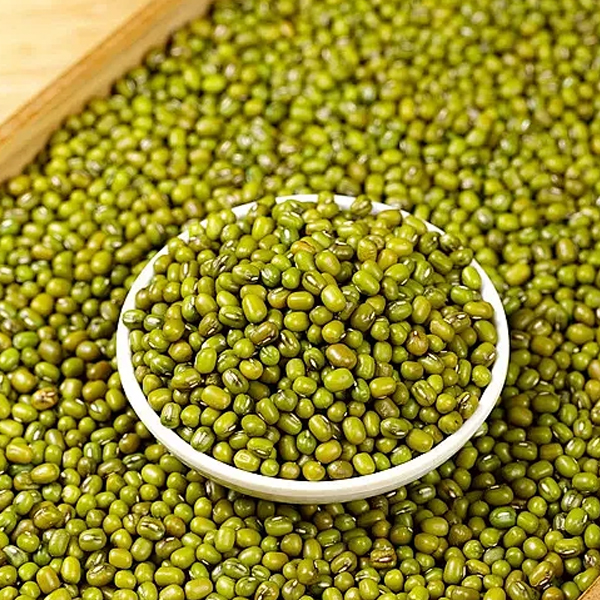
Mung Bean Cultivation in Uzbekistan
Uzbekistan is a major global exporter of mung beans and the primary source of mung bean imports for China. As a short-season legume crop grown as a follow-up crop after winter wheat, mung bean cultivation has expanded rapidly alongside the development of irrigated agriculture; however, production levels fluctuate annually due to climatic events.
1. Major Production Regions
Core production areas are concentrated in the Fergana Valley, Namangan, Jizzakh, Tashkent, Syrdarya, and Samarkand regions. Oases in the east and south, which benefit from favorable irrigation conditions, serve as the primary zones for high-quality production. While the western region of Karakalpakstan has potential for cultivation expansion despite high soil salinity, it currently accounts for a small share of total output. Mung beans are generally not cultivated in the cold northern regions.
2. Cultivation Systems and Phenology
The dominant model involves planting mung beans as a follow-up crop (second crop) after the winter wheat harvest. This method does not displace land used for staple grain crops and accounts for 90% of total production.
Main crop cycle: Sown in July and harvested in September–October; this accounts for the vast majority of total output.
Minor crop cycle: Sown in April–May and harvested in June–July; this accounts for only 10% of total output.
The growth cycle lasts 75–95 days. The crop thrives in high temperatures and abundant sunlight and relies on irrigation; while drought-tolerant, it is highly susceptible to pod rot and quality degradation if prolonged rainy weather occurs during the pod-filling stage—this represents the greatest cultivation risk in the region.
3. Production and Yield Levels
Yield: The average field yield is 1.5–2.0 tonnes per hectare, with plots featuring excellent irrigation conditions reaching up to 2.2 tonnes per hectare.
Trends in Area and Production: Cultivation area has expanded from just 18,000 hectares in the past to approximately 200,000 hectares in recent years. Production was roughly 150,000–160,000 tonnes in the 2023–2024 season, with a projected 180,000–200,000 tonnes for 2024–2025. Heavy rainfall during the harvest period can lead to significant production losses; for instance, rainfall in October 2022 damaged nearly 40% of the crop and reduced quality.
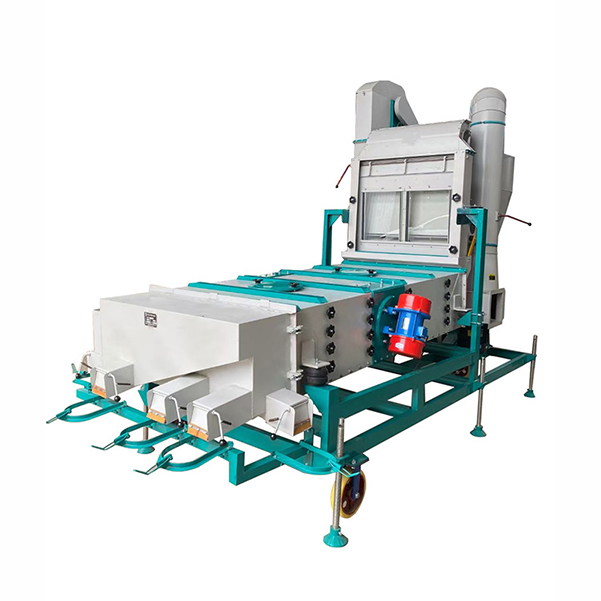
Complete Mung Bean Cleaning System and Equipment Advantages
Common impurities in raw mung beans include large debris (stalks, pods, stones, and clods), shriveled grains, weed seeds, broken beans, and light impurities (dust). Mung beans imported from Uzbekistan, in particular, often contain high levels of soil and a significant proportion of shriveled beans. A standard, comprehensive cleaning line configuration includes an air-screen cleaner, a gravity destoner, an elevator, and a color sorter; specific equipment is selected based on required processing capacity and finished product grade.
1. Air-Screen Cleaner (Core Primary Cleaning Equipment)
Operates using a combination of vibrating screen grading and circulating air separation; features multi-layer screens with apertures customized to the size of mung bean grains.
Advantages:
Separates large debris (pods, stalks, clods), small debris (dust, weed seeds), and light impurities (shriveled grains, insect-damaged beans) in a single pass, completing preliminary grading;
Adjustable airflow, vibration amplitude, and screen inclination angle allow it to handle imported raw mung beans that may be damp or have highly variable impurity levels;
High processing capacity; serves as the primary cleaning stage to remove the vast majority of loose impurities, thereby reducing the load on downstream equipment;
Achieves a purity level of 97–98% after processing, meeting basic requirements for standard commercial beans (though beans intended for sprouting require further deep processing).
2. Gravity Destoner (Key Equipment for Removing “Co-sized” Stones)
Utilizes differences in specific gravity combined with airflow and a vibrating deck to separate materials; specifically targets stones and soil clumps that are similar in size to mung bean grains—impurities that cannot be removed by standard air-screen cleaners.
Advantages:
Specifically removes “co-sized” stones, gravel, and soil clumps, solving the problem of stone contamination and preventing damage to downstream packaging and color-sorting equipment;
Simultaneously separates some lighter, defective beans (e.g., insect-damaged or moldy beans);
Particularly well-suited for raw materials from small-scale farms in Uzbekistan, maintaining stability even when the raw grain has high soil content;
High stone removal efficiency results in extremely low residual stone/gravel content, meeting export standards for grain.
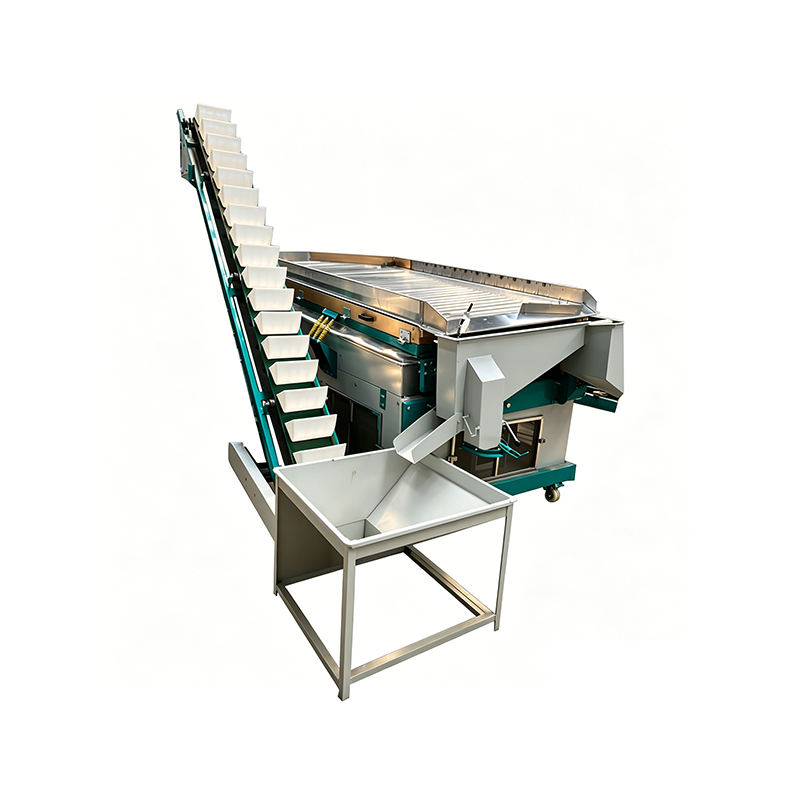
3. Magnetic Separator
Installation Location: Typically positioned before the air-screen cleaner or at the elevator transfer point; serves as a protective pre-treatment device.
Working Principle: Uses strong magnetic force to attract and capture soil clumps and magnetic metal impurities from the raw material.
Functions and Advantages:
Captures soil clumps, iron nails, wire, metal filings, and broken machinery parts mixed into the raw grain. Harvesting and transport by small-scale farmers in Uzbekistan often introduce iron objects; due to their high hardness, these objects can damage screens, gravity separator decks, and optical sorter lenses. The magnetic separator acts as a first line of defense, protecting the downstream cleaning equipment.
Attracts only ferrous impurities; mung bean kernels remain undamaged, ensuring no loss of raw material.
Reduces metal foreign matter in the finished product, meeting control standards for exported food.
Features a simple structure and easy maintenance; captured iron impurities must be cleared periodically to prevent magnetic force degradation or failure.
Note: Magnetic separators cannot remove stones, soil clumps, or non-metallic impurities; they only remove iron and cannot replace air-screen cleaners or destoners.
4. Bean Polisher
Installation Location: At the end of the cleaning process, following gravity destoning and optical sorting; classified as a finishing machine.
Working Principle: Soft brushes or abrasive rollers inside the drum rub against the mung bean kernels while an airflow system simultaneously extracts dust.
Functions and Advantages:
Polishes and cleans the mung bean surface, removing adhering soil, loose dust, residual pod skins, and surface grime or black spots. Many mung beans from Uzbekistan have soil stuck to their surfaces; while standard air-screen cleaners remove loose dust, only polishing can handle stains embedded in the skin.
Removes surface mold from insect-damaged areas and enhances the bean’s appearance and color, resulting in shiny, plump kernels and significantly improved marketability—ideal for sprouting beans and export-grade mung beans.
Skin fragments and powder dislodged by friction are promptly extracted by the fan, preventing the finished product from becoming re-contaminated with dust.
Adjustable rotation speed allows for minimal breakage with proper parameter settings; excessive speed can cause bean breakage, so strict speed control is required for sprouting bean production. Note: Polishing cannot remove stones, shriveled beans, or discolored beans, nor can it replace cleaning or color sorting; polishing cannot restore beans of poor quality where mold has penetrated deep into the kernel—these must still be removed via color sorting.
Post time: Aug-17-2026