
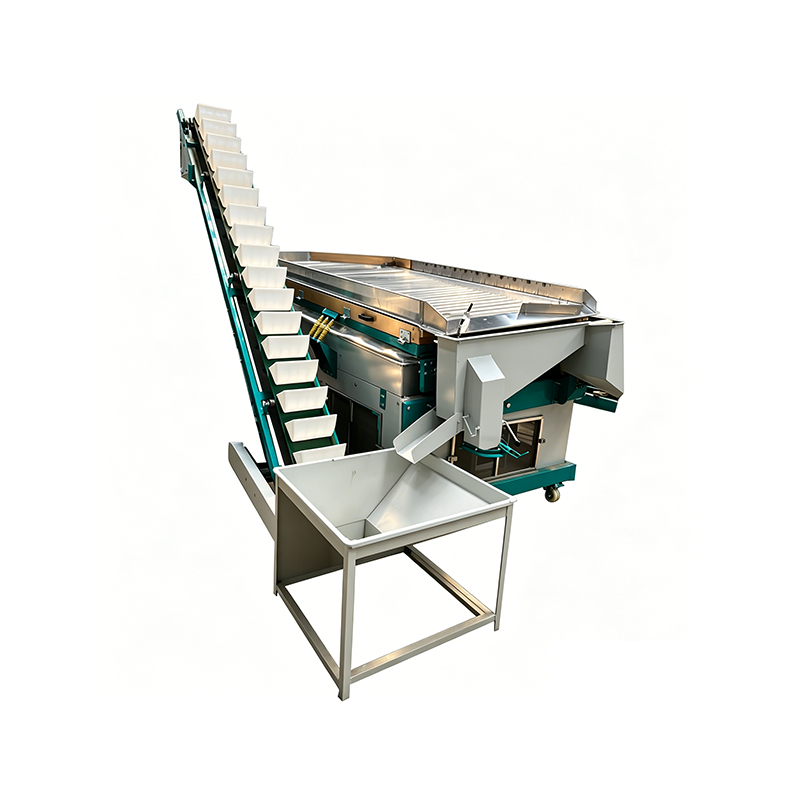
2026 gravity separator achieves sorting based on differences in material specific gravity and serves as the core piece of equipment for “in-depth refinement” in processing lines for soybeans, mung beans, and kidney beans. In actual production, however, the cleaning results can vary significantly—even when using the same machine and identical settings—if the origin of the raw material or the specific batch of material changes. This demonstrates that gravity-based sorting is not a process that automatically yields consistent, high-quality results the moment the machine is turned on; rather, the outcome is the result of a complex interplay between equipment parameters, the physical properties of the raw materials, upstream processing stages, and environmental conditions.
I. Physical Properties of the Raw Material: Determining the Upper Limit of Separation Efficiency
The inherent physical state of the raw material serves as the fundamental prerequisite for specific-gravity-based separation; no matter how advanced the equipment may be, it cannot transcend the physical limits governing material stratification.
First, moisture content and its uniformity. This is the most frequently overlooked yet highly impactful factor. When moisture levels are too high, the surfaces of the bean hulls become sticky, causing broken bean fragments, soil particles, and plant debris to adhere firmly to the surfaces of sound beans. This distorts their effective specific gravity and narrows the density gap between sound beans and defective ones (such as shriveled or insect-damaged beans), blurring the boundaries for separation and making precise sorting difficult. Furthermore, high-moisture material tends to form clumps on the separation deck; since the airflow cannot break these clusters apart, the material layer fails to fluidize, rendering the separation process entirely ineffective. Conversely, if moisture content is too low, the beans become brittle, leading to the creation of new broken fragments during feeding, vibration, and agitation—essentially generating new “light” impurities during the very process intended to remove them. Fluctuating moisture levels (e.g., when mixing different batches from storage) are even more problematic, as they create a wide, inconsistent range of specific gravities on the same deck, making it impossible to set an effective separation threshold. Therefore, ensuring that moisture content is kept within an optimal, consistent range across all batches prior to processing is the primary requirement for achieving stable and reliable separation results.
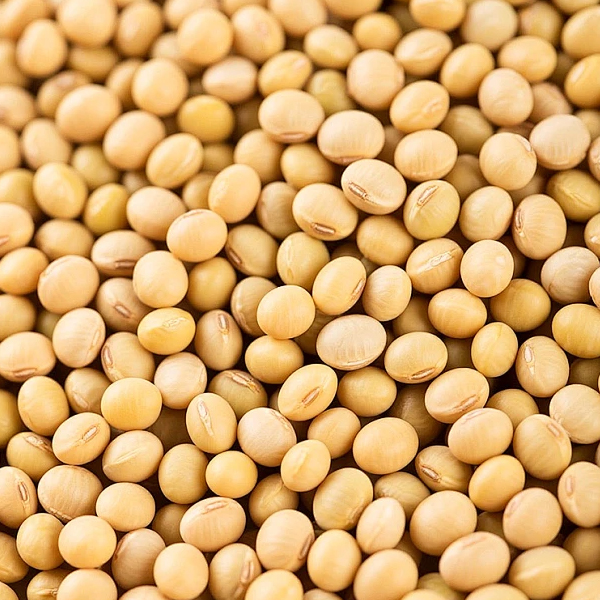
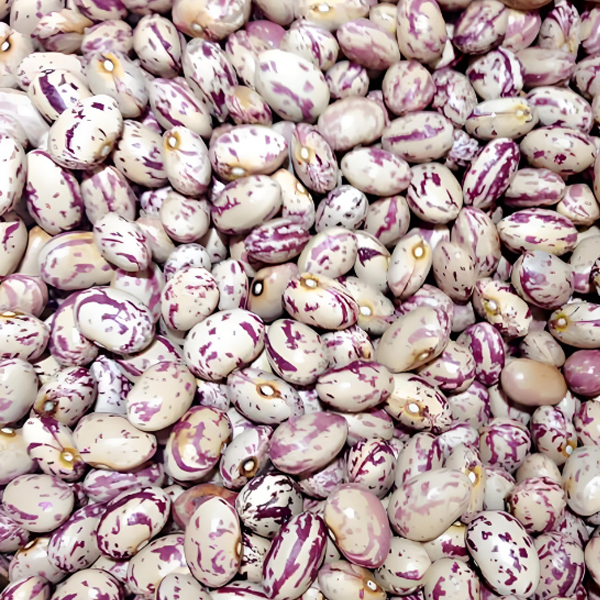
Second, the type and proportion of impurities. The composition of impurities varies by crop—such as soybeans, mung beans, or kidney beans—each presenting unique challenges for the separation process. Soybeans often contain broken cotyledons, hulls, soil clods, and weed seeds; mung beans, being smaller, are frequently contaminated with fine sand, soil dust, and pod fragments; while kidney beans, due to their larger size, are more likely to be accompanied by soil clods, stones of similar size, broken beans, or moldy grains. If large debris—such as straw, stones, or coarse soil and sand—is not removed prior to feeding, these “oversized or extreme-density” foreign objects will rapidly disrupt the structure of the material layer on the deck, causing localized accumulation and airflow “short-circuiting,” which leads to a complete breakdown of the entire separation process. Even more critical are the “impurities with similar specific gravity”—such as moldy beans, insect-damaged beans, and severely shriveled grains—whose specific gravity falls between that of high-quality beans and light impurities. In the case of kidney beans, stones of a similar size can also have a specific gravity that falls between that of the beans themselves and heavier impurities. The higher the concentration of such materials, the more difficult it becomes to establish an effective separation threshold, making it challenging to balance the purity of the final product with the recovery yield.
Third, consider grain shape and size distribution. Soybeans are relatively uniform in size; mung beans, while small, also exhibit good consistency; kidney beans, however, vary significantly in size. When there is a large disparity in grain size, the specific gravity ranges of “large, shriveled beans” and “small, high-quality beans” may overlap. This creates a scenario where physical separation based on specific gravity alone is impossible. In such cases, a pre-sorting grading screen must be used to separate the grains by size; otherwise, no matter how the gravity separator is adjusted, the output will inevitably contain a mixture of materials.
II. Adjustable Equipment Parameters: The Key to On-Site Tuning
There are four sets of adjustable parameters for a gravity separator: the inclination angle of the deck, vibration amplitude and frequency, airflow volume across various channels, and the feed rate (which determines the thickness of the material layer). These parameters are interdependent; an improper setting for any one of them will compromise performance.
Deck Inclination Angle. The inclination angle dictates the flow velocity and residence time of the material on the deck. If the angle is too steep, the material slides down too quickly—it does not “linger” on the deck long enough to undergo proper stratification—resulting in a mixture of light impurities, heavy impurities, and the final product. Conversely, if the angle is too shallow, the material accumulates and stagnates, causing the layer to thicken. This prevents airflow from penetrating the mass and hinders the turnover of the bottom layer, leading to a failure in stratification and potential clogging. For soybeans and kidney beans, which have higher specific gravity and larger grain sizes, a slightly steeper angle is appropriate. For mung beans, which are smaller and slide more easily, a shallower angle—requiring precise, fine-tuned adjustments—is necessary.
Vibration Amplitude and Frequency. Vibration facilitates the turnover, loosening, and forward transport of the material on the deck surface. If the amplitude is too low, the material does not become sufficiently suspended or agitated, causing light and heavy particles to remain “jammed” together. If the amplitude is too high, the material jumps excessively, repeatedly disrupting the stratification that has already formed—effectively re-mixing the material just as it has been separated. Mung beans, being light and small, require a lower amplitude for smooth, steady transport; otherwise, they may bounce and scatter. Kidney beans, being larger, require a greater amplitude to ensure effective turnover.
Airflow Volume and Distribution. Airflow provides the “lifting force” essential for gravity-based separation and is the most sensitive parameter. When the airflow is correctly set, light or shriveled beans, moldy beans, plant debris, and broken pods are lifted to the top of the material layer, while plump, high-quality beans settle at the bottom, in contact with the deck. If the airflow is too weak, the lifting force is insufficient; light impurities remain trapped within the material layer instead of rising, and thus end up mixed into the final product. If the airflow is too strong, even the plump, high-quality beans are lifted and discharged through the light-material outlet, leading to a significant drop in the yield of the final product. Furthermore, the uniformity of airflow distribution is critical. In single-chamber machines, it is common to see strong airflow in the center but weak airflow toward the sides; this creates “dead zones” where impurities are not thoroughly removed. Multi-stage, partitioned airflow chambers can significantly improve this issue.
III. Pre-processing Stages: The Foundation for Effective Gravity-Based Sorting
Many operational issues—often attributed to a gravity separator’s failure to achieve a clean separation—actually stem from deficiencies in the preceding processing stages.
If air-screen cleaning is absent or ineffective, large volumes of straw, plant debris, stones, and coarse sediment enter the gravity separator. This immediately disrupts the uniformity of the material layer on the deck, forcing the machine to handle both “coarse cleaning” and “fine sorting”—a dual burden that prevents it from performing either task well. Similarly, if a destoning process is missing or incomplete, stones of similar size to the target product (e.g., beans) will enter the separator and compete for the same discharge zone, significantly complicating the sorting process. The absence of a grading screen leads to a mixture of different particle sizes on the same deck, causing the aforementioned issue of “overlap between particle size and specific gravity.” Furthermore, a lack of magnetic separation allows iron contaminants to enter; these not only cause wear to the screen mesh but also accumulate on the deck surface, altering the distribution of the airflow. Additionally, the consistency of the feed—governed by upstream elevators and storage silos—directly determines the stability of the material layer as it enters the gravity separator.
To achieve high-purity separation of moldy beans, insect-damaged beans, shriveled grains, and stones (of similar size to the beans) from soybeans, mung beans, or kidney beans, the approach is clear: first, use air-screen cleaning, destoning, and grading to remove coarse impurities and grains that differ significantly in size. Ensure the moisture content of the input material is kept within an optimal, consistent range across batches. Next, configure the four key operating parameters—inclination angle, amplitude, airflow, and feed rate—based on the specific characteristics of the material. Finally, perform regular maintenance to ensure the equipment’s performance remains stable and consistent. A gravity separator is not a “universal impurity remover,” but rather a precision sorting stage within a complete processing line; its sorting accuracy and yield are maximized when the upstream material is cleaner, the parameters are precisely tailored to the product, and the equipment is well-maintained.
With its consistent purity levels, low breakage rates, broad material adaptability, reliable manufacturing quality, and comprehensive export support services, the 2026 Taobo Gravity Separator has become a preferred choice for grain and oilseed cleaning lines worldwide. It enables processing plants to ensure stable product quality and minimize losses, transforming standard raw materials into high-grade agricultural products with strong export competitiveness.
Post time: Nov-11-2026