
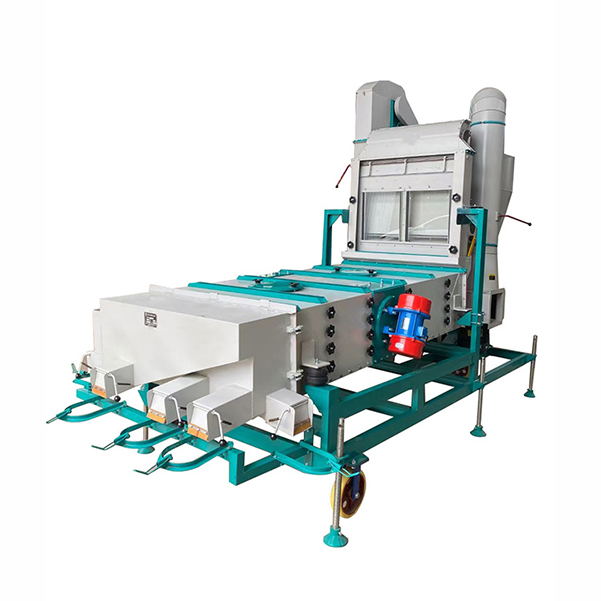
The effectiveness of a wind-screen cleaning machine in cleaning soybeans is primarily influenced by four major categories of factors—material characteristics, equipment parameters, structural configuration, and operating environment—which directly determine the impurity rate and loss rate.
I. Soybean Material Characteristics (The Most Fundamental Influence)
Moisture Content: When moisture content exceeds 18%, the soybean surfaces become sticky and the straw becomes pliable; this makes it easy for screen perforations to clog and for the material to clump together, causing cleaning efficiency to plummet. The optimal moisture content is 12%–15%.
Types and Content of Impurities:
Light Impurities (chaff, broken straw): Require sufficient airflow to be blown out;
Heavy Impurities (soil clods, pebbles): Require specific gravity separation or grading via screen perforations;
Long Stems: Prone to tangling around screen shafts and clogging the screen surface; the upper screen requires a large opening size or a comb-tooth structure to handle these.
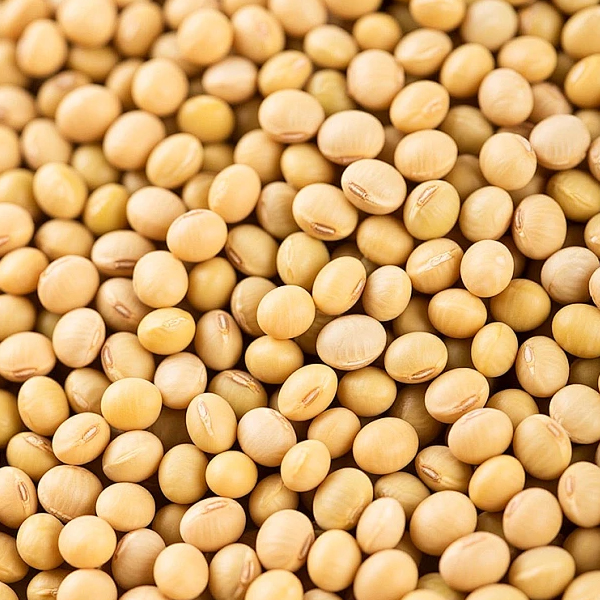
Soybean Particle Uniformity: When there are significant variations in particle size, it becomes difficult to select appropriate screen perforations; this results in the loss of small grains and the retention of large grains as impurities.
II. Equipment Operating Parameters (Adjustable in Real-Time)
Fan Speed / Airflow Volume:
Insufficient Airflow: Light impurities are not effectively blown out, leading to an increased impurity rate;
Excessive Airflow: Normal soybeans are blown out along with impurities, leading to an increased loss rate;
Common Fan Speed for Soybeans: 1000–1300 r/min (depending on the specific machine model).
Screen Box Vibration Parameters:
Frequency (Crank Speed): Too low causes material accumulation; too high causes grains to bounce excessively; common range: 400–600 r/min;
Amplitude: Too small results in poor material stratification; too large causes grains to bounce off the screen and be lost; general range: 5–8 mm.
Screen Surface Inclination Angle:
Upper Screen: 15°–30° (steeper at the rear than at the front); this facilitates the rearward conveyance of material and the discharge of long stems;
Lower Screen: Slightly less inclined than the upper screen to prevent soybeans from sliding down too quickly, thereby ensuring sufficient time for them to pass through the screen perforations.
Feeding Rate:
Too High: The material layer becomes too thick, resulting in insufficient screening; this leads to an increased impurity rate and a higher risk of clogging;
Too Low: Results in low processing efficiency, and grains are more easily carried away by the airflow; the optimal feeding rate for soybeans is typically 2.0–2.5 kg/s.
III. Sieve Body Structure and Configuration (Core Hardware)
Sieve Types and Specifications:
Upper Sieve: Typically uses a louvered sieve (opening size 25–35 mm) to discharge long stems; woven sieves are strictly prohibited (as they are prone to clogging).
Lower Sieve: Uses a round-hole sieve (φ6–8 mm) or a hexagonal-hole sieve to allow soybeans to pass through while retaining smaller impurities.
Tail Sieve: Uses a grid or louvered sieve to prevent grain kernels from being discharged along with the tailings.
Sieve Louver Opening: The upper sieve employs a “smaller at the front, larger at the rear” configuration (20–25 mm at the front, 30–35 mm at the rear) to prevent material blockage at the inlet and grain leakage at the outlet.
Sieve Box Sealing and Wear: Damaged sieves, gaps at the edges, or aged rubber seals can lead to grain leakage or the contamination of the grain with impurities.
IV. Operating Environment and Procedures (Auxiliary Factors)
Environmental Humidity: In humid weather (relative humidity > 80%), the material absorbs moisture and becomes sticky, making the sieve holes prone to clogging; consequently, the feed rate must be reduced, and the airflow appropriately increased.
Equipment Condition:
Aged Shock Absorbers: Result in uneven vibration of the sieve body, causing material drift and poor stratification.
Slipping Fan Belts: Lead to unstable airflow and fluctuations in cleaning quality.
Operational Standards: Failure to allow for a warm-up period after startup, failure to adjust parameters according to the specific material being processed, or failure to promptly clear blockages on the sieve surface will all compromise the cleaning effectiveness.
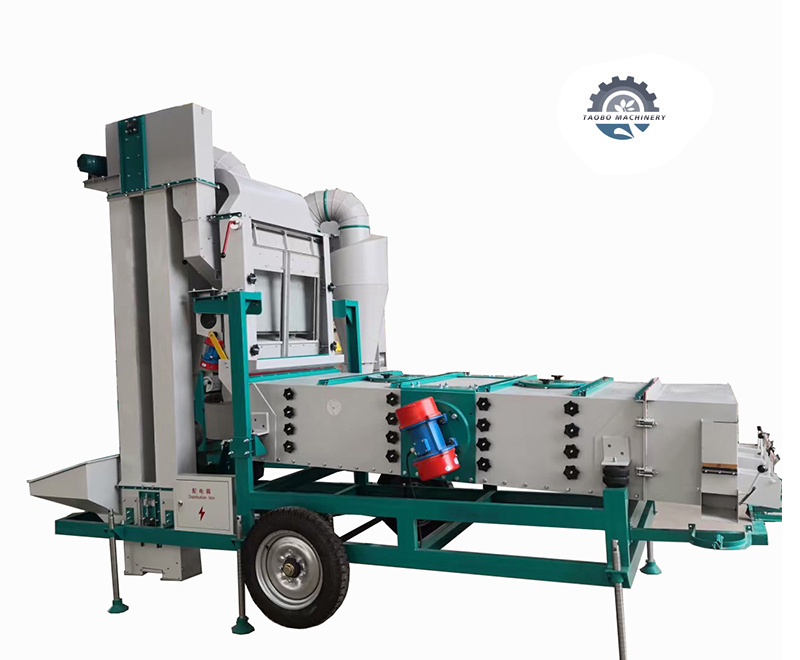
Practical Guide to Adjusting Wind-Screen Cleaner Screen Sizes Based on Soybean Particle Uniformity
Screen Selection Principles (Specific to Wind-Screen Cleaners)
1. Soybeans with High Particle Uniformity
Lower Screen (Fine Cleaning/Bottom Screen; Primarily Round Holes)
Select a standard round-hole screen with a hole diameter 0.5–1.0 mm smaller than the average soybean particle size. This allows only dust and small impurities to pass through, ensuring that intact soybeans do not fall through.
Standard Recommendation: φ6.0–6.5 mm round holes.
Upper Screen (Coarse Cleaning/Top Screen; Louvered/Slotted Holes)
Select a fixed, medium opening size of 25–30 mm. This serves only to discharge straw, large soil clumps, and long impurities; do not intentionally enlarge the screen openings beyond this range.
2. Soybeans with Moderate Particle Non-Uniformity
Lower Screen
Switch to a slightly larger round-hole size: φ6.5–7.0 mm.
Objective: To ensure that large beans do not get stuck in the screen, while allowing small, shriveled beans to pass through for separation, thereby preventing small impurities from being mixed into the finished product.
Upper Screen
Increase the screen opening/aperture size appropriately to 30–33 mm. This slows down the material’s retention speed, allowing particles of varying sizes to stratify fully and preventing small particles from being carried away by the larger material.
3. Soybeans with Severe Particle Non-Uniformity
Lower Screen
Avoid using a single small-hole size. Prioritize switching to a graduated-hole screen or a long-oval screen; alternatively, use a larger round-hole size of φ7.0–7.5 mm directly.
Objective: To create sufficient passage space for small, shriveled beans and broken beans to pass through, while relying on airflow and vibration to retain the intact beans.
Strictly avoid using small-hole screens, as this leads to severe screen clogging and a complete failure of the stratification process.
Upper Screen
Increase the opening size to 33–38 mm. Simultaneously, slightly increase the screen surface inclination angle to allow the mixed-size material to spread out rapidly, thereby minimizing the formation of layered accumulations within the material bed.
Post time: May-06-2026