
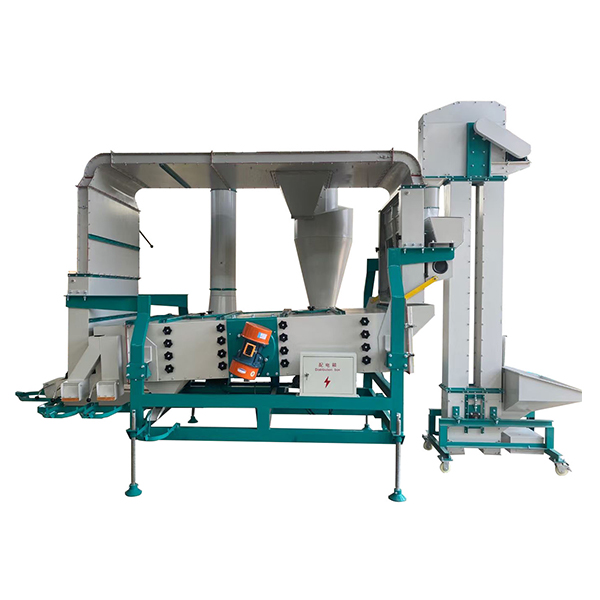
When using air-screen cleaners for sesame seeds and chia seeds, the primary challenges arise from their tiny particle sizes, low densities, tendency to clump, and suspension velocities that closely resemble those of light impurities. Cleaning performance is largely determined by material properties, airflow parameters, screen specifications, feeding mechanisms, and equipment design.
I. Material Properties (Fundamental Factors)
Particle Size and Shape
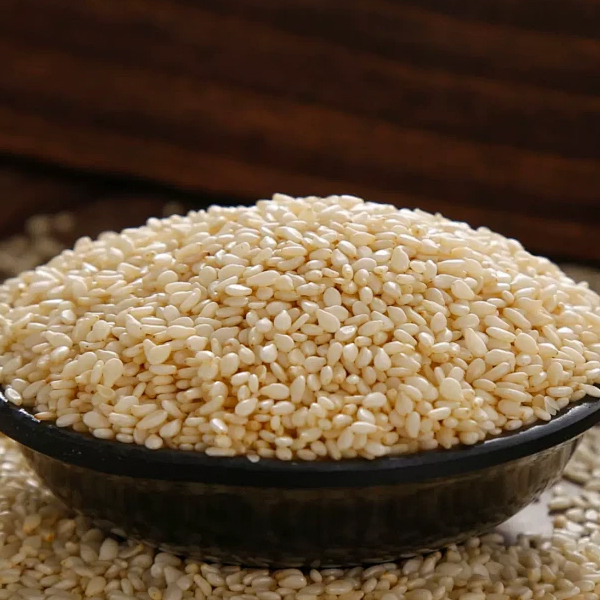
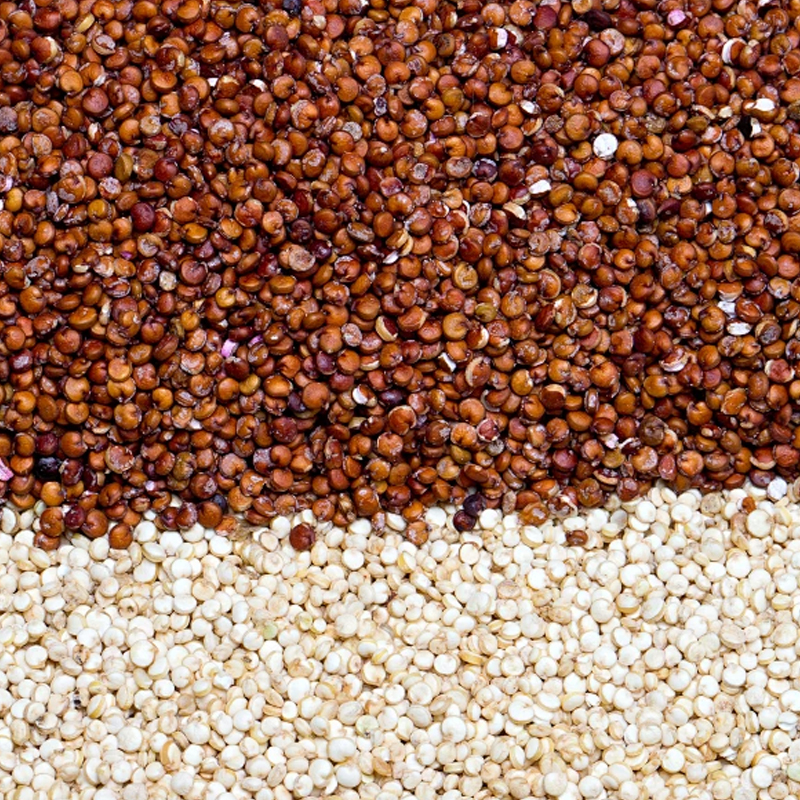
Sesame: 2–3 mm long, flat-elliptical; Chia: 1–2 mm long, nearly spherical. Both are ultrafine particles; screen apertures that are slightly too large cause product loss, while those that are slightly too small lead to clogging.
Irregular shapes result in poor flowability and slow stratification, making impurity separation difficult.
Density and Suspension Velocity
Densities are approximately 1.1–1.2 g/cm³ for sesame and 1.05–1.1 g/cm³ for chia. These values are very close to those of light impurities (dust, straw fragments, shriveled seeds); excessive airflow causes product loss, while insufficient airflow fails to remove impurities effectively.
Moisture Content and Surface Characteristics
Moisture content >12%: Strong adhesion and clumping occur; material accumulates on the screen, permeability drops, and the rate of light impurities remaining in the product spikes.
Chia seeds become sticky when exposed to moisture and can gum up the screen mesh; sesame seeds have smooth surfaces but high oil content, making them prone to sticking and clogging apertures under high-humidity conditions.
Impurity Types and Content
Common impurities: dust, fine sand, straw fragments, weed seeds, shriveled seeds, and “co-sized” impurities (particles with similar size or density).
Impurity content >15%: Processing load surges, stratification becomes chaotic, and cleaning efficiency plummets drastically.
II. Airflow System Parameters (Critical Adjustment Factors)
Air Velocity and Airflow Rate
Air velocity too low (<1.5 m/s): Light impurities are not blown away; material accumulates on the screen surface; high impurity content.
Air velocity too high (>2.5 m/s): Sesame seeds/chia seeds are blown out; excessive product loss (chia seeds are lighter and more prone to being carried away).
Uneven airflow: Air duct blockage or design flaws → localized air velocity is too high or too low; inconsistent cleaning performance.
Airflow Angle and Duct Structure
Improper air entry angle: Air hits the screen surface vertically → material bounces excessively, poor stratification; air angle too shallow → light impurities are not blown far enough and accumulate at the discharge end.
Air duct dust accumulation/deformation: Distorted airflow field and uneven velocity distribution → reduced impurity removal rate and increased product loss.
III. Screen Vibration and Mesh Parameters (Core Separation Conditions)
Screen Aperture Size and Shape
Aperture too large: Sesame/chia seeds fall through (leakage); high product loss. Aperture too small: Clogging, accumulation, and poor material passage.
Recommended specifications: Sesame—1.5–2.0 mm elongated holes; Chia seeds—1.2–1.5 mm round holes; typically uses a double-layer screen (upper screen removes large impurities; lower screen separates clean product).
Vibration Frequency and Amplitude
Frequency too low (<15 Hz): Material does not loosen; poor stratification; light impurities remain trapped within the material layer.
Frequency too high (>30 Hz): Material “jumps” off the screen surface; reduced material passage; increased wear and tear.
Amplitude too small: Material fails to move and accumulates. Amplitude too large: Excessive bouncing; material easily blown away by the airflow.
Recommended parameters: Sesame/chia seeds typically use 20–25 Hz frequency and 2–3 mm amplitude.
Screen Inclination Angle and Material
Inclination angle too small (<5°): Slow material flow; accumulation occurs. Inclination angle too large (>10°): Flow velocity too fast; insufficient screening/separation. Screen material: Steel wire mesh is prone to clogging and wears out quickly; nylon or polyurethane screens are anti-stick, wear-resistant, and resistant to clogging, making them better suited for high-moisture or oily materials.
IV. Feeding and Operational Parameters (Ensuring Stability)
Feeding Uniformity
Excessive feed rate: Material layer too thick; poor material dispersion; difficult stratification; incomplete cleaning.
Insufficient feed rate: Low efficiency; airflow prone to “channeling” (breaking through) the material layer; product loss (good material carried away with waste).
Requirement: Uniform, thin-layer feeding; layer thickness ≤ 2–3 times the particle diameter.
Material Pre-treatment
No pre-drying: High-moisture material fed directly → clumping, screen blinding, high impurity content.
No preliminary cleaning: Large impurities (straw, soil clods) enter → excessive load on screen surface, clogged holes, screen mesh damage.
V. Equipment Structure and Maintenance (Long-term Stability)
Screen Mesh Condition
Damaged/deformed mesh: Material leakage, uneven cleaning; burrs on edges: material snagging, clogged holes.
Failure to clean promptly: Broken grains, oil residue, and impurities clog screen holes; screening efficiency and impurity removal rate steadily decline.
Sealing and Air Duct Leakage
Air leakage: Insufficient effective airflow, reduced air velocity, incomplete impurity removal.
Vibration Mechanism Condition
Aged shock absorbers, worn bearings: Unstable vibration, frequency/amplitude drift, inconsistent cleaning performance.
Taobo sesame air screen cleaner and chia seed air screen cleaner can also remove impurities from various types of beans and seeds, such as soybeans, mung beans, kidney beans, coffee beans, and chickpeas.
Post time: Jun-08-2026