
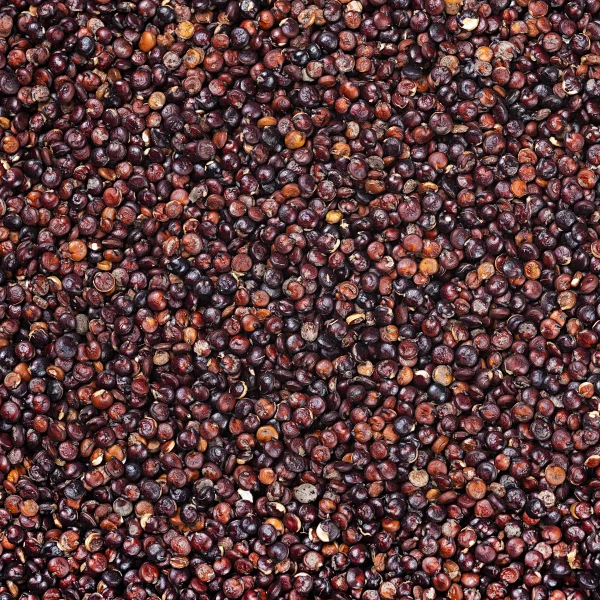
Paraguay is the world’s largest producer and exporter of chia seeds, with its cultivation characterized by winter crop rotation, large-scale production, low cost, and high quality, dominating global supply. Detailed cultivation information is as follows:
I. Core Production Data (2023-2025)
Annual Production: 80,000-90,000 tons, accounting for approximately 40% of global production, firmly holding the top position globally.
Production Value and Exports: Annual export value of approximately US$200 million, exported to 73 countries worldwide, with the United States, Germany, the Netherlands, and Japan as major markets.
Yield: Average 800-1200 kg/hectare, well-managed farms can achieve 1.5 tons/hectare.
Cultivated Area: Approximately 80,000-100,000 hectares, mainly concentrated in the northern region.
II. Core Production Areas and Climate/Soil
Core Production Area: Canindeyú Province, followed by Alto Paraná Province, Concepción Province, and other northern regions.
Climate Conditions: The area has a subtropical humid climate with winter temperatures (May-September) of 15-25℃, ample sunshine, and large diurnal temperature variations, making it ideal for chia seed growth.
Annual rainfall is 1200-1600 mm, evenly distributed, meeting its drought-tolerant yet moist growing season requirements.
Soil Conditions: The soil is primarily fertile red loam and sandy loam, with excellent drainage, crucial for high chia seed yields.
The soil has high organic matter content and a pH of 5.5-7.0, suitable for chia seed growth.
III. Planting Patterns and Agronomic Characteristics
Crop Rotation System (Core Advantage): As a winter rotation crop for soybeans, it is planted after soybean harvest (May-June) and harvested in September-October.
Advantages: Does not compete with staple crops for land, improves soil, reduces pests and diseases, and maximizes land utilization throughout the year.
Planting and Management
Sowing: Direct sowing, row spacing 50-70 cm, plant spacing 15-20 cm, sowing depth 1-2 cm.
Fertilization: Primarily organic fertilizer + phosphorus and potassium fertilizer, with minimal nitrogen fertilizer, suitable for chia seeds’ tolerance to poor soil conditions; pesticide use is extremely low.
Irrigation: Rainfall is abundant in the main producing areas, relying mainly on natural precipitation, with only minor supplemental irrigation during droughts, resulting in low planting costs.
Harvesting and Processing
Harvesting: When the flower spikes turn brown and the seeds harden (September-October), harvest directly using a combine harvester and thresh.
Cleaning: Immediately after harvest, use a winnowing screen to remove straw, broken leaves, shriveled seeds, and dust, ensuring a cleanliness of over 99%.
Drying: Low-temperature drying to moisture content ≤8%, ensuring long-term storage and export quality.
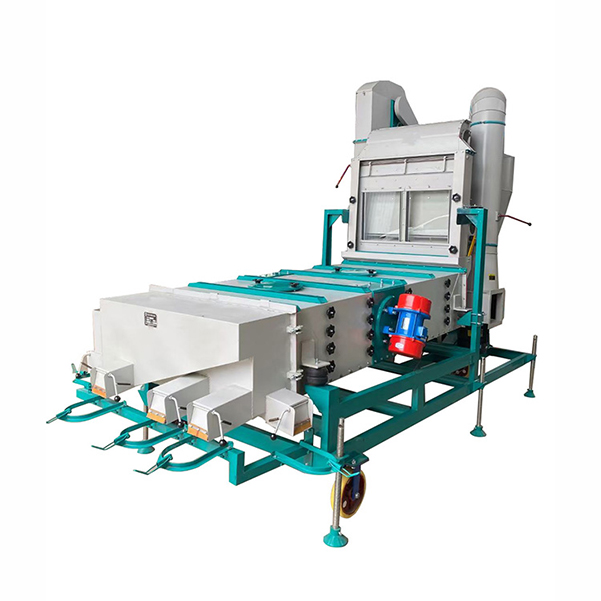
Chia seeds are extremely small, light, easily dusty, and fragile. Their cleaning logic is completely different from that of chickpeas and soybeans, requiring specialized, precise, and low-breakage equipment. An air-screen cleaning machine is an excellent choice.
II. Complete Working Principle of Chia Seed Cleaning Machine
Overall Process:
Feeding → Air Separation for Light Impurities → Multi-layer Screening for Large and Small Impurities → Graded Discharge
1. Uniform Feeding (The Foundation of Cleaning Effectiveness)
Chia seeds enter from the hopper and are evenly spread into a thin layer by the vibrating feeder/feeding roller.
Purpose: To prevent the beans from piling up, ensuring that every seed is blown and screened.
Especially Important for Chia Seeds:
Chia seeds that are too light or too small will not be thoroughly cleaned if they pile up.
2. Air Separation System: Removing Light Impurities (The Most Crucial Step)
The air separator is located below/behind the screen surface. The blower blows air upwards or backwards, creating a stable airflow.
Light Impurities Carried Away by the Airflow:
Fragments of leaves, flower buds, straw debris
Dust, fine dust
Shriveled seeds, empty shells, insect-damaged light seeds
Fluff, grass clippings
3. Multi-layer sieve cleaning: Separate by size (chia seed-specific sieve mesh). The sieve box operates with low amplitude and gentle vibration to avoid crushing the chia seeds.
The typical sieve structure consists of three layers:
① Upper sieve: Removes large impurities.
The sieve openings are larger than the chia seeds.
It blocks: long stalks, large leaves, and large debris.
The chia seeds pass through.
Large impurities are discharged from the side.
② Middle sieve: Selects qualified chia seeds.
The sieve openings are slightly smaller than normal chia seeds (1.2–1.8 mm).
Qualified chia seeds → remain on the sieve surface → flow towards the finished product outlet.
Small broken seeds, fine sand, and small mud spots → pass through.
③ Lower sieve: Collects small impurities.
It catches broken seeds, fine sand, and dust.
These are discharged as waste.
4. Sorted Discharge (One machine outputs four types of materials)
One air-screen cleaner can simultaneously separate:
Large impurities (stalks, leaves, weeds)
Small impurities (sand, soil, broken seeds)
Light impurities (shriveled seeds, dust, fluff)
Clean and qualified chia seeds (finished product)
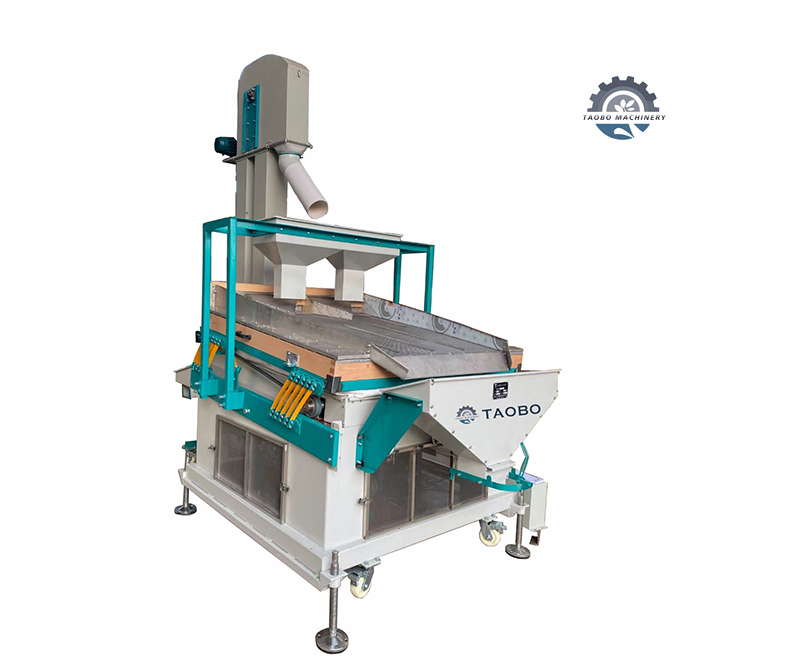
In addition to air-screen cleaning machines, destoners and gravity separators can also remove impurities from chia seeds.
Industry Standard Cleaning Process (Export Grade)
Feeding → Primary Cleaning Screen → Air Screen → Fine Grading Screen → Gravity Destoner → Magnetic Separator → Color Sorter → Finished Product Warehouse
After cleaning, the following results can be achieved:
Purity ≥99.8%
Free of stones, soil, impurities, and mold
Meets food-grade/export standards
Applicable Materials (Covering Grains, Oilseeds, Legumes, and Miscellaneous Grains)
1. Legumes: Chickpeas, soybeans, mung beans, red beans, black beans, kidney beans, lentils, broad beans, chia seeds, quinoa, etc.
2. Grains: Wheat, barley, oats, rice, corn, sorghum, millet, highland barley, etc.
3. Oilseeds: Rapeseed, peanuts, sesame, sunflower seeds, flaxseed, etc.
4. Vegetable Seeds, Medicinal Herb Seeds, Forage Seeds: Cabbage seeds, radish seeds, alfalfa seeds, medicinal herb seeds, etc.
Post time: Mar-11-2026