Turkey is one of the world’s major chickpea producers, primarily growing the Kabuli variety, concentrated in the semi-arid Anatolian interior. In recent years, the planting area has been approximately 500,000-600,000 hectares, with stable yields of 475,000-605,000 tons. The 2024/25 yield was 575,000 tons, and is projected to reach 605,000 tons in 2025, making it Turkey’s leading soybean crop. The following is a detailed explanation from a core perspective:
I. Core Planting Areas and Distribution
The main producing areas are concentrated in the low-humidity, semi-arid central and southeastern Anatolia. Ranked by yield share:
Ankara: Approximately 16.2%, the largest producing area, with soil and climate well-suited to the Kabuli variety.
Yozgat: Approximately 12.5%, a traditional main producing area, performing excellently under rainfed conditions.
Konya: Approximately 8.8%, with stable yields achieved through the cultivation of drought-resistant varieties.
Other important producing areas: Karaman, Adıyaman, Çorum, Kayseri, etc., accounting for over 30% in total.
II. Varieties and Crop System
Main Varieties: Primarily Kabri type, with large seeds and shallow seed coats, suitable for both export and domestic consumption. Drought- and disease-resistant varieties such as Azkan, Gökçe, Seçkin, and Menemen are promoted, developed by the Turkish Ministry of Agriculture and Forestry’s breeding project, suitable for rain-fed areas.
Crop System
Sowing: Mainly spring sowing, March-April, sowing depth 3-5 cm, row spacing 30-40 cm, plant spacing 10-15 cm, sowing rate 8-12 kg/mu.
Harvesting: Harvesting from June to August, when the lower leaves fall and the pods turn yellow and harden, mainly by machine, with manual assistance from small-scale farmers.
Crop rotation: Rotate with wheat, barley and other grasses, avoid continuous cropping with legumes, and reduce the risk of soil-borne diseases (such as wilt and root rot).
Post-harvest Cleaning and Processing of Turkish Chickpeas (Core Quality Cleaning Steps)
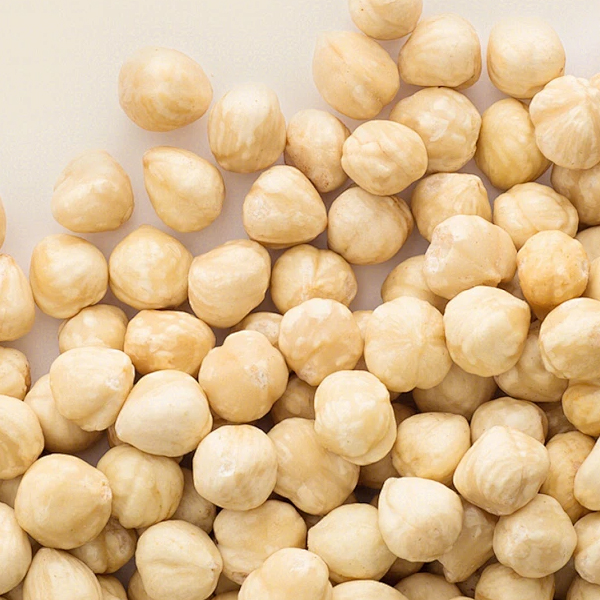
Post-harvest cleaning of Turkish chickpeas is primarily mechanized. Small-scale farmers use “simple machinery + manual assistance,” while large-scale farms/processing enterprises are equipped with complete cleaning and processing lines. The core objective is to remove impurities, shriveled, broken, and insect-damaged chickpeas, selecting uniformly sized marketable beans. The cleaning process is adapted to both export and domestic consumption needs. The standard process is as follows: Primary Cleaning: Threshing and Initial Impurity Removal After manual/mechanical harvesting, chickpeas are threshed. First, a wind-screen cleaner removes large impurities (straw, clods of soil, remaining pods) and light impurities (shriveled shells, dust). Simultaneously, a blower separates lighter empty beans and broken leaves, initially improving cleanliness.
Secondary Cleaning: Gravity Grading + Sorting for Precise Impurity Removal
This is the core cleaning step in the local process. Large-scale processing enterprises mostly use chickpea-specific gravity separators (adapted to the size and specific gravity characteristics of chickpeas). By adjusting the screen aperture, fan airflow, and gravity table inclination, triple separation is achieved:
Removal of irregularly shaped chickpeas (oversized/undersized);
Separation of insect-damaged, shriveled, and moldy chickpeas (those with a lower specific gravity than normal seeds are blown away by the fan);
Sieving out fine impurities (sand, gravel).
Local Capri chickpeas are relatively large, so the screen aperture is typically adjusted to 8-10mm to ensure uniform seed size.
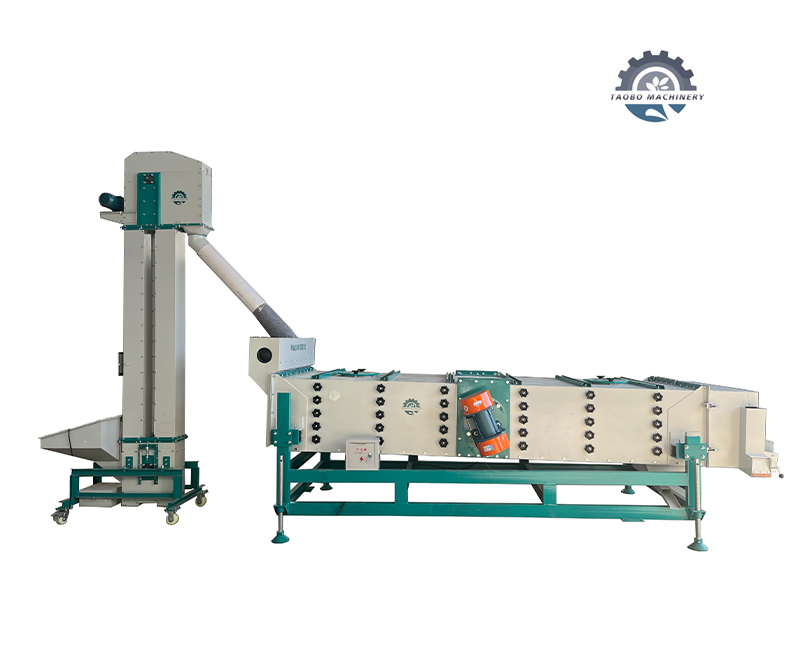
Air-screen cleaners are fundamental cleaning equipment in bean processing, used as the first step in almost all bean cleaning lines. They combine the principles of screen size selection and air-force separation by a blower to efficiently separate obvious impurities in beans that are irregularly sized or vary significantly in weight. They offer high cleaning efficiency, are easy to operate, and are suitable for primary cleaning by small farmers and small processing plants, as well as serving as a pre-processing step in large-scale processing lines.
Core Function (for Legumes)
Sorting by Size: Removes impurities and seeds of mismatched sizes.
By changing to specialized sieves with different aperture sizes (suitable for different legumes: 8-10mm for chickpeas, 3-5mm for lentils, 6-8mm for kidney beans), three types of size separation are achieved:
Undersize: Removes small impurities smaller than normal-sized seeds (sand, gravel, broken beans, shriveled pods, weed seeds);
Oversize: Removes large impurities larger than normal-sized seeds (straw, pod residue, clods of earth, weed stems, misshapen large beans);
Retained Seeds: Retains standard-sized legume seeds, laying the foundation for subsequent precise cleaning.
Separation by airflow: Removing light impurities and empty kernels. The equipment has a built-in adjustable speed fan. By controlling the airflow, it blows away light impurities (bean shells, dust, dried vegetable leaves, weed seeds) that are much lighter than normal kernels in the beans. At the same time, it separates some empty kernels and insect-damaged half kernels (very light inferior kernels), thus initially improving the cleanliness of the beans.
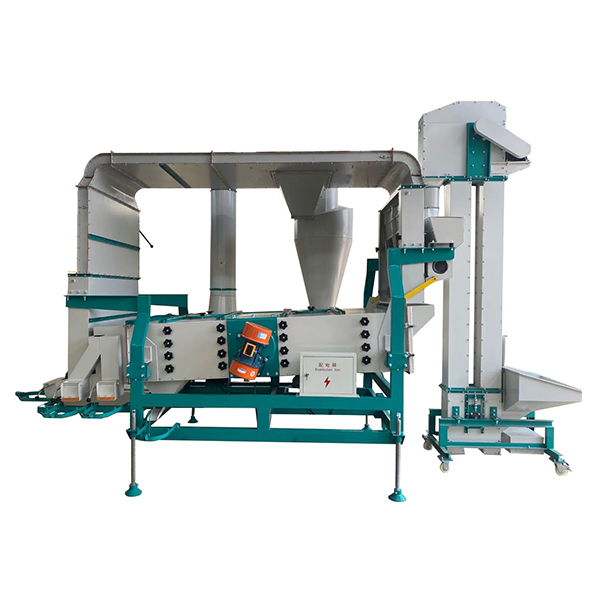
Gravity separators are high-end cleaning equipment for beans, primarily utilizing the principle of “gravity separation.”
Core Function (for beans):
Separating inferior bean kernels of the same size but different specific gravities.
This is the core function of the gravity separator. It precisely separates beans that are “of acceptable size but of poor quality” remaining after air sieving:
Removing insect-damaged, moldy, shriveled, and sprouted kernels: These kernels are the same size as normal beans, but due to internal tissue damage, moisture loss/moldiness, their specific gravity is much lower than normal kernels. They are lifted by airflow and separated by vibration.
Removing immature kernels: Green and small beans with insufficient pulp filling, which meet the size standard but have a lower specific gravity, are separated by the gravity separator, ensuring that the remaining kernels have a consistent plumpness.
Separating Hidden Impurities of the Same Size and High Specific Gravity: Beans are prone to contain sand, pebbles, and lumps of soil that are the same size as the beans (e.g., chickpeas from semi-arid regions of Turkey are prone to contain hard lumps of sand). These impurities are the size of the air sieve and cannot be removed. Moreover, their specific gravity is much higher than that of the beans. They will be precisely separated at the bottom of the gravity table, preventing sand and gravel from causing wear and tear on subsequent processing (polishing, packaging) equipment, while also improving food safety and export safety.
Post time: Jan-28-2026