
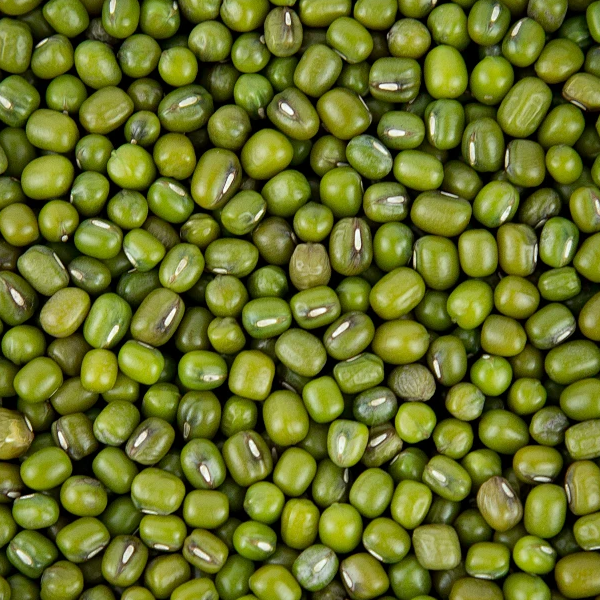
Mung beans are a core export crop for Uzbekistan, with a continuously expanding planting scale and stable output growth. Exports are mainly to China and Kazakhstan. Specific details are as follows: Planting Scale and Distribution: The planting area has been increasing year by year, reaching approximately 100,000-120,000 hectares in 2024/25. The main producing areas are Tashkent Region, Samarkand Region, Bukhara Region, and the Fergana Basin. In the west (Bukhara and Samarkand), small-grain, high-quality sprout beans are the main crop, while in the east (Fergana), commercial beans are the main crop. The planting method is irrigation via furrows, with mechanized planting used in some areas.
Production Performance: Production in 2023/24 was approximately 150,000-160,000 tons. In 2024/25, due to favorable weather conditions (low summer temperatures and no rainfall during the harvest period), production increased to 180,000-200,000 tons, with a yield of approximately 1.5-1.8 tons/hectare. Yields in high-quality western production areas reached 2.7 tons/hectare, while yields in mechanized eastern planting areas were approximately 1.2 tons/hectare. Impurity and breakage rates were relatively high.
Varieties and Uses: Both local and introduced Chinese varieties coexist. Small-grained varieties in the west (1000-grain weight approximately 35-40 grams) are used for sprout bean exports (accounting for 55% of exports), while large-grained varieties in the east are used for commercial bean exports. From January to November 2025, exports to China reached 85,500 tons, accounting for nearly 80% of total exports, making China a major global supplier of mung beans.
Key advantages: low planting cost (water-saving compared to cotton, requiring only 2 waterings), short growth cycle (60-70 days), can be used as a filler crop to improve land utilization, farmers have high enthusiasm for planting, and export profits are considerable.
The Core Significance of Impurity Removal in Legumes Uzbekistan faces a significant impurity problem in its legumes (especially mung beans) (straw, shriveled husks, stones, soil, and broken grains can account for 8%-15%). Impurity removal is crucial for export trade, quality assurance, and profit improvement, specifically: Export Market Access Guarantee: Markets such as China and Kazakhstan have strict standards for mung bean impurity content (≤1%), breakage rate (≤0.5%), and purity. Impurity removal is key to overcoming these market barriers. One of the core reasons for the increase in mung bean exports in 2024/25 was the introduction of small-scale cleaning equipment by cooperatives, which improved the impurity compliance rate.
Quality and Food Safety Improvement: Removing stones and soil prevents mold growth during storage (risk of aflatoxin), and removing broken grains and shriveled shells improves edible and processing quality. Cleaning sprouts reduces the rate of rotten sprouts, increasing export prices.
Significant Economic Gains: Impurities reduce purchase prices by 10%-15%, but cleaning increases prices by 20%-30%. Storage losses decrease from 10%-15% to below 3%, increasing profits for smallholders and cooperatives by 25%-40%, further promoting the expansion of planting scale.
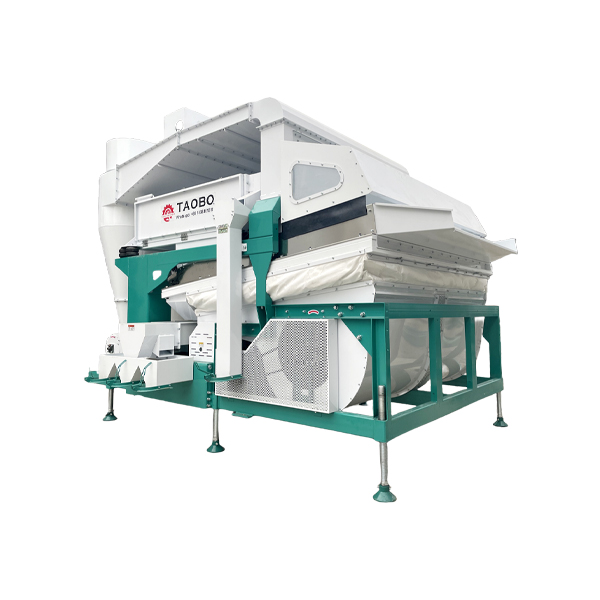
Suitable for Planting and Export Characteristics: Wind-screen cleaning machines are suitable for smallholder planting areas in the west, while combined wind-screen + gravity + destoning + grading equipment is suitable for mechanized planting areas in the east. Cleaning allows for grading of sprouts/marketable beans, increasing export added value and expanding into European and Southeast Asian markets.
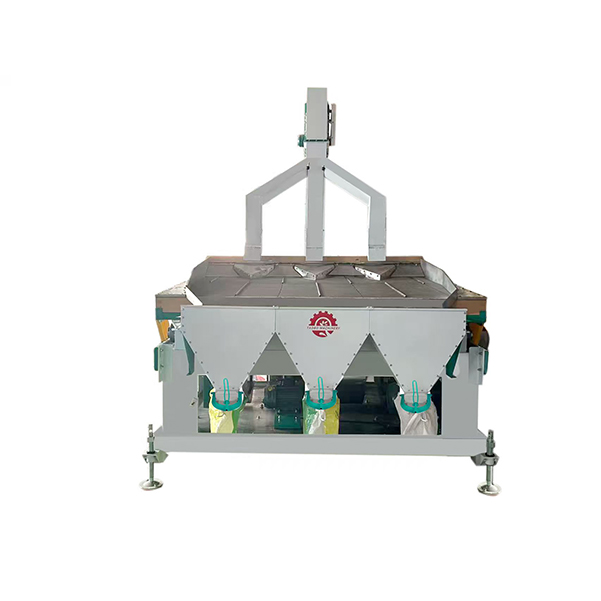
The air-screen gravity separator is a combined grain cleaning device integrating air separation, screening, and gravity separation. Its core function is to remove impurities based on the aerodynamic characteristics, particle size, and density differences of the materials. It is suitable for various beans and grains such as soybeans, mung beans, and kidney beans, achieving a purity of over 98.5% and a breakage rate of ≤0.2%. It is a core piece of equipment for export and high-quality processing.
Core Working Principle (Three-Step Synergistic Impurity Removal):
Air Separation for Light Impurities: The fan generates an adjustable airflow (wind speed 3-8m/s), which separates low-density impurities such as dust, straw, and shriveled husks through the suction duct/sedimentation chamber. Light impurities are carried by the airflow into a cyclone dust collector for centralized discharge, avoiding secondary pollution. It is suitable for different crop grain densities.
Screening to remove large/small impurities: Multi-layer vibrating screens (perforated screens/woven screens) classify particles by size. The upper layer removes stones and large straws, the middle layer separates qualified grains from sand and broken particles, and the lower layer collects fine impurities. Screen holes are replaceable (e.g., 6-8mm round hole screen for soybeans, 3-5mm long hole screen for mung beans) to adapt to different crop particle sizes.
Specific gravity separation: A vibrating specific gravity table, combined with bottom airflow, separates materials of different densities into strata—full grains (high density) sink and move upwards along the screen surface, while shriveled, moldy, and insect-damaged grains (low density) float and slide downwards, achieving precise sorting; dual specific gravity table models can perform secondary sorting for even higher precision.
Post time: Jan-21-2026