
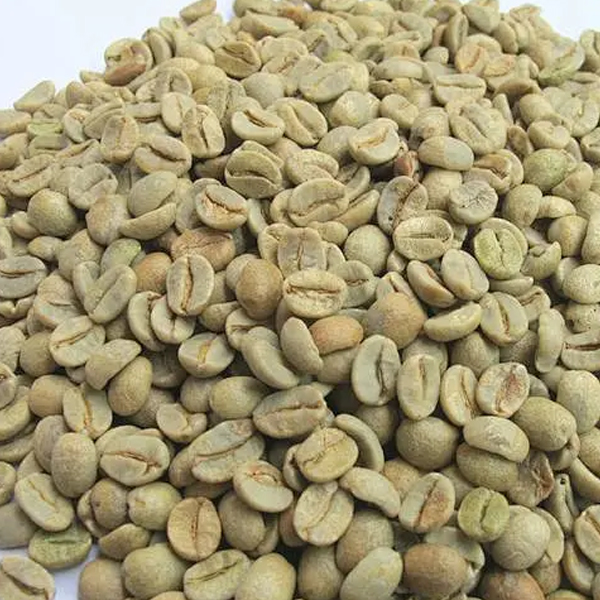
Peru and Mexico both rank among Latin America’s premier specialty coffee-producing regions. Both center their production on small-scale farming, organic practices, and high-altitude Arabica varieties; however, they exhibit distinct differences in terms of production volume, growing regions, flavor profiles, coffee varieties, and industry models.
I. Basic Production Volume and Scale (2024/25 Season)
Peru
Production Volume: Approximately 3.88 million bags (60 kg/bag); ranked 9th globally.
Cultivated Area: Approximately 420,000 hectares; average yield of 721 kg/hectare.
Producers: Over 80% are smallholder farmers with holdings of less than 5 hectares, relying heavily on cooperatives.
Export Positioning: A leading global supplier of premium organic and Fair Trade coffee, primarily targeting specialty markets in Europe and North America.
Mexico
Production Volume: Approximately 3.87 million bags (60 kg/bag); ranked 10th globally.
Cultivated Area: Approximately 500,000 hectares; average yield of 630 kg/hectare (slightly lower than Peru).
Producers: Approximately 500,000 growers; 85% are smallholders with less than 2 hectares, with family farms playing a dominant role.
Export Positioning: The largest supplier to North America (specifically the U.S.), catering to both commercial and specialty coffee markets.
II. Core Producing Regions and Growing Environments
Peru (High-Altitude Andean Cloud Forest Zone)
Core Producing Regions (Accounting for 85% of National Production)
San Martín: Largest area (22.5%), highest production volume
Junín: Chanchamayo is the most renowned district; accounts for 40% of national production
Cajamarca: Highest yield per hectare (1,130 kg/ha); exceptional quality
Cusco: High-altitude region in the south; a hub for organic specialty coffees
Growing Conditions
Elevation: 1,200–2,200 m (among the highest in the world)
Climate: Andean cloud forest environment; significant diurnal temperature variation; average annual temperature of 18–22°C
Soil: Volcanic humus-rich soil; excellent drainage and high organic matter content
Cultivation Method: Shade-grown (intercropped with fruit trees); leading global rates of organic certification
Mexico (Southern Sierra Madre Mountains)
Core Producing Regions (Accounting for 91.4% of National Production)
Chiapas: Largest producing region (37%); located near the Guatemalan border; produces coffee of the highest quality
Veracruz: Second-largest region (30%); primarily situated at low to medium elevations
Oaxaca: A hub for specialty coffees; characterized by clean flavor profiles
Puebla: High-altitude region known for premium quality coffee
Growing Conditions
Elevation: 600–1,800 m (generally lower than in Peru)
Climate: Tropical mountain climate; abundant rainfall and high humidity
Soil: Volcanic ash soil; fertile, though prone to compaction in certain areas
Cultivation Method: Traditional shade-grown method; recent promotion of disease-resistant new varieties (e.g., Oro Azteca)
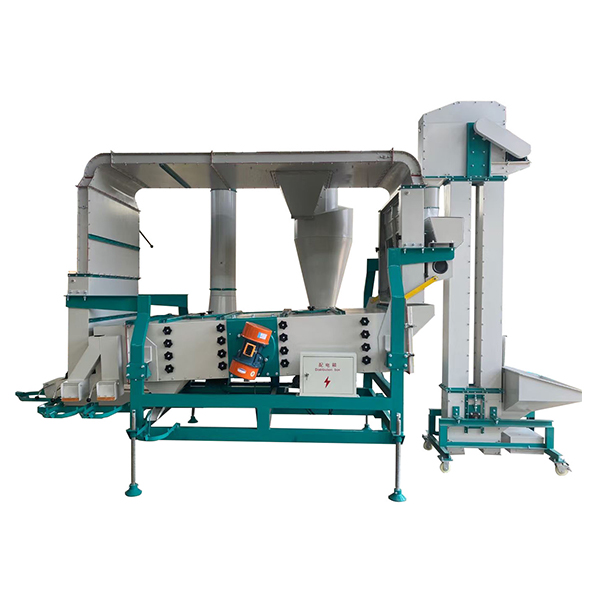
In the processing and cleaning of coffee beans, the air-screen cleaner and the gravity separator are the two most critical pieces of equipment for impurity removal and grading. Their respective functions are entirely distinct:
One handles the removal of light impurities and size grading; the other handles density-based separation and the removal of defective beans. Typically, the process involves air-screen cleaning first, followed by gravity separation.
I. Air-Screen Cleaner (Air-Screen Machine / Cleaning Sieve)
Primary Functions
Air Separation Section: Removal of light impurities
Blows away: Empty shells, bean husks, broken bean fragments, dust, stalks, lint, and light, shriveled beans.
Removes—in a single pass—any foreign matter that is significantly lighter in weight than normal coffee beans.
Screening Section: Grading by particle size + Removal of large and small impurities
Screens out: Stones, clumps of soil, large stems, and large foreign objects (coarse impurities).
Screens out: Broken beans, fine sand, and small impurities (fine impurities).
Simultaneously grades the coffee beans into 2 to 3 size categories (large, medium, and small).
In Summary:
Initial Coarse Cleaning: Removes light impurities as well as large and small foreign objects, and performs a preliminary size grading, thereby preparing the beans for subsequent processing by the gravity separator.
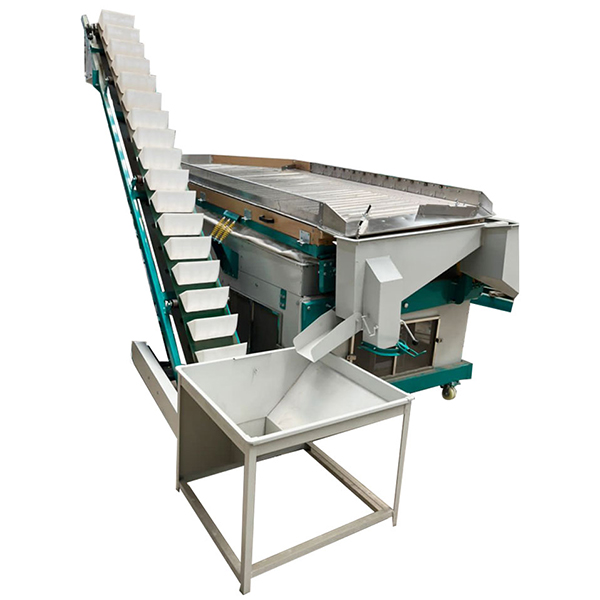
II. Gravity Separator (Gravity Destoner / Density Sorter)
1. Primary Function
Removes impurities that are similar in size to coffee beans but differ in weight.
Removes contaminants that cannot be screened out by an air-screen separator:
Stones, clumps of soil, and glass shards (which are heavier than coffee beans)
Insect-damaged beans, moldy beans, shriveled beans, and “dead” beans (which are lighter than coffee beans)
Sorts coffee beans based on density (specific gravity) to refine quality:
Separates out high-quality beans that are plump, mature, and high in density
Isolates inferior beans that are low in density, immature, or have undergone abnormal fermentation
Enhances consistency in the subsequent roasting process:
Beans with uniform density absorb heat more evenly during roasting, significantly reducing the likelihood of under-roasting or scorching.
Post time: Apr-15-2026