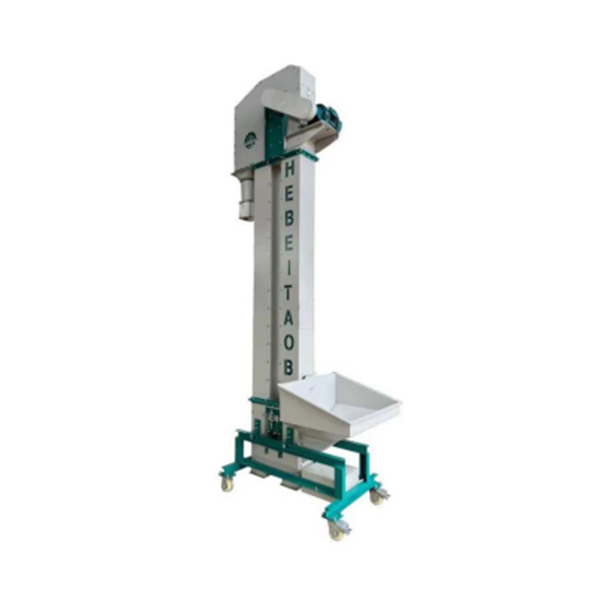
In the sesame cleaning process, the core function of a bucket elevator is to achieve vertical or inclined conveying of sesame seeds. It is a key conveying device connecting various stages of sesame cleaning, and its specific functions can be summarized as follows:
1. Connecting cleaning processes and improving conveying efficiency: Sesame cleaning typically involves multiple processes such as air screening, gravity separation, and magnetic separation. There are often height differences between the inlet and outlet of each piece of equipment. A bucket elevator can stably and continuously convey sesame seeds processed in the previous process to the inlet of the next cleaning equipment, avoiding the inefficiency of manual handling and material loss, forming an automated cleaning production line. For example, sesame seeds screened by the air screening machine fall into the hopper, and the bucket elevator can lift them to the inlet of the gravity separator to continue the destoning process.
2. Reducing breakage and impurity contamination during sesame conveying: Sesame seeds are small and lightweight. If conventional screw conveyors are used, problems such as seed breakage, dust generation, and secondary contamination of impurities can easily occur. Bucket elevators transport sesame seeds by scooping, lifting, and unloading them. The well-sealed buckets reduce friction and collision between the sesame seeds and the conveying components, thus lowering the breakage rate. At the same time, they prevent external dust and impurities from entering during the conveying process, ensuring the cleanliness of the sesame seeds before cleaning.

3. Adapting to the Process Layout Requirements of Sesame Cleaning: Sesame cleaning equipment often requires a compact space design. Bucket elevators have a small footprint and can complete long-distance vertical conveying, effectively saving workshop floor space and helping to optimize the overall layout of the cleaning production line. They are especially suitable for the workshop planning of small and medium-sized sesame processing enterprises.
4. Controlling Conveying Volume and Ensuring the Stability of the Cleaning Process: The conveying volume of the bucket elevator can be controlled by adjusting the motor speed, etc., precisely matching the processing capacity of subsequent cleaning equipment. This avoids equipment blockage due to excessive feeding or equipment idling due to insufficient feeding, ensuring the stable operation of each stage of sesame cleaning.
The core working principle of a vertical conveyor elevator is to continuously scoop and lift materials using circulating buckets, and then unload them through a specific method, achieving vertical or steep-angle conveying. The specific working process can be divided into three key stages: **Scooping and Feeding Stage:** The bottom buckets of the elevator extend deep into the material bin (or the discharge port of the previous process). As the traction component (chain or belt) drives the buckets in a cyclical motion, the buckets in the downward section scoop up granular materials like sesame seeds from the material pile.
Given the small size and light weight of sesame seeds, shallow buckets are typically selected to avoid over-scooping and overflow, while also reducing material collision and breakage.
Vertical Lifting Stage:The buckets scooping up material move upward with the traction component, completing the vertical conveying process within the enclosed casing. The casing prevents sesame seeds from flying and scattering during the lifting process and also prevents external impurities from contaminating the material, ensuring the cleanliness of the conveying process.
The conveying speed in this stage can be controlled by adjusting the motor speed to match the feeding requirements of subsequent cleaning equipment
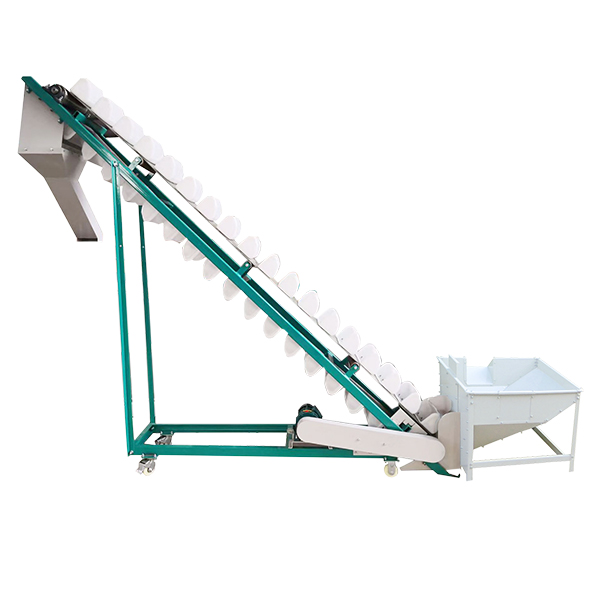
In grain and bean (such as sesame and soybean) cleaning and conveying production lines, inclined elevators are a type of equipment defined by their conveying angle, while skirted elevators are a special type of belt-type elevator designed based on their conveyor belt structure.
Inclined Elevator
Core Definition: Refers to material lifting equipment with an inclined conveying direction (generally between 15° and 75°). It is not a specific model but a broad category.
Common Types: Can be belt-type, scraper chain-type, skirted belt-type, etc. In grain and bean conveying, inclined elevators are often used for short-distance, low-height-difference process connections, such as conveying material from the outlet of an air-screen cleaner to the inlet of an adjacent magnetic separator.
Applicable Characteristics: Compared to vertical bucket elevators, inclined elevators offer a gentler conveying speed and lower grain breakage rate; however, the inclination angle cannot be too large, otherwise material slippage can easily occur. Generally, when the inclination angle exceeds 30°, it is combined with structures such as skirts and partitions to prevent material slippage.
Skirted Elevator
Core Definition: Specifically refers to a belt elevator that uses a conveyor belt with skirted partitions. It is a common type of inclined conveyor and a specialized model designed for easily slippery materials.
Structural Features: The conveyor belt surface is fitted with corrugated rubber skirts, and transverse partitions are installed between the skirts to form enclosed small troughs, effectively preventing materials from sliding down during inclined conveying.
Applicable Scenarios: Ideal for small, lightweight, and easily rolling materials such as sesame seeds and rapeseed. It can stably convey materials at large inclination angles of 30°-70°, combining the low-breakage advantages of inclined conveying with increased conveying height. It is widely used in short-to-medium distance lifting sections of cleaning production lines.
Post time: Dec-23-2025