
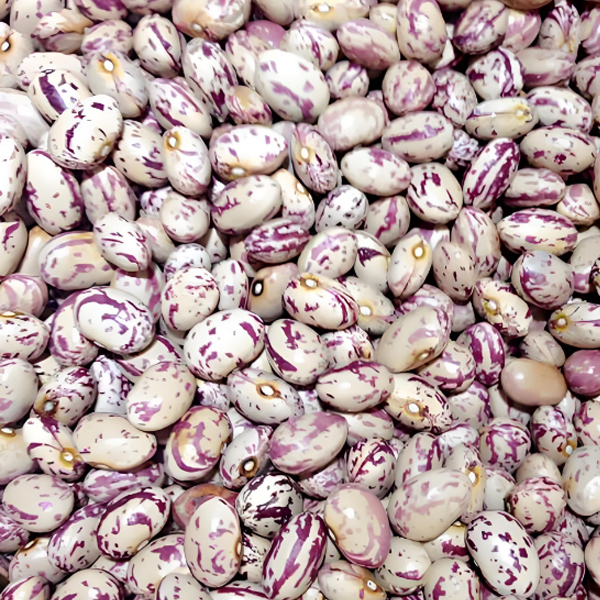
1. Pinto beans are one of the most widely consumed types of dry beans globally. They derive their name from their seed coats, which feature an ivory-colored background marked with irregular reddish-brown spots or streaks. Once mature and cooked, these spots fade, leaving the bean with a uniform light brown hue and a soft, creamy, and floury texture.
2. Classification: An annual herbaceous plant belonging to the Phaseolus genus within the Leguminosae family, it is a self-pollinating species. The dried seeds are typically oval or kidney-shaped, with a diameter usually ranging from 8 to 10 mm.
3. Origin: Native to south-central the Americas (specifically the regions of Mexico and Peru) dating back 7,000 years, the bean was introduced to Europe during the Columbian era and subsequently spread across the globe.
4. Morphology: The plants are classified into two growth habits: bush (upright) and vine (climbing). The pods are slender and elongated, with each pod containing 4 to 6 seeds. After harvest, the beans must be thoroughly dried to a moisture content of less than 12% to facilitate storage and subsequent cleaning and processing.
Major Global Producing Countries and Cultivation Characteristics
1. Major Producing Regions: The United States (specifically North Dakota, Idaho, and Washington) and Mexico constitute the world’s two core production hubs, accounting for a combined output of over 60% of the global total. These are followed by Argentina, China, Canada, and Ethiopia.
2. Growth Conditions: The crop thrives in warm, dry climates and is intolerant of waterlogging. The optimal temperature range for growth is 20–28°C, with a growing season lasting 90–110 days. It is best suited for cultivation in well-drained sandy loam soils and is frequently rotated with corn or wheat (utilizing nitrogen fixation via root nodules to improve soil quality).
3. Harvesting and Drying: Following mechanical harvesting, the crop must be dried under ventilated conditions to reach a safe moisture level; this prevents mold growth and insect infestation and serves as a prerequisite for subsequent impurity removal.
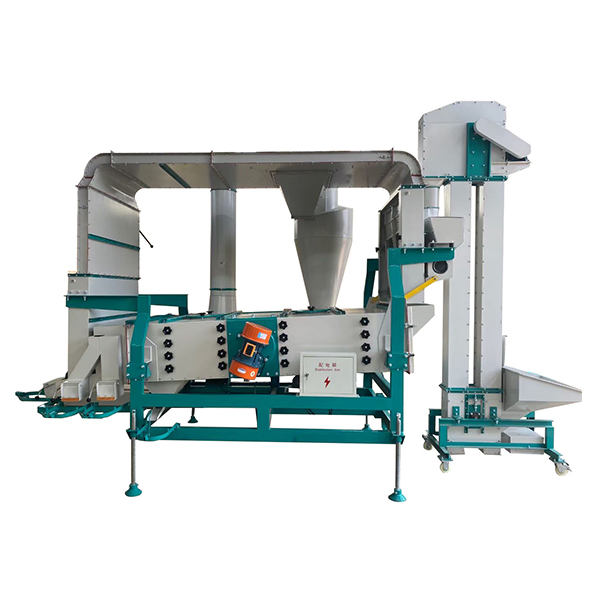
I. The Role of the Air-Screen Cleaner (Combined Air-Screen Grain Cleaner) in Spotted Bean Cleaning
The air-screen cleaner serves as the core equipment for the initial cleaning and purification of spotted beans. It simultaneously performs both air separation (removing light impurities) and screen separation (removing physical impurities), constituting a complete process encompassing both coarse cleaning and fine selection.
1. The Role of the Air Separation Section (Updraft / Recirculating Air System)
Removal of light impurities: Straw, bean leaves, dust, shriveled beans, broken hulls, insect-damaged hollow grains, weed seeds, and other light, airborne debris.
Principle: Utilizes differences in air buoyancy; spotted beans, being denser, fall rapidly, while light impurities are drawn away by the airflow and collected in a settling chamber or dust collector.
Key Significance for Spotted Beans:
Removes shriveled and insect-damaged beans, thereby enhancing the uniformity of the commercial bean product.
Reduces dust and impurity content, facilitating subsequent grading, packaging, and export inspection processes.
2. The Role of the Screen Body Section (Multi-Layer Vibrating Screens)
The screen surfaces typically consist of three or four layers, performing the following functions in sequence:
Upper Layer: Coarse Impurity Screen
Removes impurities larger than the spotted beans: Stones, clods of earth, bean pods, straw segments, plastic fragments, etc.
Prevents clogging of downstream equipment, thereby protecting the grading screens, gravity separators, and packaging machines.
Middle Layer: Fine Selection Screen (The Critical Layer)
Separates spotted beans from medium-sized impurities based on length and width.
The screen perforations are typically sized to match the specific grain size of the spotted beans, allowing only qualified beans to pass through while retaining oversized impurities.
Lower Layer: Fine Impurity Screen
Removes impurities smaller than the spotted beans: Broken beans, fine sand, small soil particles, small pebbles, and tiny weed seeds.
Significantly reduces sand content, helping to meet export grain standards.
3. The Overall Positioning of the Air-Screen Cleaner within the Spotted Bean Processing Workflow
Functions Performed: Removal of coarse impurities + Removal of fine impurities + Removal of light impurities + Preliminary removal of shriveled beans.
Output: Clean spotted beans—essentially free of impurities—ready for subsequent grading or gravity separation.
It serves as the primary workhorse equipment for the entire process, bridging the gap from “coarse cleaning” to “purified grain.”
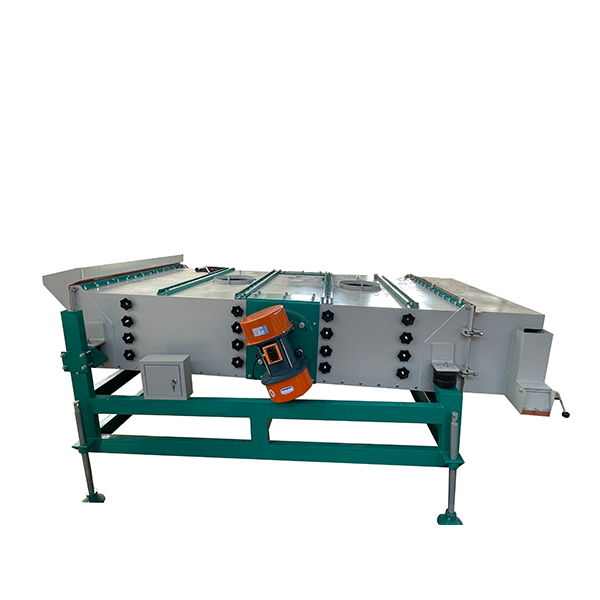
II. The Role of Grading Screens (Bean Graders / Circular Vibrating Screens) in Pinto Bean Cleaning
The Sole Core Task of the Grading Screen:
To separate pinto beans into different grades based on particle size, thereby achieving standardized, commercial-grade sorting.
It is not responsible for impurity removal (impurities are removed by the preceding air-screen cleaner); its function is strictly size grading.
1. Working Principle
Utilizes multiple layers of circular or square screens with varying mesh apertures.
As the pinto beans roll and slide across the screen surfaces, they are automatically graded according to their diameter or width.
Large-sized beans exit from the top screen layer; medium-sized beans from the middle layer; and small-sized beans from the bottom layer.
2. Specific Applications for Pinto Beans
Separating Large Beans:
Suitable for high-end export markets, food processing, and as raw material for canned beans.
Separating Standard Medium Beans:
Represents the mainstream market specification; characterized by uniform quality and commanding the highest market price.
Separating Small Beans / Broken Beans:
Can be utilized for animal feed, further processing, or as by-products.
Standardizing Grain Size to Enhance Commercial Value:
Export-grade pinto beans require uniform grain size; the grading screen is a critical piece of equipment for meeting commercial inspection standards and fulfilling foreign trade contracts.
Prevents “mixed-size packaging,” which can lead to price reductions or product returns.
3. Process Positioning of the Grading Screen
Placed downstream from the air-screen cleaner:
Impurity removal occurs upstream, followed by size grading downstream.
Output: Clean, size-graded finished pinto beans.
Post time: Mar-17-2026