
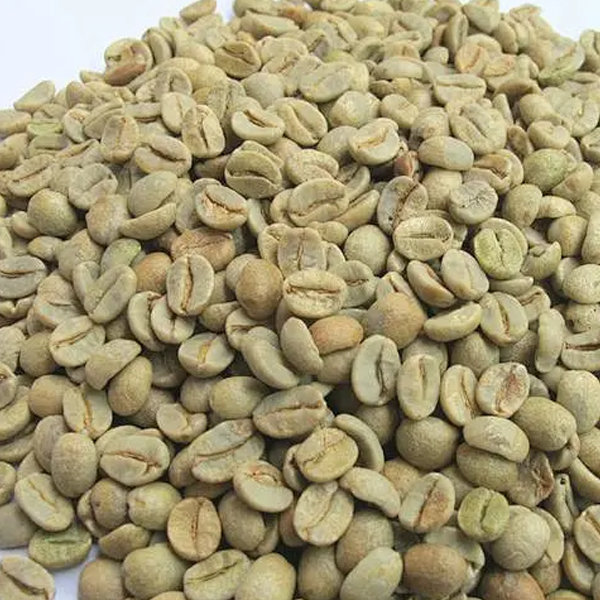
I. Overview of Coffee Cultivation in Brazil
1. Overall Scale and Industry Status
Brazil is the world’s leading coffee producer, with a total cultivation area of approximately 2.25 million hectares. Coffee is grown across 17 states, with seven core states accounting for 98% of national output. Total production consistently represents around 35% of the global total; the country cultivates both Arabica and Robusta on a large scale, possessing production capacity for both specialty beans and raw materials for industrial instant coffee.
Production follows a biennial cycle (alternating between high-yield and low-yield years). Arabica output fluctuates significantly due to drought and frost, whereas Robusta is highly resilient and offers stable yields.
2. Key Production Regions by Variety
(1) Arabica (Accounts for 65%–70% of total output; primary source for specialty coffee and commercial blends)
Major producing states: Minas Gerais (the heart of Brazilian coffee, accounting for over 60% of the country’s Arabica), São Paulo, Paraná, and Bahia.
Grown on tropical plateaus at altitudes of 700–1,200 meters; soil is red sandy loam; distinct wet and dry seasons.
Mainstream varieties: Mundo Novo, Bourbon, Catuai, and Caturra. Flavor profiles feature low acidity and nutty/chocolatey sweetness, making them ideal for milk-based coffee and blends.
Cultivation model: Dominated by large-scale, mechanized farms equipped with harvesting machinery; the natural (dry) processing method is the most common.
(2) Robusta / Conilon (Accounts for 30%–35% of output; raw material for instant and blended coffee)
Major producing state: Espírito Santo (produces 70% of Brazil’s Robusta and supplies 20% of the global Robusta raw material market).
Grown at lower altitudes (200–600 meters); the variety is heat-tolerant, resistant to coffee leaf rust, and thrives in poor soil; yields per hectare are far higher than those of Arabica.
70% of Robusta plantations are equipped with irrigation systems, ensuring highly stable yields; characterized by high caffeine content and intense bitterness, it is primarily used for instant coffee.
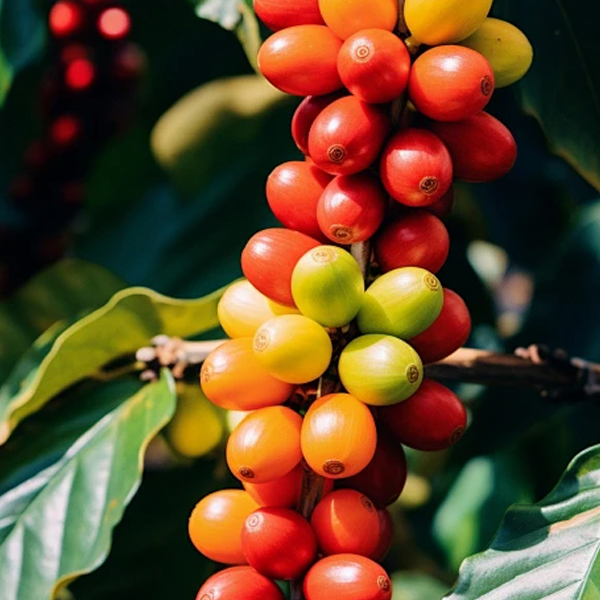
II. Comprehensive Coffee Bean Impurity Removal Equipment
Categorized by processing sequence into five main stages—preliminary coarse cleaning, heavy impurity removal, grading and fine selection, optical sorting, and auxiliary conveying—the complete production line equipment list and functions are as follows:
(I) Front-end Pre-processing Coarse Cleaning Equipment (Removal of large debris and lightweight field impurities)
Preliminary Cleaning Screen
Function: Serves as the initial coarse screening stage for incoming material; removes oversized debris such as twigs, withered leaves, soil clumps, twine, large stones, and fruit stalks; stabilizes feed flow to prevent downstream equipment from clogging or sustaining impact damage.
Application: The first processing step for incoming Brazilian natural-process coffee cherries or parchment coffee.
Air-Screen Cleaner
Principle: Combines multi-layer vibrating screen grading with negative-pressure air suction.
Impurity Removal: Dust, bean skins, shell fragments, shriveled/lightweight beans, and debris; simultaneously performs preliminary separation of oversized beans and undersized broken beans.
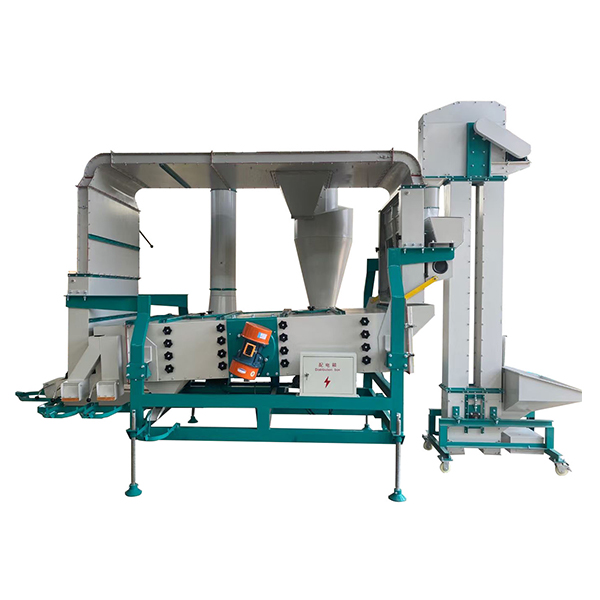
(II) Core Equipment for Heavy Impurity Removal
Specific Gravity Destoner
Principle: Uses airflow fluidization combined with vibration-based stratification. Stones and soil clumps, being denser than coffee beans, sink and are discharged, while clean beans float and exit via the main stream.
Essential Equipment: Brazilian highland coffee often contains soil; natural-process beans frequently carry sand and stones. Without a destoner, these contaminants can damage hulling drums and crush a significant number of beans.
(III) Grading and Density Sorting Equipment (Improving uniformity and removing defective beans)
Coffee Bean Grading Screen
Sorts beans by size; separates broken beans, underdeveloped small beans, and oversized/misshapen beans. Uniform bean sizing facilitates subsequent color sorting and ensures even roasting.
Specific Gravity Separator
Separates beans based on density differences: removes hollow shells, fermented/spoiled beans, insect-damaged beans, and immature/light beans, retaining only plump, high-density, quality beans. Crucial for Brazilian natural-process coffee, which often contains hollow or shriveled beans.
Coffee Bean Polisher
Polishes the surface of green beans to remove adhering soil, black spots, and residual mucilage, enhancing visual luster; a standard feature for export-grade coffee.
(IV) Terminal Optical Sorting Equipment (Final removal of off-color defects)
Specialized Coffee Color Sorter
Uses high-speed CCD cameras and AI algorithms for millisecond-level identification. Removes blackened/moldy beans, discolored (fermented) beans, insect-damaged beans, red skin fragments, off-colored stones, and plastic particles. Multi-channel models suit large-scale Brazilian processing plants (handling 10,000+ tons); offers >99% sorting accuracy and supports secondary re-sorting to recover good beans and minimize waste.
(V) Auxiliary Conveying Equipment
Bucket elevators, rotary airlocks, dust extraction systems, finished product bagging scales, and buffer silos. Enables fully enclosed, dust-free, continuous production; compatible with high-capacity, automated dry-processing lines in Brazil.
Post time: Jul-01-2026