
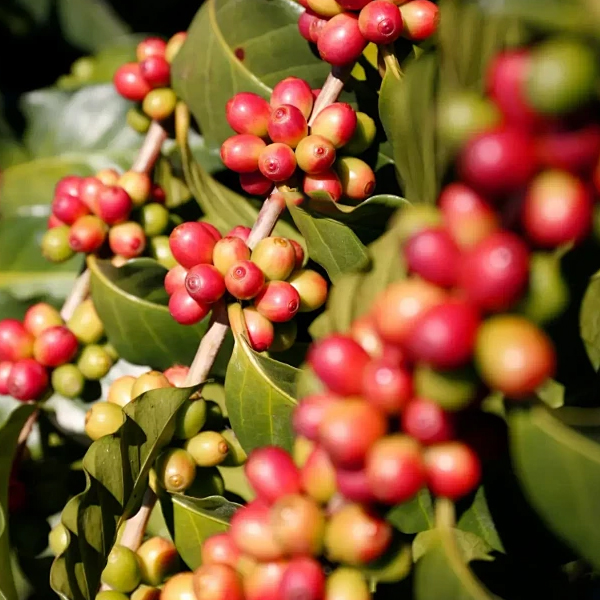
Peru is a significant global producer and exporter of coffee, which stands as the country’s primary agricultural commodity, trailing only the mining and fishing sectors. According to data from the U.S. Department of Agriculture (USDA) and Peru’s Ministry of Agrarian Development and Irrigation (MIDAGRI), Peru’s coffee cultivation spans approximately 427,000 hectares across 16 of the country’s 25 regions. For roughly 223,000 households—the vast majority being smallholder farmers—coffee production serves as their primary source of income. Cultivation is concentrated along the eastern foothills of the Andes and the transition zone toward the upper Amazon, mostly at altitudes between 900 and 2,000 meters. Notably, 75% of the coffee trees are grown at elevations above 1,000 meters; the cool, mountainous climate imparts a refined and balanced flavor profile to Peruvian coffee. Four major producing regions—Cajamarca (22%), San Martín (20%), Junín (19%), and Amazonas (15%)—collectively account for approximately 76% of the national output, with additional production occurring in the southern regions of Cusco and Puno.
In terms of production and exports, Peruvian coffee consists almost exclusively of the Arabica variety, with commercial volume measured in 60-kilogram bags. For the 2023/24 crop year, production reached approximately 4.2 million bags, with exports totaling about 4.06 million bags—a 16% year-on-year increase in production. Exports for the 2026/27 crop year are projected to reach approximately 4.55 million bags. In 2024, the value of coffee exports hit a record high of approximately $1.1 billion, reaching nearly 60 markets, with North America and Europe serving as the primary destinations. It should be noted that in recent years, Peru’s coffee sector has been affected by coffee leaf rust (*roya*) and anomalous weather patterns in certain areas. Consequently, the harvested area in some regions—specifically San Martín and Amazonas—is expected to shrink in 2025, leading to greater volatility in both the yield and quality of coffee produced by smallholder farmers. Overall, the characteristics of Peruvian coffee—namely its high-altitude cultivation, large production area, and a focus on exporting specialty-grade Arabica—necessitate stringent requirements during the processing stage regarding bean clarity, physical integrity, and visual grading.
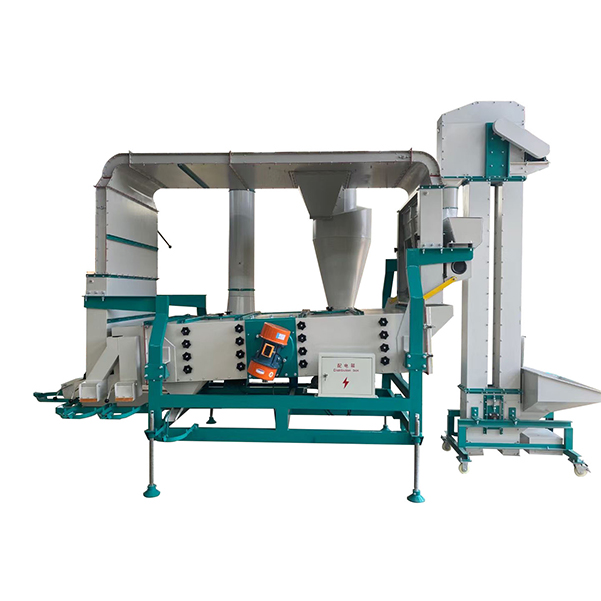
Peru’s coffee exports consist primarily of green coffee beans. Following harvest, the beans undergo hulling and polishing, then proceed to a cleaning and sorting stage designed to remove stones, soil clods, broken beans, insect-damaged beans, and other foreign matter, while also standardizing bean size. Common equipment used for this cleaning process includes the following:
First, the air screen cleaner (for coarse or primary cleaning). This machine operates through a combination of screening and air classification. Driven by an eccentric mechanism, the screen deck vibrates, causing the material to tumble and move forward across the surface. The upper screen layer traps stalks, large stones, and other foreign objects, while the lower layer allows fine soil particles to pass through. Simultaneously, a fan generates a directional airflow that extracts dust, lightweight impurities, and hollow or shriveled beans. For both parchment (hulled) and green (milled) coffee beans in Peru, this machine enables the rapid, high-volume removal of easily separable impurities at the intake stage, significantly enhancing product purity and reducing the workload for subsequent processing steps. It offers high throughput and a low breakage rate, serving as the first line of defense in a coffee cleaning line.
Second, the gravity separator (for destoning and precision sorting). This machine targets stones, sand, and soil clods that are similar in size to coffee beans but differ in specific gravity. It employs a three-in-one sorting method: fluidization via an upward airflow, vibration of the screen deck, and inclined conveyance. As the material enters the machine, a uniform upward airflow fluidizes the bed; denser particles—such as stones—sink to the screen surface and are directed toward a stone-discharge outlet, while the lighter, plump coffee beans float to the top and flow toward the product outlet. This process effectively removes heavy, similarly sized impurities that may have bypassed the air-screen cleaner. It is a critical step for ensuring that exported coffee beans are free of stones and debris, thereby eliminating food safety risks and achieving a purity level of 99.5% or higher.
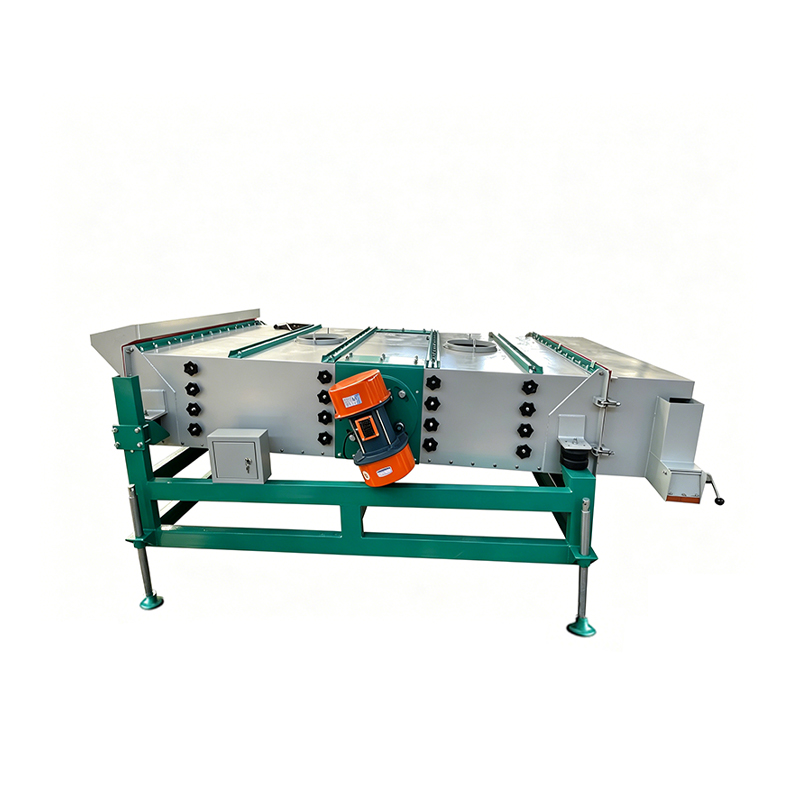
Third, the grading machine (for classification by bean size). Operating principle: Featuring multiple stacked screen layers with varying aperture sizes, the machine uses reciprocating vibration to move the product through each layer. The beans are sorted by size—categorized into large, medium, and small—and discharged through separate outlets. Outcome: This process ensures uniform sizing of cleaned coffee beans by removing broken or shriveled, undersized beans. The resulting product is consistent in size and visually appealing, allowing for grading-based pricing and significantly enhancing both product quality and market competitiveness.
Fourth, the color sorter (a precision processing step for high-end products): Operating principle: High-precision optical sensors detect color variations on the surface of the beans, and high-speed air nozzles blast away discolored or defective beans (such as moldy, insect-damaged, or off-colored beans). Outcome: This machine precisely removes the small number of discolored, moldy, or flawed beans that are difficult to eliminate during earlier processing stages. It serves as the final quality-control step for specialty coffee, ensuring visual uniformity and hygienic standards.
Fifth, the coffee bean polisher: This machine polishes the surface of the beans, giving them a smooth, lustrous appearance and enhancing their visual appeal; this step is typically performed after the cleaning and sorting process.
In the context of Peruvian coffee production—which is characterized by smallholder farming and a focus on specialty-grade exports—raw coffee beans often contain impurities such as stones, soil clods, dust, broken fragments, and discolored beans. A processing line configuration consisting of an air-screen cleaner, a gravity separator, a grading screen, and an optical sorter is recommended: the air-screen cleaner removes bulk light and large debris; the gravity separator precisely eliminates stones and heavy impurities; the grading screen ensures uniform bean size; and the optical sorter removes discolored or defective beans. This integrated sequence consistently elevates coffee bean purity to over 99.5%, meeting the rigorous standards of the specialty coffee markets in Europe and North America. The air-screen cleaners, gravity separators, and grading screens from Hebei Taobo Machinery feature high-volume airflow, low-breakage operation, and adjustable airflow and vibration amplitude. With easily swappable screens and the ability to fine-tune parameters based on the specific characteristics of the coffee beans, this equipment serves as a reliable solution for Peruvian coffee processors aiming to achieve high purity, minimal breakage, and the premium quality required for export.
Post time: Oct-20-2026