I. Overview of Chickpea Cultivation in Ethiopia
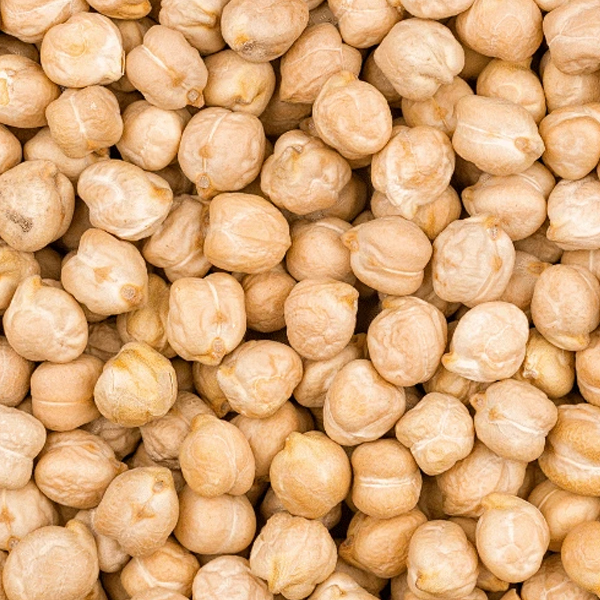
Ethiopia is the largest chickpea producer in Africa and the third largest globally, accounting for approximately 46% of Africa’s total production. It is the country’s third largest soybean crop after broad beans and common beans.
Core Production Areas: Highly concentrated in Amhara and Oromia regions, these two areas contribute over 90% of the country’s planting area and 92% of its yield. The Dembia region in Amhara is a high-quality production area due to its suitable climate.
Planting Scale: Approximately 680,000 farmers nationwide cultivate chickpeas, accounting for 1.91% of the total grain planting area and 1.63% of the total grain yield.
Climate and Sowing Time: A cool-season crop, the main season is sown from September to November and harvested from February to April of the following year; some areas have two crops a year, with the second season sown at the end of April.
Varieties and Yields: Primarily Kabuli type, with improved varieties such as Arerti, Habru, and Yelbie being promoted. High-yield and stable-yield combinations can reach 2.42 tons/hectare; traditional varieties have lower yields, approximately 1.2–1.8 tons/hectare.
Production Characteristics: Mostly rain-fed and dryland farming, rotated with thrush and wheat for nitrogen fixation and fertilization; mainly for domestic consumption, with a small amount exported to the Middle East and Europe.
II. Commonly Used Equipment for Chickpea Impurity Removal
Chickpea impurities include: straw, broken leaves, sand, clods of mud, metal, shriveled beans, moldy/discolored beans, broken beans, etc. A multi-stage purification process is required, consisting of equipment arranged in a process of initial cleaning → grading → destoning → demagnetization → color sorting.
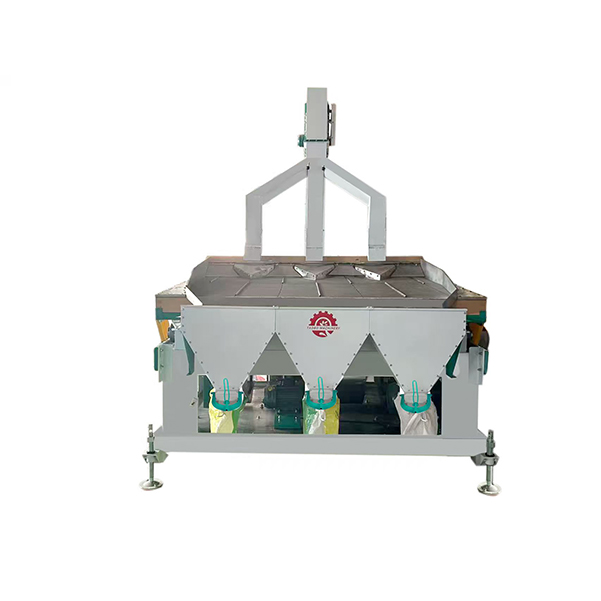
1. Initial Cleaning Screen (Vibrating Screen)
Function: Removes large impurities (straw, weeds, pods) and small impurities (dust, broken particles), performing preliminary grading.
Principle: Multi-layer screen + vibration/rotation, separating by particle size; equipped with a suction system to remove light impurities.
Common Models: Air screen cleaner, vibrating cleaning screen.
2. Gravity Destoner
Function: Separates heavy impurities with a higher specific gravity than chickpeas, such as adjacent stones, clods of mud, and metal particles.
Principle: Vibrating table + airflow, utilizing the difference in specific gravity and aerodynamics to separate sand and stones from the chickpea stream.
Effect: Destoning rate ≥98%, achieving “no stones in chickpeas, no chickpeas in stones”. 3. Magnetic Separator (Permanent Magnet Drum/Magnetic Rod)
Function: Removes magnetic metal impurities such as nails, screws, and iron filings.
Principle: Strong magnetic field attracts metal, which automatically detaches as the equipment operates.
Configuration: Often connected in series after primary cleaning and destoning to protect subsequent equipment.
4. Air Screen Cleaner (Suction Separator)
Function: Removes light impurities (shriveled beans, insect-damaged beans, broken leaves, dust).
Principle: Adjustable air speed; utilizing weight differences, light impurities are carried away by the airflow, while qualified beans settle.
5. Color Sorter (Photoelectric/AI Color Sorter)
Function: Removes discolored beans, moldy beans, insect-damaged beans, broken beans, glass/plastic, and other foreign objects.
Principle: High-speed camera + AI recognition; compares color/shape; air valve precisely removes defective particles.
Result: Identifies fine impurities ≥0.5mm; finished product purity ≥99.8%. 6. Grading Screen (Plane Rotary Screen / Drum Grading Screen)
Function: Separates chickpeas into large, medium, and small grades according to particle size to meet different market demands.
Principle: Precise sieve apertures + low-speed rotation/rolling reduce breakage.
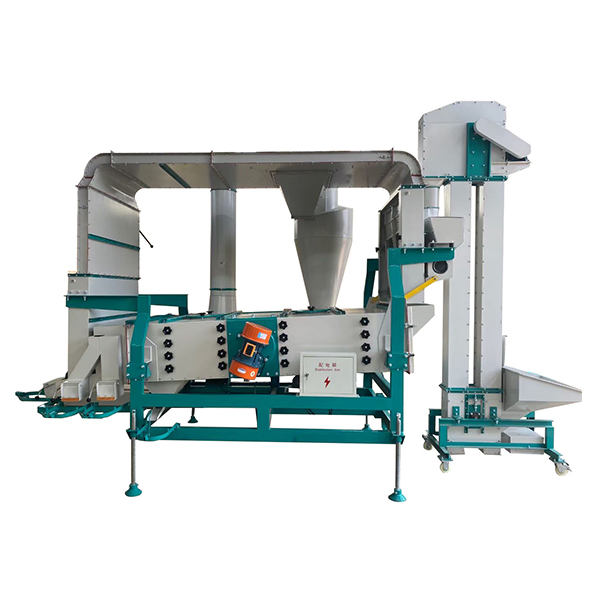
The Complete Working Principle of an Air Screen Cleaner for Chickpeas
The core of the air screen cleaner is the simultaneous operation of two processes: “screening by size + air separation by weight,” making it highly suitable for chickpeas, which are large, regularly shaped, and susceptible to breakage.
1. Feeding and Uniform Feeding
Chickpeas enter through the hopper and are evenly spread into a thin layer by the feeding rollers/vibration feeder.
Purpose: To prevent the beans from piling up or becoming clogged, ensuring that every bean is screened and blown by the air.
2. Air Separation System (Removal of Light Impurities)
An adjustable fan at the bottom of the machine blows a stable airflow upwards.
Airflow passes through the bean layer:
Light impurities: shriveled beans, insect-damaged beans, broken leaves, straw, dust, bean skins → are sucked away by the airflow and enter the dust collection bag/settling chamber.
Plump chickpeas: heavier, settle and fall normally → enter the screen layer.
The fan airflow is adjustable to accommodate chickpeas with different moisture levels and plumpness. 3. Multi-layer sieve cleaning (grading by particle size + impurity removal) The sieve box performs reciprocating vibration/planar rotation motion, which is gentle and prevents chickpeas from breaking.
Post time: Mar-04-2026