
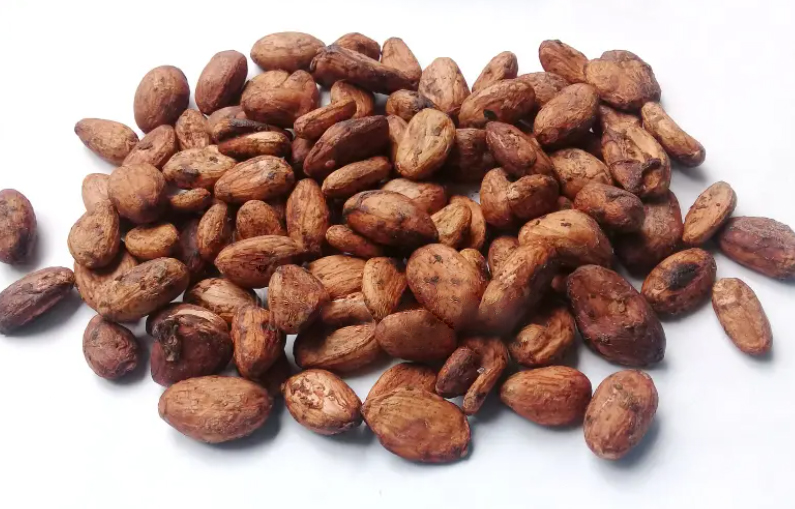
Ethiopia, the birthplace of Arabica coffee, is Africa’s largest Arabica producer and the world’s fifth-largest coffee producer. Coffee is its leading agricultural export earner, employing over 25 million people nationwide. Cultivation is primarily based on traditional rainfed small-scale farming methods, but in recent years, both acreage and yield have steadily increased, with export volume and price rising simultaneously.
Cultivation Distribution and Ecological Suitability: Ethiopian coffee is concentrated in three core production regions: the south, west, and east, spanning altitudes from 550 to 2750 meters. The optimal growing conditions are volcanic rock with slightly acidic soil at altitudes of 1400-2200 meters. The average annual temperature is 15-25℃, and annual rainfall is 900-2700 mm, ideal for Arabica coffee growth. The core production regions and their characteristics are as follows: Southern Region (Sidamo, Yirgacheffe): Altitude 1500-2200 meters, primarily using washed processing, with flavors of floral and citrus notes; this is the core region for specialty coffee.
Western Region (Jima, Kafa Forest): Altitude 1400-1800 meters, predominantly sun-dried, accounting for approximately 35% of national production. This region is the concentration of forest coffee systems, producing coffees with a rich flavor and long-lasting aftertaste.
Eastern Region (Harar): Altitude above 2700 meters, primarily sun-dried, exhibiting a unique mocha flavor and dried fruit aroma. Production is approximately 26,000 tons.
Planting systems are divided into three categories: forest coffee (wild/semi-wild, approximately 35%), garden coffee (mixed cultivation in farmers’ backyards, approximately 50%, density 1000-1800 plants/hectare), and plantation coffee (large-scale cultivation, approximately 15%). All are primarily rain-fed, with sowing dates adjusted according to the rainy season, and harvesting occurring from October to February.
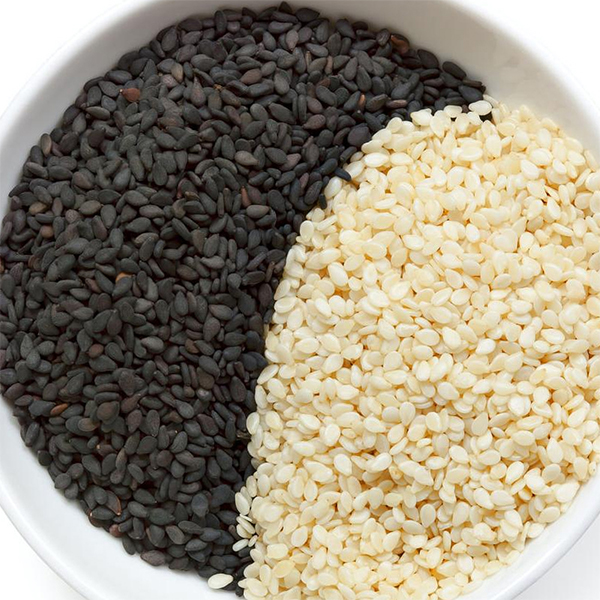
Sesame is Ethiopia’s second-largest foreign exchange earner after coffee. Cultivation is concentrated in low-altitude tropical arid and semi-arid ecological zones. Over the past five years, the planted area initially plummeted due to conflict in the north, but has slowly recovered. Yields are low and highly volatile, varying with both area and climate.
Cultivation Distribution and Ecological Adaptation: Ethiopian sesame is mainly grown in the northern and northwestern regions, including Tigray, Amhara, and Ben Shangul-Gumaz. The lowlands of western Oromia and the southern ethnic regions are secondary production areas. Humera in Tigray, North Gondar in Amhara, and Sivorega in Oromia are the core production areas, contributing approximately 80% of the national output. This crop thrives at altitudes of 500-1500 meters in lowlands, preferring warm, dry climates with 600-900 mm of annual rainfall. It is intolerant of waterlogging and thrives in well-drained, light to medium-grained fertile soils. The optimal growing temperature is 20-35°C. The planting system is primarily rainfed, with rotation often with cereal crops such as sorghum and millet. Intercropping is used in some areas. Sowing is concentrated in the early rainy season (June-July), and harvesting occurs in September-October.
Planting Area Changes: In 2019/20, Ethiopia’s sesame planting area reached a recent peak of approximately 375,000 hectares. From 2020-2021, conflicts erupted in major producing areas such as Tigray, leading to farmland abandonment and labor shortages. In 2021/22, the planting area plummeted to 270,000 hectares, a 28% decrease from its peak. After 2022, the conflict gradually eased, farmers began to resume cultivation, and coupled with rising export prices and policy support, the planting area rebounded to around 300,000 hectares in 2023/24, but has not yet recovered to pre-conflict levels. The main planting entities are small farmers, with approximately 860,000 small farmers participating in planting. There are also some commercial plantations of a certain scale. However, small farmers generally face problems such as difficulty in obtaining high-quality seeds and low technical level.
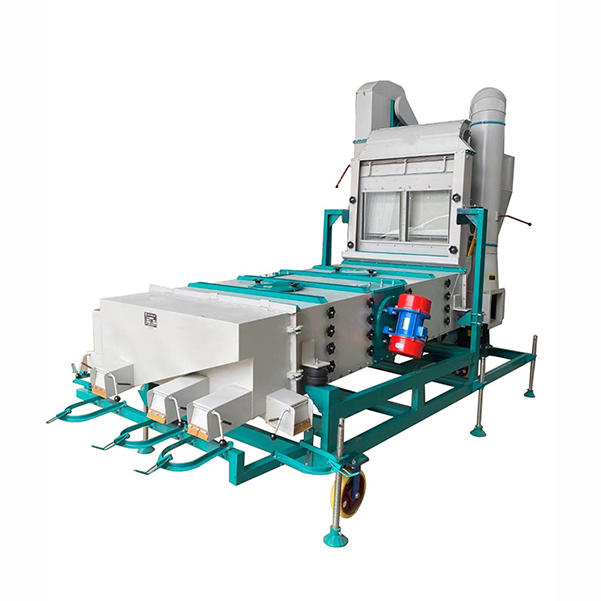
When sesame and coffee bean raw materials have high impurity content, the air-screen cleaner is a cost-effective primary cleaning device. Its core function is to remove different types of impurities through a combination of “air power + sieving,” and parameters can be adjusted according to the impurity percentage and type to achieve efficient cleaning.
Core Workflow: The air-screen cleaner’s cleaning process consists of two main stages: air separation and sieving. These two stages typically run continuously. Some models are designed with a “air separation first, then sieving” combination structure to ensure impurities are removed step-by-step.
Air Separation: Utilizing the difference in density and air resistance, the material (sesame or coffee beans) enters through the inlet and first passes through a high-speed airflow zone. The equipment’s built-in fan generates a controllable airflow that passes vertically or horizontally through the material flow.
Impurities lighter than the target material (such as dust, shriveled shells, broken leaves, and light grass clippings) have high air resistance and are carried away by the airflow, entering the dust collection device or waste outlet.
The target material (sesame seeds/coffee beans) and heavier impurities (such as pebbles, clods of soil, and heavy sand) will not be blown away by the airflow due to their high density and strong inertia, and will fall into the lower screening layer.
Screening process: The material is graded and impurities removed based on differences in particle size and shape. After air separation, the material falls onto multiple layers of screens. These screens are driven by a vibrating motor to reciprocate or circularly vibrate. Different layers of screens have different aperture sizes, achieving a grading effect of “removing large impurities at the top and small impurities at the bottom.”
Upper screen (large impurity screen): The aperture size is slightly larger than the maximum particle size of the target material.
When cleaning sesame seeds: The aperture size is approximately 2.0-2.5 mm, larger than the sesame seed particle size (approximately 1.5-2.0 mm). Large particles such as pebbles, clods of soil, and large straws cannot pass through and will be conveyed to the large impurity discharge port by the vibrating screen surface.
When cleaning coffee beans: The sieve aperture is approximately 10-12mm (suitable for coffee bean sizes of 8-10mm). Large impurities such as stems, unhulled pods, and large stones are trapped and discharged.
Lower layer sieve (small impurity sieve): The sieve aperture is slightly smaller than the minimum particle size of the target material.
When cleaning sesame seeds: The sieve aperture is approximately 1.0-1.2mm, smaller than the sesame seed particle size. Small impurities such as mud, fine grass seeds, and broken sesame husks will pass through the sieve aperture and fall into the small impurity collection trough.
When cleaning coffee beans: The sieve aperture is approximately 5-6mm, smaller than the coffee bean particle size. Small impurities such as fine soil particles, broken coffee grounds, and small stones are removed.
Middle layer target material: Sesame seeds or coffee beans of suitable particle size will pass through the upper sieve and remain on the lower sieve, then be conveyed to the finished product outlet by the vibration of the sieve surface.
Post time: Jan-04-2026