
Pigeon Pea Cultivation in Mozambique and Tanzania
I. Overview of Cultivation and Annual Production
(A) Tanzania
Cultivation Patterns
The country’s second-largest pigeon pea producing region; cultivation is dominated by smallholder farmers using rain-fed, scattered plots. Intercropping with maize or cassava is the standard practice, with minimal use of chemical fertilizers or pesticides. Core production areas include the semi-arid highlands of Mwanza, Singida, and Dodoma (central) and Mbeya (south). Two planting seasons occur annually, with the main harvest season running from July to November. Individual farm plots range from 0.3 to 2 hectares; mechanization is extremely low, with manual harvesting and open-air ground drying, resulting in high levels of impurities in the raw material.
Annual Production Volume
2023: 150,000 tons; 2024: 180,000 tons; 2024/25 season official forecast: 400,000 tons (peak volume following expanded planting).
Primary Exports: 300,000–350,000 tons annually to India, with smaller quantities to the Middle East and China; domestic consumption accounts for only about 10%.
Characteristics of Raw Material Impurities
Due to open-air ground drying, the highest impurity components are silt, soil clods, and gravel. Contaminants include maize, cowpeas, weed seeds, dried pods, stalks, insect-damaged or moldy beans, shriveled beans, and broken beans; total impurity content in raw grain can reach 3%–8%.
(B) Mozambique
Cultivation Patterns
The largest pigeon pea exporter in Southern Africa; 70% of the population relies on agriculture, yet only 10% of arable land is utilized, indicating immense potential for expanded cultivation. Core production areas include Cuamba (Niassa Province), Nampula, and Cabo Delgado. Pigeon peas are intercropped with maize or vanilla; the crop is drought- and poor-soil-tolerant, requiring only minimal supplemental watering during the flowering stage. Harvesting is entirely manual, and drying takes place outdoors by the roadside. The government, in partnership with the FAO, promotes high-quality seed varieties, and the number of large-scale cooperatives is increasing year by year. Annual Production Volume
Subject to significant annual fluctuations (impacted by El Niño-induced drought): 320,000 tonnes in 2021 and 198,000 tonnes in 2022; peak production in bumper years reaches 450,000 tonnes, while stable annual output ranges from 250,000 to 350,000 tonnes.
Annual exports consistently exceed 170,000 tonnes, destined primarily for India, with smaller volumes going to China and the Middle East; domestic consumption accounts for less than 15% of the total.
Characteristics of Raw Material Impurities
Sourced from red soil regions, the crop is characterized by fine red sandy soil, small stones, and significant soil clumping. It contains high levels of dry twigs, pod husks, irregular weed seeds, moldy/black-spotted beans, and insect-damaged grains. The total impurity content in the raw crop ranges from 4% to 10%, making it the source with the highest impurity levels among East African producing regions.
II. Classification of Major Impurities in Raw Pigeon Peas from Both Regions
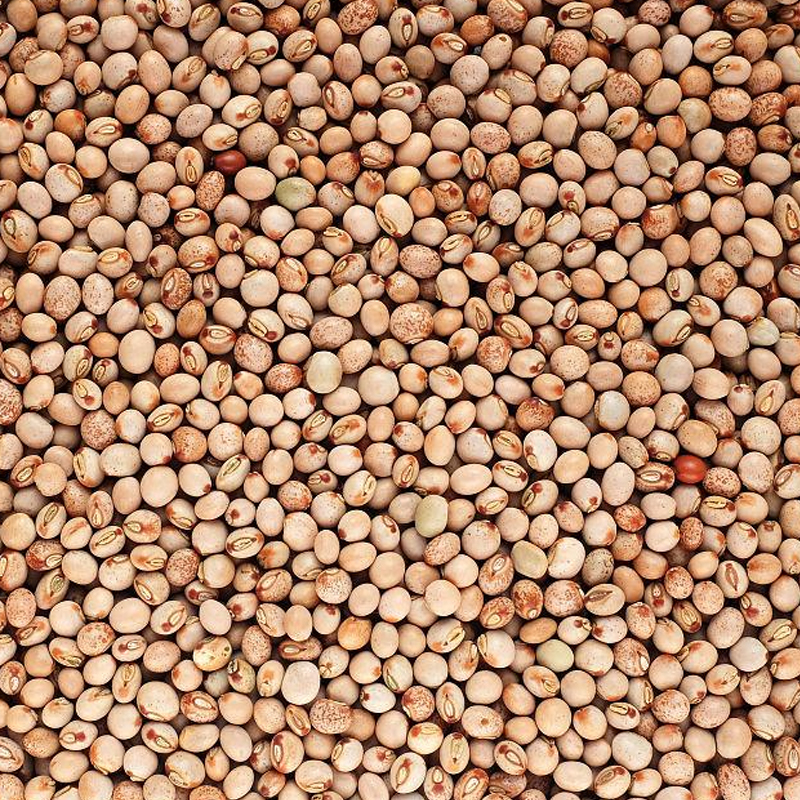
Light Impurities: Pod fragments, stalk pieces, weed leaves, dust, shriveled husks, empty pods
Heavy Impurities: Red soil clods, sand and gravel, soil aggregates, small brick fragments, metal scraps (from harvesting equipment wear)
Foreign Legumes / Weed Seeds: Corn, cowpeas, sorghum grains, wild weed seeds
Defective Beans: Insect-damaged beans, moldy/blackened beans, discolored/spotted beans, broken cotyledons, shriveled beans
Quarantine-Regulated Impurities: Live insects, insect eggs, insect cocoons (must be completely removed for export to China)
Pigeon Pea Cleaning and Processing Line
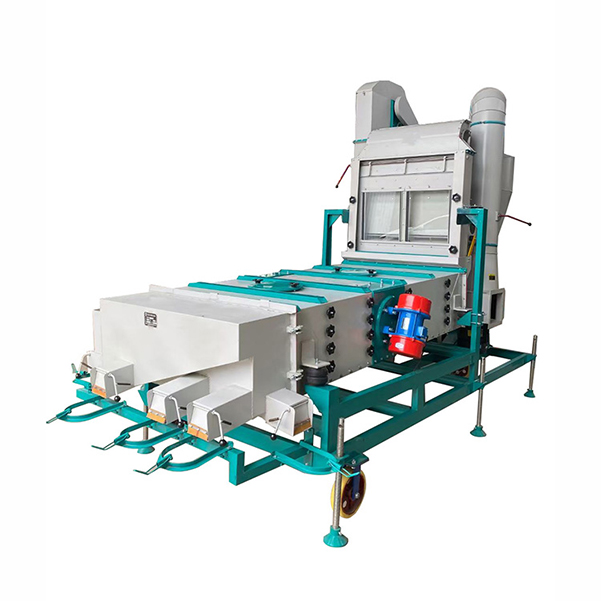
Complete Process: Feeding → Pre-cleaning Screen → Air-Screen & Gravity Separator → Destoner → Magnetic Separator → Grading Screen → Color Sorter → Polishing → Finished Product
Step 1: Air-Screen Cleaner (Removal of large, light impurities)
Double-layer vibrating screen + axial fan: The upper screen separates stalks, intact pods, and large soil clods; the lower screen sifts out fine red soil and weed seeds; the fan extracts dust and shriveled beans, removing 60% of light impurities and soil (both coarse and fine) in a single pass.
Step 2: Air-Screen Gravity Separator (Core impurity removal; optimized for high-soil raw materials from Africa)
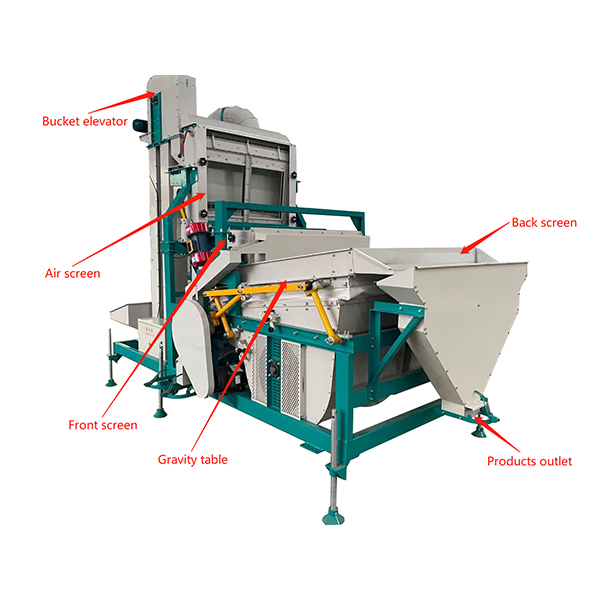
Airflow suspension + gravity-based stratification: Lighter materials—such as shriveled beans, moldy beans, and weed seeds—float to the top and are discharged, while plump pigeon peas sink; residual fine dust is simultaneously removed, drastically reducing soil content and resolving the issue of sticky Mozambican red soil adhering to the beans.
Step 3: Specialized Gravity Destoner (Removes gravel and soil clumps)
Designed to address the issue of high red soil and gravel content in the region, this machine uses vertical airflow stratification to separate and discharge stones and hard soil clumps based on their higher specific gravity. Capable of separating fine gravel similar in size to the beans themselves, it is essential equipment for production lines in East Africa.
Step 4: Magnetic Separator (Removes metal impurities)
Extracts iron nails and filings introduced during harvesting and transport, protecting downstream color sorters and polishing rollers from scratches while ensuring compliance with food safety standards.
Step 5: Grading Screen (Size-based separation)
Sorts beans by size, diverting broken cotyledons and undersized, shriveled beans to prevent them from interfering with the accuracy of the color sorting process.
Step 6: CCD Color Sorter for Beans (Removes moldy, discolored, and insect-damaged beans)
High-definition cameras identify defects such as black spots, reddish discoloration, insect damage, and mottling, which are then ejected by high-pressure air jets; it also separates out mixed foreign bean varieties. This is a critical step for producing premium export-grade beans, keeping the level of discolored grains in the final product below 0.1%.
Step 7: Bean Polisher (Optional; for premium exports)
Uses friction to remove the film of red soil adhering to the bean surface, enhancing skin luster, reducing dust, and improving market appeal; this step is often required by high-end buyers in India.
Post time: Jul-18-2026