
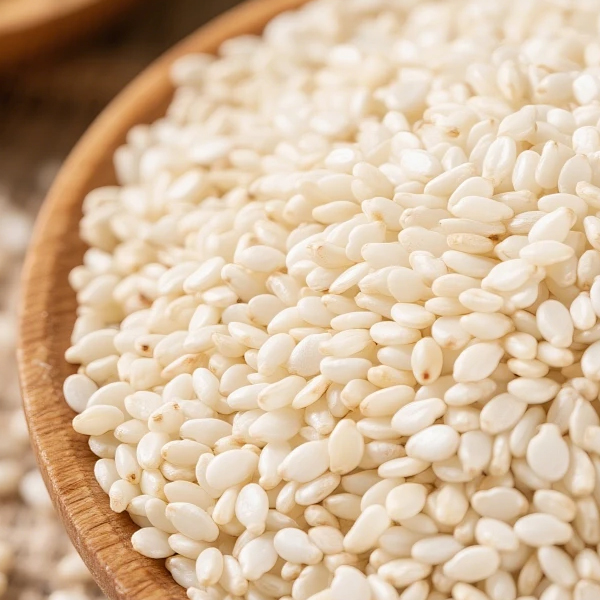
Sesame is a core oilseed export for Nigeria. Production is concentrated in the northern and north-central savanna regions—specifically in Jigawa, Nasarawa, Benue, Kano, Katsina, Gombe, and Taraba states—where over 90% of the crop is grown by smallholder farmers, primarily under rain-fed conditions. Varieties include white sesame (food-grade; mainly from Nasarawa and Benue, suitable for baking and tahini production) and brown sesame (oil-crushing grade; from Jigawa and Kano). Annual production fluctuates significantly, typically ranging between 400,000 and 500,000 metric tons, and is notably affected by the security situation in the north. The planting season runs from May to July, with the harvest reaching the market between September and November. Impurities often include soil clods, sand, stones, weed seeds, broken husks, and shriveled grains, sometimes mixed with small amounts of cowpea or sorghum fragments; consequently, there is a high demand for cleaning and gravity-based destoning processes. Key export destinations include China, Turkey, the Middle East, and Japan.
In Tanzania, sesame—locally known as “Simsim”—is a major export commodity in East Africa. It is categorized into three quality tiers: high-quality white sesame from the south (Lindi and Mtwara regions, preferred by Chinese buyers), light-white sesame (from the Songea area), and mixed-color sesame (from the central regions of Dodoma, Manyara, and Morogoro). Annual production is approximately 120,000 to 130,000 metric tons; planting occurs in December, with the harvest following in April of the next year. The oil content generally ranges from 48% to 52%, and the quality is consistent. The crop is traded via the Tanzania Mercantile Exchange. Impurities include weed seeds, sand, soil, broken pods, and sesame seeds of varying colors. Given the significant quality variations across different production zones, the crop requires grading and cleaning. Exports are directed to China, India, Japan, South Korea, and the Middle East.
Sesame is a key cash crop promoted in Mozambique. Traditional production hubs include Nampula, Zambezia, Tete, and Sofala. In recent years, high-yield sesame varieties have been pilot-planted near Maputo in the south through collaborations with Chinese enterprises, and the production area continues to expand. Annual production typically ranges from 90,000 to 100,000 tons, with sowing in January and harvesting in May. Key challenges include low yields, a fragmented base of smallholder farmers, and vulnerability to production losses from hurricanes and floods—factors that often lead farmers to switch to soybean cultivation. The crop consists primarily of white sesame seeds, which are a popular import item in China. However, the raw material often contains high levels of impurities—such as soil, sand, crop stalks, weed seeds, moldy grains, and insect-damaged kernels—resulting in poor consistency. Processing requires a multi-stage air-screening and gravity-based destoning production line. The output is primarily exported to China and Japan.
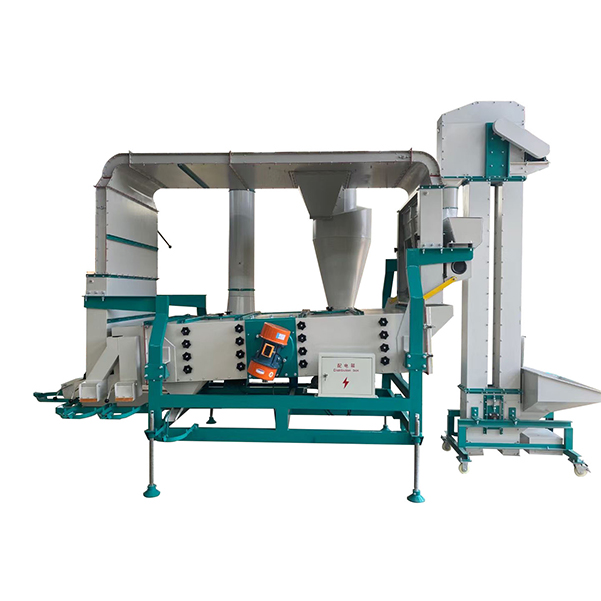
The Core Advantages of Air-Screen Cleaners in Removing Impurities from Sesame Seeds
Although sesame seeds are small, the cleaning process is the most challenging—and arguably the most valuable—stage in the entire production chain. Sesame seeds have a high oil content, a tiny physical size, and a low specific gravity, yet they are often contaminated with a complex array of impurities: sand, soil, weed seeds, broken husks, shriveled or moldy grains, and insect-damaged seeds. They may also be mixed with other grains—such as cowpeas or sorghum fragments—or even sesame seeds of a different color. If these impurities are not thoroughly removed, it directly impacts oil yield, product color, and ash content. This, in turn, determines whether the batch qualifies as food-grade or merely oil-pressing grade, and whether it can command a premium price for export or only a standard commodity price. The air-screen cleaner has become the primary tool for sesame pre-processing precisely because it integrates two physical principles—air separation (aspiration) and mechanical screening—into a single, streamlined process. This makes it an indispensable solution for handling materials like sesame seeds, which are characterized by their small size and diverse range of impurities.
I. Air Separation: Removing “Light” Impurities
One of the most troublesome types of impurities in sesame consists of “light” particles—such as shriveled seeds, empty husks, plant debris, dust, and chaff—that have a specific gravity similar to that of the sesame seeds themselves, making them impossible to separate using screens alone. The primary advantage of an air-screen cleaner lies in its use of “air”: an adjustable fan generates an upward airflow, leveraging aerodynamic differences between the sesame seeds and the impurities to blow the light debris, dust, and shriveled grains out of the machine. A settling chamber can also be incorporated to recover any sound, plump sesame seeds that might have been caught in the airflow, ensuring that high-quality product is not lost. Because the airflow can be precisely adjusted to accommodate sesame seeds from different origins or with varying moisture content, these machines offer a level of flexibility that single-function screening equipment simply cannot match.
II. Mechanical Screening: Removing Oversized and Undersized Impurities
While air separation handles “light” impurities, mechanical screening addresses issues related to “size.” The air-screen cleaner utilizes a multi-layered screen assembly, typically divided into coarse and fine screening stages: the upper layer, featuring larger apertures, traps stones, straw, and large debris, while the lower layer, with smaller apertures, sifts out fine sand, soil particles, and broken fragments. Since sesame seeds are relatively uniform in size, any irregularly shaped impurities are effectively blocked by the specific aperture dimensions of the screens. These multi-layered screens are easily interchangeable; the factory can configure various aperture combinations to suit the specific impurity profiles found in different production regions—such as Nigeria, Tanzania, or Mozambique—enabling a single machine to be adapted to diverse requirements through customized screen selection.
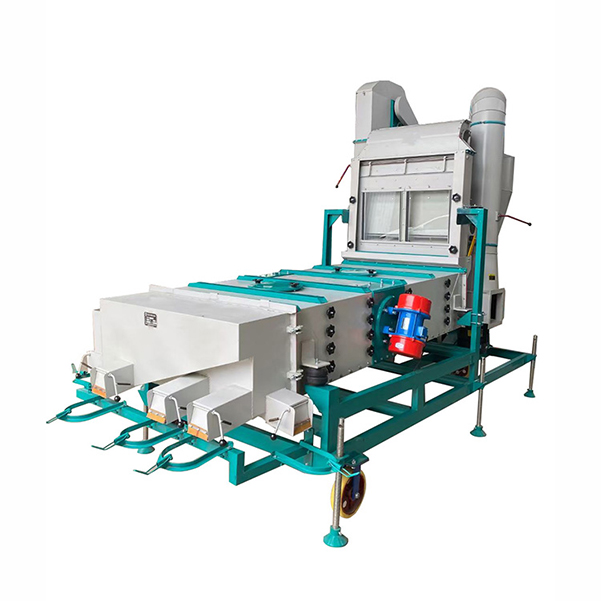
III. Multi-Stage Cleaning for Consistent 99.5% Purity
Rather than a simple, linear sequence, the cleaning process employs a multi-stage, closed-loop configuration: “air separation — screening — air separation.” Sesame seeds first undergo initial air separation to remove light impurities, followed by screening to eliminate debris of varying sizes. A second round of air separation then provides a final “polishing” step, removing any residual dust or shriveled seeds. This integrated, multi-stage design ensures a consistent purity level of 99.5% or higher—meeting the strict acceptance standards for food-grade sesame exports. For equipment from Hebei Taobo Machinery, 99.5% is not merely a marketing slogan; it is a core performance metric backed by empirical data, and the primary reason clients return for repeat orders.
IV. Preserving Seed Integrity to Minimize Breakage and Loss
Sesame seeds are high in oil content and possess thin, fragile hulls; excessive impact during the cleaning process can lead to broken seeds or hulling, which negatively affects both oil yield and market appearance. Our air-and-screen cleaner utilizes a low-speed, gentle-feed design. Separation is achieved through controlled airflow and screen oscillation—avoiding harsh mechanical impact—thereby maximizing the preservation of seed integrity. Furthermore, the adjustable feed rate ensures that the material is spread evenly, preventing clumping or blockages; this enhances processing efficiency while simultaneously reducing product loss. For oil processors and exporters, a lower breakage rate means a higher yield of qualified product from every ton of raw material—translating directly into tangible profit.
V. Versatile Adaptation to Diverse Impurity Profiles Across African Sourcing Regions
This is precisely why our air-and-screen cleaning equipment is highly favored in markets such as Nigeria, Tanzania, and Mozambique. Sesame seeds from Nigeria often contain soil clods, sand, gravel, and weed seeds, along with contaminants like cowpeas and broken sorghum grains; processing these requires an integrated system combining air-screen cleaning with gravity-based destoning. Sesame from Tanzania is categorized into three grades—white, off-white, and mixed-color—with significant variations in impurity levels and coloration across different production regions, necessitating precise grading and cleaning. Sesame from Mozambique frequently contains high proportions of soil, moldy grains, and insect-damaged seeds; due to this poor raw-material consistency, it requires a robust, multi-stage processing line that incorporates both air-screen cleaning and gravity-based destoning. With their flexible design—featuring adjustable airflow, interchangeable screens, and the option to add destoning modules—air-screen cleaners can be rapidly reconfigured to handle sesame from different countries and batches. Capable of adapting to produce from various regions, these machines offer the highest level of versatility among all equipment exported for this purpose.
When choosing an air-screen cleaner, you are also choosing the strength and capability of the manufacturer behind it. Hebei Taobo Machinery has long specialized in grain and oil processing equipment; the company operates a facility spanning over 10,000 square meters, employs a professional team of 100, and holds more than a dozen core technical patents. Its air-screen cleaners have been exported to over 50 countries and regions worldwide, with successful, proven applications in African markets such as Nigeria, Tanzania, and Mozambique. Furthermore, the company provides comprehensive, end-to-end service—covering production line design, equipment customization, on-site installation and commissioning, operational training, and lifelong spare parts supply—ensuring a worry-free experience for customers from purchase through long-term operation. For specific materials like sesame seeds, the company offers tailored solutions, including customized screen configurations, optimized airflow parameters, and complete production line integration, ensuring the equipment is perfectly aligned with the characteristics of local raw materials and specific processing objectives.
Post time: Oct-27-2026