
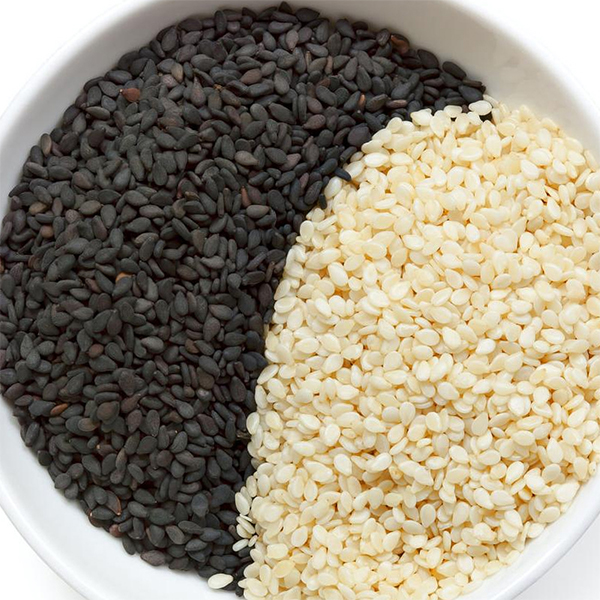
Tanzania is a top global producer and exporter of sesame, primarily relying on small-scale rainfed farming. The main production areas are concentrated in the southeast. Its white sesame is of exceptional quality. While production has fluctuated in recent years, exports remain a significant source of foreign exchange.
1. Planting Conditions and Season
Climate and Soil: Suitable for semi-arid to sub-humid tropical climates, with annual rainfall of 500-1000 mm. Prefers loose, well-drained sandy soil. Rainfed cultivation is the primary method.
Planting and Harvest Seasons:
Southern Region: Long rainy season, sowing from March to May, harvesting from June to August;
Central Region: Short rainy season, sowing from November to December, harvesting from March to April of the following year.
Varieties: Primarily Sesamum indicum, with a small number of drought-resistant and pest-resistant improved varieties promoted.
2. Planting and Post-Harvest Process
Planting Management: High proportion of traditional farming methods, primarily using organic fertilizers, with minimal use of chemical fertilizers and pesticides; a strong “default organic” characteristic.
Harvesting and Primary Processing: Manual harvesting → bundling and sun-drying for 1-2 weeks → manual threshing → winnowing + sun-drying (moisture content reduced to safe standards).
Quality and Regulation: In the southeast, the National Food Reserves Authority (NFRA) handles unified procurement, resulting in relatively stable quality; in the central and northern regions, market transactions lead to significant quality variations. Electronic auctions and phytosanitary certificates will be implemented starting in 2024 to improve export quality.
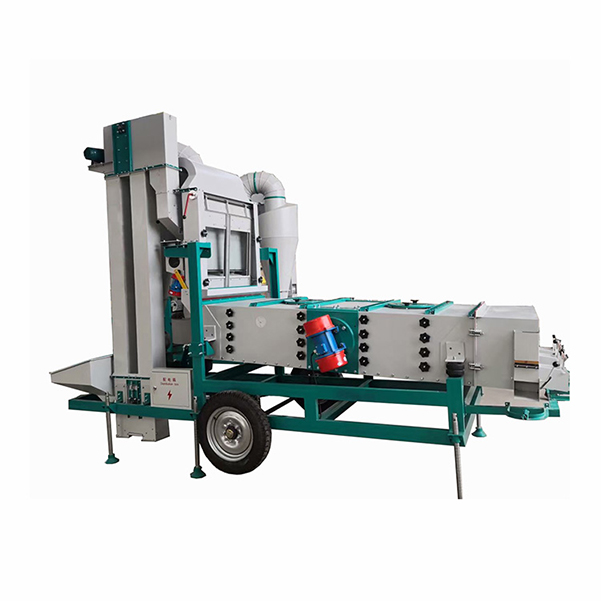
I. Primary Cleaning Equipment (Suitable for Small Farmers and Purchasing Points)
This type of equipment is mainly used to remove impurities with large differences in volume and specific gravity from sesame seeds, meeting the basic cleanliness requirements for export.
Air Screen Cleaner
Function: The core primary cleaning equipment. It removes light impurities such as straw fragments, shriveled husks, and light weed seeds through air separation; and separates large impurities (such as small stones and large weed seeds) and small impurities (such as mud and fine dust) through multi-layered sieves.
Adaptability: Simple structure and low cost, suitable for small purchasing points in rural Tanzania. The sieves can be changed to accommodate different sesame seed sizes.
Destoner (Gravity Destoner)
Function: Addressing the problem of Tanzanian sesame seeds easily mixing with sand, gravel, and clods of soil, this equipment utilizes the specific gravity difference between sesame seeds and sand/gravel. Under the action of a vibrating screen and airflow, it separates heavy impurities such as sand and gravel, avoiding wear and tear on subsequent processing equipment.
Adaptability: Can be used independently or connected in series with an air-screen cleaner, it is a key piece of equipment for improving the marketability of sesame seeds during primary cleaning.
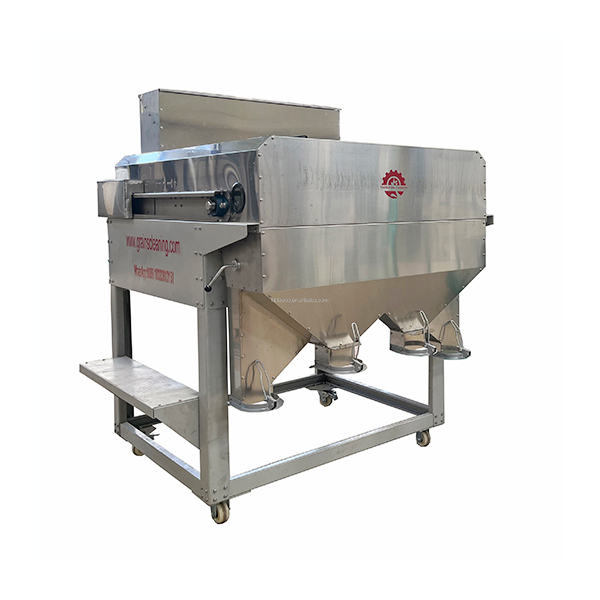
II. Advanced Cleaning/Grading Equipment (Suitable for Large-Scale Processing Plants and Export-Oriented Processing)
For export-grade sesame seeds or those requiring deep processing (such as sesame oil extraction and food raw materials), further removal of shriveled seeds, moldy seeds, and discolored seeds is necessary to improve sesame quality and added value.
Air Screen Gravity Separator
Function: Integrates air screening and gravity separation functions. After primary cleaning, it precisely separates shriveled seeds, insect-damaged seeds, and moldy seeds (these impurities are similar in size to normal sesame seeds but have different specific gravities) using a gravity separator, significantly improving sesame purity.
Compatibility: Suitable for large-scale processing plants, it can be integrated with drying and packaging lines to meet the high-quality requirements of the international market for sesame seeds.
Color Sorter (Optical Color Sorter)
Function: Targets discolored seeds, diseased seeds, and weed seeds (such as black weed seeds similar in size to sesame seeds) in sesame seeds. Utilizing optical recognition technology, a high-speed air jet device removes discolored impurities, further improving the appearance quality of the sesame seeds.
Adaptability: Primarily used in the high-end export processing of sesame seeds, it is a key piece of equipment for Tanzanian sesame seeds to penetrate the European, American, and Middle Eastern markets.
Magnetic Separator
Function: Removes magnetic impurities such as iron filings and nails that are mixed into sesame seeds during harvesting, transportation, and processing, preventing damage to subsequent oil pressing or food processing equipment.
Adaptability: As an auxiliary cleaning device, it is connected in series after an air-screen gravity separator or color sorter, serving as a supplementary step in fine processing.
Post time: Dec-25-2025