Working Principle of the Soybean Air-Screen Cleaner
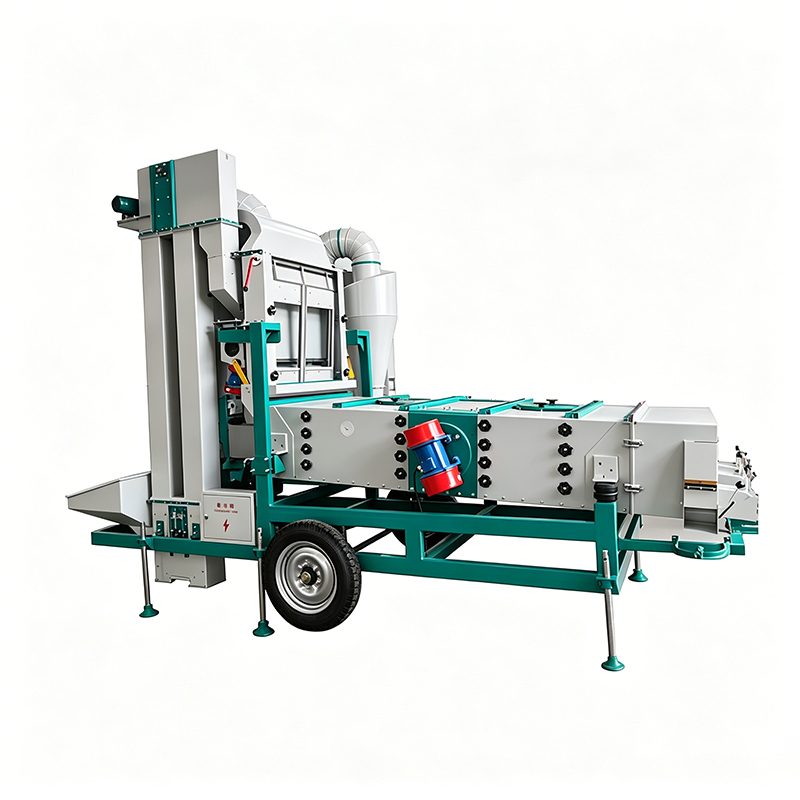
The soybean air-screen cleaner combines two sorting principles—air separation (based on weight/specific gravity) and vibrating screening (based on particle size)—to separate light, large, and small impurities from the soybeans, thereby achieving cleaning and grading. The machine primarily consists of a feeding mechanism, a vibrating screen assembly, a fan and airflow system, and a discharge/impurity removal mechanism.
1. Uniform Feeding
Soybeans enter through the feed inlet and pass through a spreading mechanism that thins out the material. The soybeans are evenly distributed across the upper screen surface, preventing clumping or piling. This ensures that every soybean undergoes both screening and air separation, avoiding issues where an overly thick material layer might result in incomplete cleaning.
2. Vibrating Screening Principle (Separation based on particle size)
A motor drives the screen assembly to vibrate reciprocally, causing the multi-layer perforated screens to undergo horizontal and small-amplitude vertical vibrations. Material particles are sorted based on the screen aperture size:
Upper screen (large apertures): The apertures are larger than the soybean kernels. Soybeans pass through the screen and fall to the next level, while impurities larger than the soybeans—such as pods, stalks, soil clods, and coarse straw—remain on the screen surface. These move toward the discharge end due to the vibration and are expelled as “large impurities.”
Lower screen (small apertures): The apertures are smaller than intact soybeans. Intact soybeans remain on the screen and are conveyed toward the outlet, while broken beans, soil particles, fine sand, and small weed seeds fall through the apertures and are expelled as “small impurities.”
Some models feature a third screen layer for further grading of soybeans into different size specifications. Rubber cleaning balls are placed beneath the screens; as the machine vibrates, these balls strike the screens to prevent broken beans and seed coats from clogging the apertures. 3. Air Separation Principle (Separation based on material weight and specific gravity)
A fan generates an adjustable airflow—divided into primary and secondary streams—that passes through the moving layer of soybeans:
Intact, plump soybeans are heavier and less affected by the airflow; they continue moving along the screen surface toward the main discharge outlet.
Lighter materials—such as shriveled beans, insect-damaged beans, hulls, dust, and stem/leaf fragments—are carried away by the airflow into a settling chamber, where light impurities settle for collection while dust is exhausted through the dust outlet.
Airflow volume is adjustable to accommodate soybean raw materials with varying moisture levels and impurity contents; the enclosed airflow system helps reduce workshop dust.
4. Discharge Routing
Clean soybeans, having undergone both screening and air separation, exit through the main discharge outlet; large impurities, small impurities, and light/shriveled debris are discharged through separate outlets, effectively separating impurities from the finished soybeans.
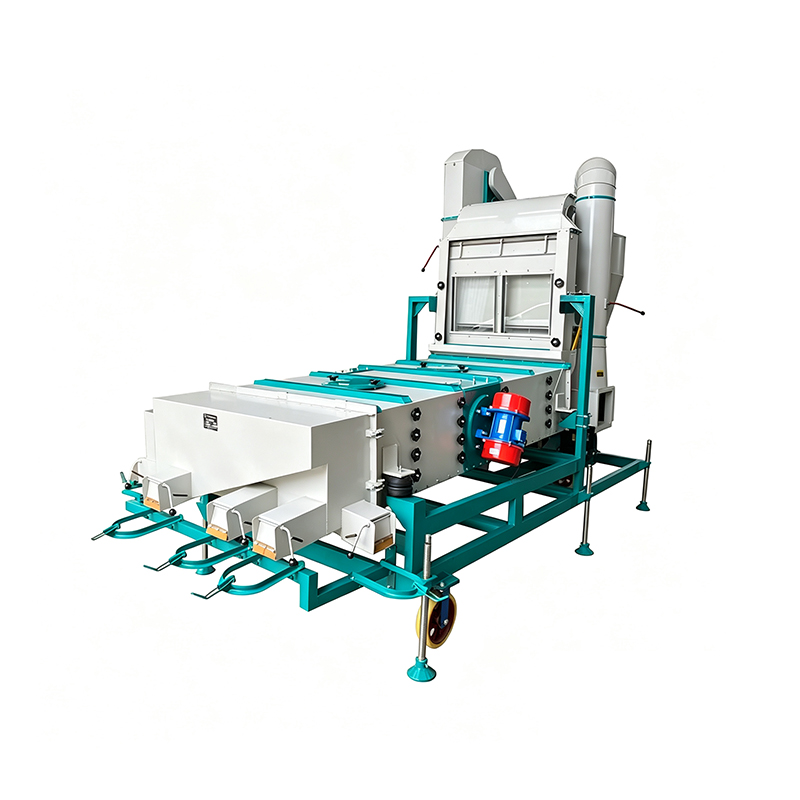
When selecting a soybean air-screen cleaner, consider factors such as processing capacity, the nature of impurities in the raw material, and on-site operating conditions.
1. Determine the actual processing capacity
Do not rely solely on the rated capacity on the nameplate; nameplate ratings are often based on wheat. Since soybeans have larger grains and different flow characteristics, actual throughput will be lower than the rated figure.
Small farms/workshops: 0.5–2 t/h; suitable for low-volume, intermittent operation.
Grain collection stations/small-to-medium processing plants: 3–8 t/h; suitable for continuous intake.
Large grain depots/oil processing plants: 10–25 t/h or higher.
Selection advice: Choose a model with a rated capacity 20% higher than your actual requirement. This margin prevents clogging and maintains cleaning purity when handling material with high impurity levels.
2. Select configuration based on impurity profile
Common soybean impurities: leaves, pod fragments, dust, shriveled beans, broken beans, weed seeds, soil clods, and stones.
Light impurities only (leaves, dust, shriveled grains): A standard double-layer air-screen model suffices; cleaning is achieved via air separation combined with sizing screens.
High levels of stones and soil clods: A gravity destoner is essential; air-screen systems alone cannot separate stones that are similar in size to soybeans.
Soybean seed processing: Prioritize three- or four-layer screen decks with secondary air separation. This allows for grading, ensures high purity, removes shriveled grains, and preserves germination rates.
High broken bean content/fragility concerns: Choose a model with gentle vibration and an effective feed-buffering structure to minimize breakage; high-quality equipment can keep the breakage rate at or below 0.2%.
3. Screen configuration is critical for soybean cleaning
Soybean grains typically range from 8 to 12 mm in size. Ensure the manufacturer provides perforated screens specifically designed for soybeans rather than generic woven mesh; perforated screens offer superior wear resistance and dimensional stability. Upper large-aperture screen: Removes large impurities such as pods and soil clumps;
Lower small-aperture screen: Allows broken beans, soil particles, and fine impurities to pass through;
Features a quick-release screen design for rapid screen changes, facilitating easy switching to the processing of other coarse grains;
Equipped with self-cleaning rubber balls to prevent soybean fragments from clogging the screen apertures, thereby reducing the frequency of manual cleaning.
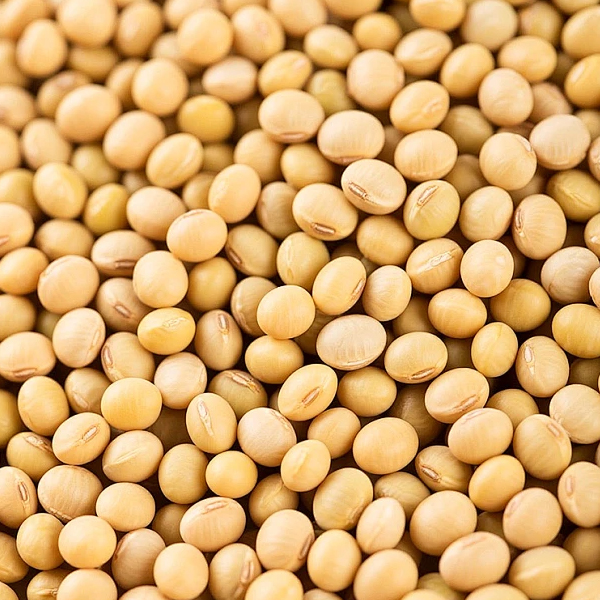
The soybean air-screen cleaner is a cleaning system that combines air separation with vibrating screen classification. It primarily sorts materials based on differences in particle size and weight. While designed for soybeans, it is also suitable for a wide range of other legumes, grains, and seeds, catering to applications such as raw material pre-treatment, commercial grain processing, seed selection, and cleaning of export-bound grain.
I. Material Suitability
Various Soybean Varieties
Domestic yellow, black, and green soybeans, as well as imported GM soybeans. It can process raw purchased grain, sun-dried soybeans containing pods/leaves/dust, and damp soybeans mixed with shriveled grains. It effectively removes pods, stalks, leaf fragments, dust, shriveled beans, broken beans, weed seeds, and fine soil.
Other Legumes
Edible legumes such as kidney beans, adzuki beans, mung beans, chickpeas, pinto beans, pigeon peas, etc.; primary cleaning is achieved by simply swapping in screens of the appropriate specifications.
Grains and Coarse Cereals
Wheat, corn, sorghum, millet, oats, and buckwheat; suitable for primary cleaning of raw grain to remove stalks, dust, and shriveled grains.
Seed Processing
Soybean seeds and various coarse cereal seeds; utilizes multi-layer screens and secondary air separation to remove insect-damaged, shriveled, and broken grains, thereby increasing seed purity and serving as a pre-treatment step for subsequent coating or seed dressing.
Note: This machine cannot completely remove stones or “side-by-side” stones (stones similar in size to the material); a gravity destoner is required for that purpose.
II. Application Scenarios
Grain Procurement Stations: Primary cleaning of purchased soybeans; rapidly removes stalks, dust, and shriveled beans to upgrade grain quality and facilitate storage and transport.
Oil Processing Plant Pre-treatment Sections: The initial cleaning stage prior to oil extraction; removes the majority of light debris and impurities of varying sizes, reducing the load on downstream equipment and protecting oil-pressing machinery.
Coarse Cereal and Food Processing Plants: Processing of edible soybeans and cleaning of raw materials for soy products; reduces impurities and improves the visual quality of the finished product.
Seed Breeding Bases and Processing Plants: Primary and refined selection of soybean seeds; separates shriveled and insect-damaged grains to ensure high germination rates. Grain processing and export production line: Meets purity standards for soybean exports and performs preliminary cleaning of raw materials; can be integrated with bucket elevators, storage silos, and packaging machines to form a complete production line.
Farmers and small-to-medium workshops: Mobile models are suitable for sites with limited space and intermittent processing needs, handling impurity removal for soybeans after drying.
Post time: Aug-04-2026