
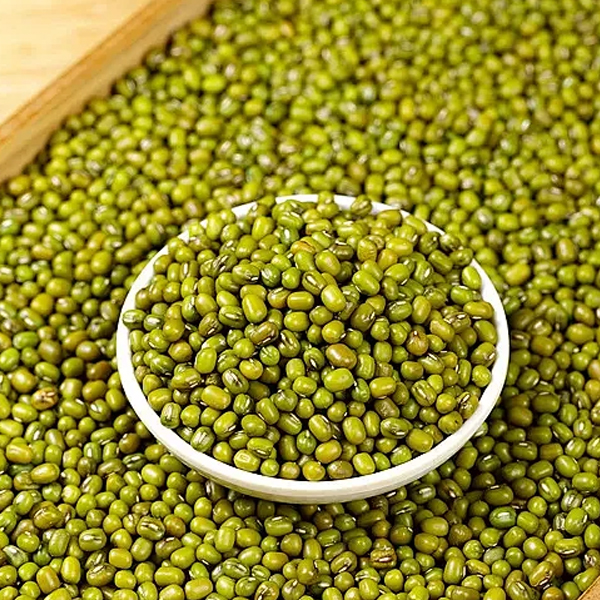
Common impurities in raw mung beans include dust, straw fragments, pods, soil clods, stones, metal contaminants, shriveled grains, insect-damaged beans, moldy/rotten beans, off-colored beans, and broken cotyledons. The entire production line utilizes differences in physical properties to grade and remove impurities, making it suitable for processing commercial-grade beans, seeds, and export-quality products.
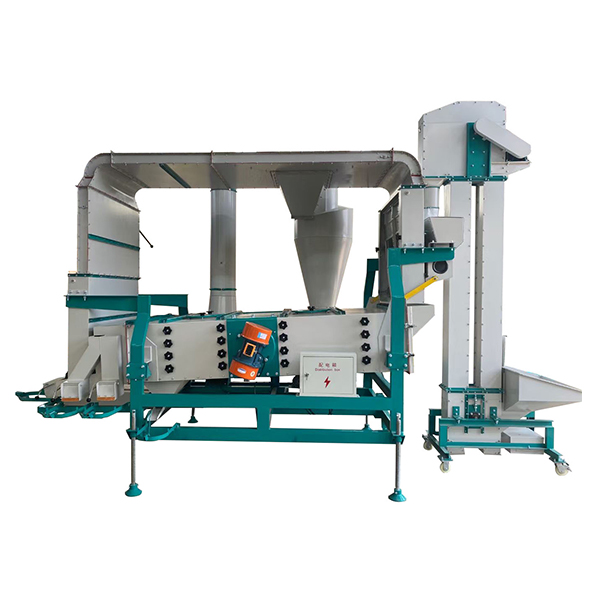
1. Air-Screen Vibratory Cleaner (Pre-cleaning/Coarse Cleaning)
Function: Uses a combination of airflow and multi-layer screens. Airflow removes dust, bean skins, straw fragments, empty pods, and light, shriveled grains. Large-aperture screens remove soil clods, pods, and large clumps, while fine screens separate out fine sand, soil, broken cotyledon fragments, and small weed seeds. This completes the initial coarse purification, reducing the processing load on downstream equipment and preventing screen clogging.
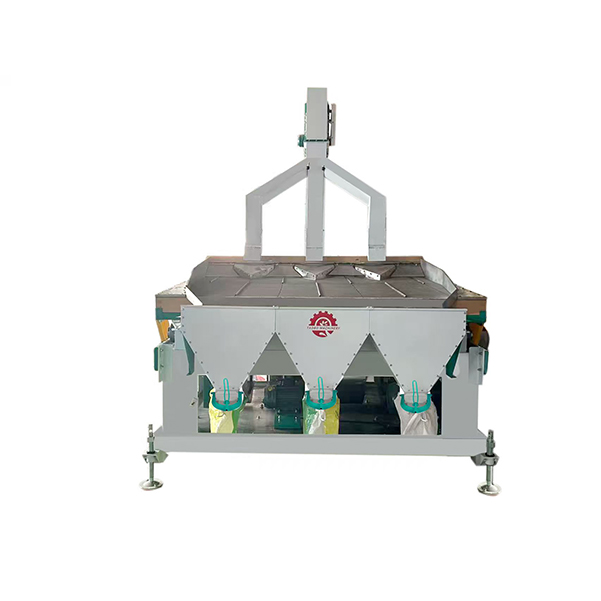
2. Gravity Destoner
Function: Separates stones, soil granules, and heavy soil clods that are similar in size to mung beans but differ in specific gravity. It removes “co-sized” stones mixed with the beans, preventing equipment wear and eliminating the risk of stones in the final product; it is a critical machine for removing heavy impurities.
3. Magnetic Separator
Function: Uses a strong magnetic field to capture impurities such as iron nails and magnetic soil clods from the raw material. This protects equipment like bucket elevators and color sorters from damage caused by hard objects and eliminates food safety risks associated with metal foreign bodies in the finished product.
4. Bean Polisher
Function: Polishes the surface of the mung beans to remove surface dust, mud spots, and bean skin fragments, as well as surface mold spots. It creates a uniform, glossy appearance and separates out the dust and debris generated during the polishing process.
5. Color Sorter
Function: Uses optical recognition to sort and reject moldy beans, insect-damaged beans, blackened/discolored beans, and off-colored foreign beans. It ensures precise control over the visual quality of the finished product, meeting purity requirements for exports and high-standard commercial beans.
6. Grading Screen
Function: Sorts beans by size, separating large, intact mung beans from medium/small beans and broken fragments, enabling the graded sale of the finished product.
Key Factors Affecting Mung Bean Cleaning Efficiency
I. Factors Related to the Raw Material Itself
1. Impurity content: Excessive levels of stones (similar in size to the beans), shriveled beans, broken fragments, soil, and stalks can overwhelm the equipment’s processing capacity. Inadequate separation time directly reduces cleaning precision; furthermore, large soil clumps can clog screens, causing screening failure.
2. Moisture content: High moisture makes beans sticky, causing fragments and soil to adhere to their surfaces; this hinders the air-screen cleaner from removing light impurities, impairs the polishing effect, and interferes with color sorting accuracy. Conversely, excessively low moisture makes beans brittle, leading to increased breakage during processing and the creation of secondary impurities.
3. Particle size heterogeneity: Significant size variations—such as a high proportion of large debris and small broken beans—complicate screen grading. Some impurities may pass through the screen alongside acceptable beans, resulting in incomplete separation.
II. Equipment Selection and Configuration Factors
1. Completeness of the equipment lineup: The absence of a gravity destoner prevents effective removal of stones similar in size to the beans; a lack of color sorters means moldy or insect-damaged beans cannot be rejected; and skipping the polishing stage leaves residual soil stains, preventing the finished product from meeting export standards.
2. Screen specifications: Improper selection of screen apertures in air-screen cleaners causes issues: oversized holes allow impurities to pass through, while undersized holes cause acceptable beans to be discharged as waste, resulting in product loss.
3. Processing throughput: Exceeding rated capacity creates an overly thick material layer, leaving insufficient time on screens or gravity tables for light and heavy impurities to separate; conversely, an insufficient feed rate results in a layer that is too thin, disrupting the material’s fluidization state and reducing destoning and screening efficiency.
III. Equipment Calibration and Parameter Factors
1. Airflow in air-screen cleaners: Excessive airflow may inadvertently remove intact beans along with light impurities, causing product loss; insufficient airflow fails to effectively remove dust, shriveled beans, and bean skins. 2. Gravity destoner parameters: Improper adjustment of vibration frequency, inclination angle, or air pressure prevents effective stratification of beans and stones; this leads to issues such as stones contaminating the finished product, good beans being discharged along with the stones (product loss), and incomplete removal of stones similar in size to the beans.
3. Color sorter parameters: Unreasonable settings for brightness and sensitivity; low sensitivity results in failure to detect moldy or damaged beans, while high sensitivity leads to the erroneous rejection of good mung beans, thereby reducing the yield of the finished product.
4. Polisher rotation speed: Excessive speed increases the breakage rate of mung beans, producing a large number of split beans; conversely, insufficient speed fails to thoroughly remove surface dirt and dust, resulting in poor polishing and brightening effects.
Selecting Cleaning Equipment Based on Impurity Levels in Mung Beans
Raw mung bean materials are categorized into three conditions—low, medium, and high impurity levels—based on the quantity and type of impurities present. Matching equipment to these specific impurity profiles avoids redundant investment while ensuring product purity, balancing processing capacity with final product yield.
1. Low-Impurity Raw Materials (Impurity content ≤ 3%)
Material Condition: Raw stock that has undergone simple preliminary screening after field procurement. Primary impurities include small amounts of dust, shriveled beans, and bean fragments; stones, moldy beans, and stalks are rare. Typically used for processing local commercial-grade beans.
Equipment Configuration: Air-screen vibrating cleaner + Magnetic separator
Explanation: Air-screening removes dust, shriveled beans, and large/small debris, while magnetic separation removes iron and soil clumps. Since the material contains virtually no stones of similar size to the beans or moldy/discolored beans, a gravity destoner or color sorter is not required; however, a polisher may be added if specific visual quality standards must be met. Installing a full suite of equipment is not recommended, as over-processing can cause bean breakage and increase production costs.
2. Medium-Impurity Raw Materials (Impurity content 3%–8%; most common scenario)
Material Condition: Raw stock procured from general farming households. Contains dust, stalks, pods, shriveled beans, and fragments, along with significant amounts of stones similar in size to the beans (co-sized stones) and soil clumps, plus small quantities of moldy or insect-damaged beans. Used for domestic distribution and standard export orders.
Equipment Configuration: Air-screen vibrating cleaner + Magnetic separator + Gravity destoner + (Polisher) + Color sorter
Explanation: The air-screen cleaner removes stalks, dust, and large/small debris to reduce the load on downstream equipment; the gravity destoner specifically removes co-sized stones, eliminating risks associated with heavy impurities; the magnetic separator protects the machinery; a polisher is optional for enhancing appearance; and the color sorter removes moldy beans, insect-damaged beans, and discolored particles to meet standard commercial grade requirements. This configuration is the mainstream solution for mung bean processing, offering a balance between impurity removal efficiency and processing loss. 3. High-impurity raw materials (impurity content > 8%)
Raw material condition: Harvested directly from the field without pre-processing; contains complex impurities including large clods of soil, pods, stalks, and mud clumps; high content of stones; significant proportions of shriveled, broken, and moldy/rotten beans; soil tends to clog screens. Typically used for large-scale primary processing in production hubs or for high-standard export orders.
Equipment configuration: Pre-cleaning air-screen separator + magnetic separator + gravity destoner + polisher + color sorter + grading screen.
Description: A pre-cleaning air-screen unit is used first to remove large stalks, soil clods, and bulk light impurities at high throughput, preventing these large contaminants from clogging downstream gravity tables and screens; a gravity destoner is essential to remove stones of similar size and density to the beans; a polisher removes soil stains from the bean surface; a color sorter rigorously rejects moldy, rotten, or discolored beans; and a grading screen performs size-based sorting.
Post time: Aug-05-2026