

Practical Considerations for Cleaning Corn and Soybeans Using Destoners and Gravity Separators
Drawing upon the operating principles of both types of equipment and the specific characteristics of the grain materials, this guide separately outlines general key points as well as considerations specific to corn and soybeans. It aims to balance cleaning effectiveness, minimize grain breakage, prevent material loss, and ensure equipment durability—all tailored to the context of batch processing operations.
I. General Basic Considerations (Applicable to Both Destoners and Gravity Separators)
1. Essential Pre-processing:
Corn and soybeans often contain large impurities such as stalks, leaf fragments, twine, large clumps of soil, and weeds. These materials *must* undergo a preliminary cleaning stage using an air-screen separator. Feeding them directly into the machine can easily clog the screen surfaces, air ducts, and slotted perforations, resulting in incomplete destoning and a failure of the gravity separation layering process.
2. Uniform and Stable Feeding:
It is strictly forbidden to feed material in surges (alternating between heavy and light flow), to allow the feed to cut off completely, or to overfill the machine to the point of congestion. You must adjust the vibration feeder speed or baffle plates to maintain a thin, continuous, and uniform distribution of material. The grain should be spread out in a single, flat layer to prevent the material bed from becoming too thick, which can lead to impurities becoming trapped within the grain mass and create “dead zones” where separation cannot occur.
3. Matching Air Pressure and Air Volume:
Both types of equipment rely on airflow to stratify the material. If the air volume is too high, it can easily blow away intact grain kernels, thereby increasing material loss. Conversely, if the air volume is too low, the material will not suspend properly; consequently, stones and sand cannot be separated, and light impurities cannot be distinguished from the heavier grain. Since corn and soybeans feature larger kernel sizes and higher densities compared to grains like sesame or mung beans, the air volume settings should be adjusted slightly upward.
4. Timely Impurity Removal and Regular Maintenance:
Regularly clean the screen surfaces, air intake screens, and air ducts to remove accumulated dust, soil, and broken grain fragments. Inspect the vibration springs, eccentric mechanisms, and sealing strips to prevent vibration imbalances and air leaks. Furthermore, avoid allowing dust to accumulate over long periods, as this can significantly impair the efficiency of the blower fan.
5. Controlling Material Moisture Content:
If the moisture content of corn or soybeans is too high, the material becomes sticky and prone to clumping; soil lumps may adhere to the grain kernels, making separation impossible and causing the screen perforations to become clogged. Conversely, if the moisture content is too low, the kernels become brittle and highly susceptible to breakage upon impact during processing. It is critical to strictly maintain moisture levels within the safe range; any damp material must be air-dried or mechanically dried prior to processing.
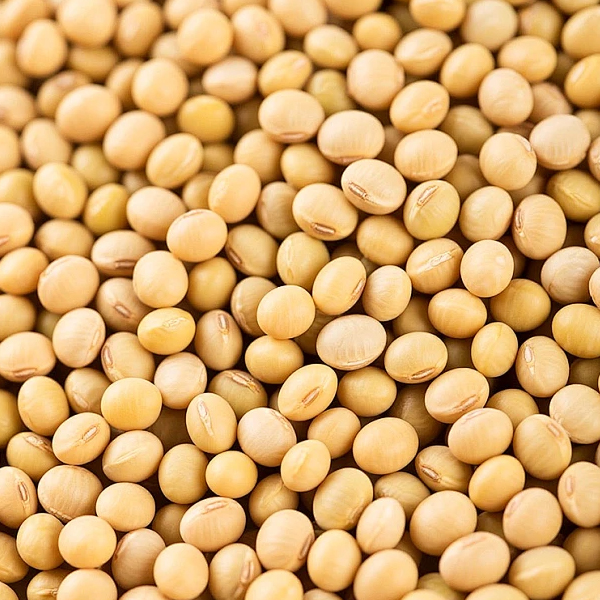
II. Specific Considerations for Destoner Operation (Corn & Soybeans)
Core Principle of the Destoner: Utilizes specific gravity, airflow suspension, and the counter-directional movement of a fish-scale sieve to separate stones of similar size to the grain, mud lumps, pebbles, glass shards, and other heavy impurities.
Sieve Surface and Tilt Angle Adjustment
Select a fish-scale destoning sieve plate designed for large-sized grains, and reduce the tilt angle of the sieve surface. Since corn and soybean kernels are relatively large, an excessive tilt angle would cause the material to slide down too rapidly, preventing the stones from having sufficient time to stratify and separate.
Strict Separation of “Companion” Impurities
Corn and soybeans are particularly prone to contamination by “companion” impurities—stones and hardened soil lumps of a size similar to the grain itself. These types of impurities cannot be removed through standard screening alone and require a dedicated destoner; therefore, one must strictly avoid skipping the destoning step by relying solely on air-screen cleaning equipment.
Rational Setting of Vibration Frequency
The vibration intensity should not be set too high, as excessive vibration can cause kernels to collide violently on the sieve surface, leading to cracking or hulling. This is particularly critical for soybeans, which have thin seed coats that are highly susceptible to damage (resulting in oil leakage) and a compromised visual appearance. Conversely, if the vibration is too weak, the stones will be unable to “climb” against the flow of material and be discharged.
Management of the Stone Discharge Outlet
Periodically inspect the stone discharge outlet to prevent stones from accumulating and flowing back into the finished product stream. Carefully control the stone discharge ratio to ensure that viable kernels are not inadvertently discharged along with the stones, thereby minimizing product loss.
Prevention of Impurity Blockages
Fragments of corn cobs, broken soybean pods, and soil debris can easily become lodged in and clog the perforations of the fish-scale sieve. Perform a simple air-blow cleaning during production intervals (e.g., between shifts) to ensure that the airflow penetrates the grain bed uniformly.
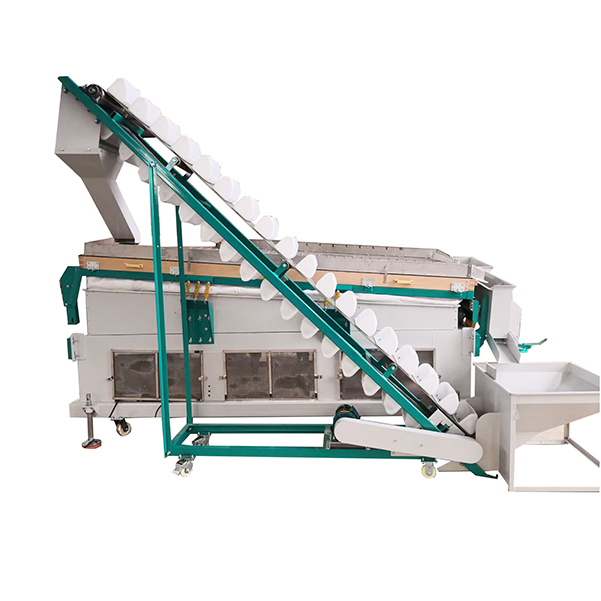
III. Specific Operational Considerations for Gravity Separators (Corn and Soybeans)
Core Function of the Gravity Separator: To stratify materials based on specific gravity differences, thereby removing shriveled, moldy, insect-damaged, and broken grains, as well as moldy seeds, light impurities, and other deteriorated particles, while simultaneously grading and separating plump, high-quality grains.
1. Adjustment of Airflow Stratification on the Separating Bed
Plump corn and soybean grains possess a high specific gravity, whereas shriveled, moldy, and insect-damaged grains have a lower specific gravity. It is necessary to fine-tune the wind pressure from the bottom-mounted fan to establish a stable stratification pattern: light impurities in the upper layer, qualified grains in the middle layer, and heavy impurities in the bottom layer. Disrupted stratification will directly result in sorting failure.
2. Synchronization of Bed Vibration and Material Flow Direction
Adjust the vibration amplitude in accordance with the material’s flow characteristics. Soybeans exhibit good fluidity, so the vibration frequency should be appropriately reduced. Corn kernels are slightly flattened and possess only moderate fluidity; therefore, the vibration intensity should be slightly increased to prevent material accumulation or localized clumping.
3. Rational Configuration of Discharge Zones
Strictly delineate three distinct discharge zones: qualified grains, light impurities, and heavy impurities. Moldy corn kernels and insect-damaged soybeans tend to concentrate in the light impurity zone, while high-density hard soil clumps and small pebbles will remain in the heavy impurity zone; ensure that materials from these two zones do not intermix.
4. Strict Control to Prevent Crushing and Hulling
Soybean seed coats are fragile; therefore, the surface of the gravity bed must be free of any hard protrusions or burrs. Minimize material tumbling and friction to prevent the seed coats from peeling off or the kernels from cracking, as such damage negatively impacts storage longevity and commercial appearance.
5. Adaptation to Variations in Moisture Content
For damp corn or soybeans—such as those harvested after rainfall—which often contain a higher proportion of lightly moldy grains and clumps, it is necessary to reduce the feed rate and wind speed to facilitate a slower, more gradual stratification process. Conversely, for commercial grains that have been dried to an excessively low moisture level, the vibration intensity should be appropriately reduced to minimize mechanical damage.
Post time: Apr-23-2026