
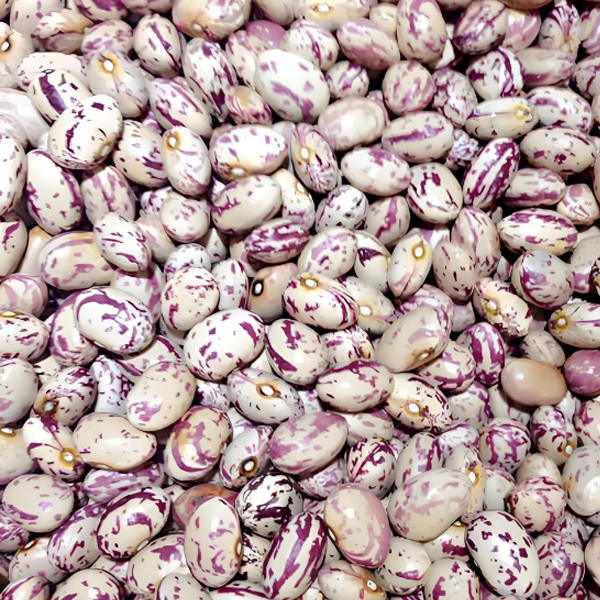
The core challenges in cleaning kidney beans lie in the difficulty of removing impurities, the fragility of seeds, poor equipment compatibility, and the difficulty of quality grading, directly impacting cleanliness, yield, and economic benefits.
I. Numerous and Difficult-to-Separate Impurities
Light Impurities: Leaves, straw, broken pods, dust; easily float or adhere, making thorough air separation difficult.
Heavy Impurities (Stones): Pebbles, clods of earth, metal; their specific gravity is close to that of kidney beans, making them difficult to separate completely by gravity separators.
Similar-Shaped Impurities: Immature seeds, shriveled seeds, insect-damaged seeds, broken seeds; similar in size/weight, difficult to remove with ordinary sieving.
Discolored/Moldy Seeds: Mottled, discolored, and moldy beans require color sorting; missed selection affects commercial value.
Adhesive Impurities: Damp soil and straw debris adhere to the bean surface, difficult to remove, and easily clog screens.
II. High Cleaning Damage Due to Seed Characteristics
Thin Skin and Easily Cracked: Kidney beans (especially white kidney beans) have thin seed coats, making them prone to breakage and peeling due to vibration, friction, and impact, thus lowering their grade.
Large Fluctuation in Moisture Content: At harvest, the moisture content is typically 15%–25%. High moisture levels result in soft seeds that easily stick together and clog the screen; excessive dryness leads to brittleness and breakage.
Large Size Variation: Large white kidney beans, small red kidney beans, and black kidney beans vary greatly in size, making it difficult to adapt to a single screen, easily leading to mixed grades or material leakage.
Irregular Shape: Oval/kidney-shaped beans have poor rolling properties and poor screen surface flow, affecting screening efficiency.
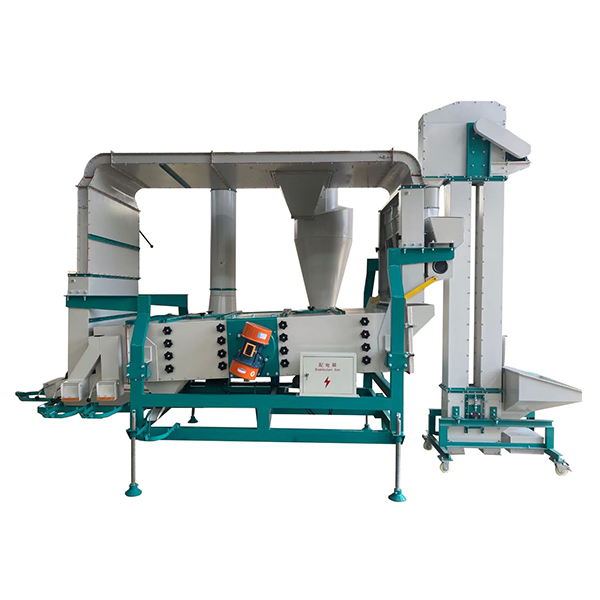
III. Equipment and Process Compatibility Issues
Screen Clogging/Wear: High-moisture materials stick to the screen; improper aperture (too small, causing blockage; too large, causing leakage); loose or deformed installation; excessive impurities accelerate wear.
Difficulty Controlling Air Separation Parameters: Excessive air velocity blows away good beans, increasing losses; insufficient airflow fails to remove light impurities; uneven airflow leads to poor localized cleaning.
Unstable Gravity Destoning: Fluctuations in material flow rate, table wear, and uneven airflow easily result in “high stone content” or “good beans being swept away by stones.”
Limited Color Sorting Accuracy: Small color difference between discolored grains and normal beans (e.g., light-colored kidney beans); concealed mold/insect damage, leading to high missed sorting rate; reduced processing speed when impurities are high.
Poor Equipment Versatility: Incompatible parameters with ordinary grain cleaners (e.g., wheat sieves), easily damaging beans and resulting in low cleaning cleanliness.
IV. Conflict Between Quality Grading and Efficiency
Difficulty in Balancing Cleanliness and Yield: Pursuing high cleanliness (e.g., 99.5%+) requires multiple processes, increasing breakage and losses; simplifying processes leads to excessive impurities.
Insufficient Grading Accuracy: Mixed sizes, shapes, and maturity levels affect the consistency of subsequent processing (e.g., canned goods, red bean paste).
Conflict Between Capacity and Quality: At high flow rates, the material layer is thick, resulting in insufficient screening/air separation and excessive impurity penetration; low flow rates are inefficient and costly.
V. Other Common Problems
Insect Infestation and Hidden Defects: Insect holes, eggs, and internal mold are difficult to detect visually, requiring X-ray inspection; ordinary cleaning cannot remove them.
Metal Foreign Object Contamination: Iron wires and nails are introduced during harvesting/processing, damaging equipment and posing food safety risks; magnetic separation/metal detection is required.
High Energy Consumption and Costs: Multi-machine combinations (primary cleaning + air screening + gravity separation + color sorting) result in long processes, high energy consumption, and complex maintenance, placing a heavy cost burden on small and medium-sized farmers.
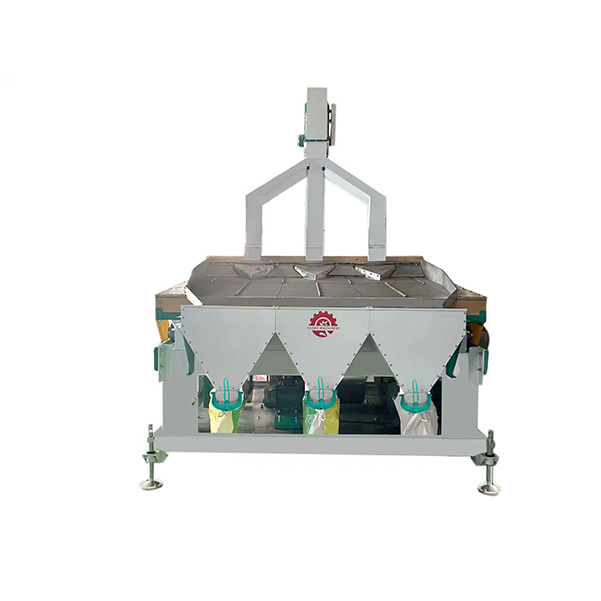
A Complete Solution for Removing Difficult Impurities in Green Bean Cleaning This solution addresses various stubborn impurities in green beans, including light impurities, side stones, clods of soil, broken grains, moldy or discolored grains, and sticky wet impurities. It addresses issues related to process flow, equipment configuration, parameter adjustment, material pretreatment, and operational control, providing a practical solution that can be directly implemented in production lines.
I. Raw Material Pretreatment to Reduce Impurity Difficulty from the Source
Controlling Feed Moisture Content: The moisture content of green beans entering the cleaning process should be controlled between 13% and 15%. Excessive moisture softens the beans, causes soil and straw to stick, clogs the screen, and prevents light impurities from adhering to the beans and being blown away. If the moisture content is too high, allow the beans to air dry naturally or at a low temperature, avoiding high-temperature exposure to prevent cracking and breakage.
Manual Processing + Initial Cleaning and Separation: The raw material is first passed through a vibrating screen to remove large, long straws, large clods of soil, broken pods, and rope-like materials. This prevents large impurities from clogging subsequent elevators, screens, and air ducts, reducing the load on downstream equipment.
Manual Processing + Initial Cleaning and Separation I. Loosening Clumps of Material: Damp and clump-covered kidney beans are first loosened by a dispersing roller to separate the sticky beans and mud clumps, preventing them from becoming trapped and unable to be removed.
II. Configuring a Grading and Cleaning Process for Step-by-Step Impurity Removal (Core Process): A combined process of initial cleaning → air screen cleaner → gravity destoner → grading machine → color sorter → magnetic sepraator. Impurities are removed step-by-step according to type, avoiding reliance on a single piece of equipment for hard impurity removal.
TAOBO air screen cleaner: Solves light impurities and impurities of varying sizes.
Equipped with double/triple-layer specialized screens: the upper layer removes large impurities, while the lower layer screens for small fragments, soil, and shriveled beans.
Uses dual-sided adjustable air ducts, allowing for fine-tuning of air speed from low to high: Too low an air speed will not remove broken leaves and straw; too high an air speed will carry away intact kidney beans, causing losses. The standard is to effectively remove light impurities without scattering good beans.
Adjusting the screen angle and vibration frequency to suit the kidney-shaped and poorly flowing characteristics of kidney beans ensures even distribution of material without accumulation, preventing localized impurity buildup.
TAOBO Gravity Destoner: Specializes in separating stones and clods of similar volume. Kidney beans, stones, and clods of similar volume and specific gravity cannot be separated by ordinary sieves; a gravity destoner is necessary. It controls the feed rate to ensure uniformity and consistency. Fluctuations in feed rate will result in uneven material layer thickness on the platform, incomplete destoning, or good beans being discharged with the stones. It stabilizes the platform angle, amplitude, and bottom airflow to create a stable fluidized layer, allowing stones to sink and kidney beans to float and separate into layers. Regularly clean the perforated mesh of the fish-scale sieve to prevent clogging, which can lead to layering failure and excessive stone content.
TAOBO grading machine: Removes broken pieces, insect-damaged small particles, and deformed particles. Custom-made sieves with different apertures are used according to kidney bean specifications (large white kidney beans, red kidney beans, and mixed kidney beans) to separate broken particles, insect-damaged small particles, and immature wrinkled particles, preventing them from mixing with the finished product.
TAOBO Color sorter: Solves moldy, discolored, and mottled beans. Color sorting removes moldy, browned, insect-damaged, and discolored beans that are indistinguishable to the naked eye and ordinary machinery. This involves: lowering the feed speed to improve recognition accuracy; fine-tuning the grayscale and color difference threshold for the inherent patterns on kidney beans to avoid mistakenly removing good beans while accurately removing bad ones; and regularly cleaning the lens and dustproof glass to prevent dust from obstructing the selection and causing missed beans.
TAOBO Magnetic separation + metal detection: Removes soil and metal impurities. Installing permanent magnet separators and metal detectors at the elevator and discharge port removes iron wires, nails, and metal scraps brought in during harvesting and processing, both removing impurities and protecting subsequent equipment.
Post time: May-11-2026