

Operational Guidelines for Cleaning Sesame and Soybeans Using an Air-Screen Gravity Separator
I. Distinguishing Material Characteristics
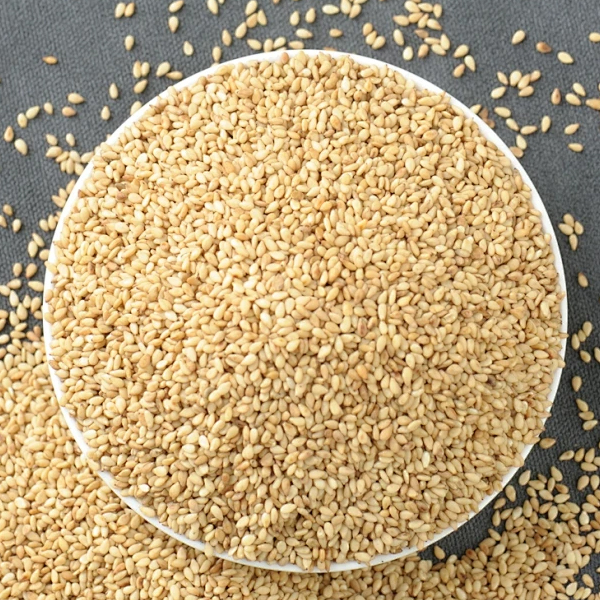
Sesame is a small-seeded oil crop characterized by low specific gravity and light kernels; it contains significant amounts of light impurities, dust, and shriveled seeds. Soybeans are large-grained and heavy, often containing moldy or insect-damaged kernels, soil clods, and stones of similar size. Airflow settings, vibration frequencies, and screen configurations are completely incompatible between the two; machine parameters must be recalibrated when switching materials, and direct switching without adjustment is strictly prohibited.
II. Screen Selection and Configuration
Cleaning Sesame: Use small-aperture woven screens. The upper screen removes large impurities and stalks, while the lower screen retains intact sesame seeds and allows fine soil and debris to pass through; apertures are kept small to prevent the loss of good-quality seeds.
Cleaning Soybeans: Use large-aperture perforated screens. The upper screen removes weed stems and large soil clods, while the lower screen discharges broken cotyledons and small, shriveled beans. The entire screen set must be replaced when switching materials; mixing screens with different aperture sizes is prohibited. Check seals after installation to prevent material leakage.
III. Airflow Adjustment Points
1. Sesame: Requires low, gentle airflow. The front air duct extracts dust, broken hulls, and shriveled seeds. The rear gravity separation duct uses low wind speed to lift only empty or shriveled seeds; excessive airflow risks sucking away intact, plump seeds (causing product loss), while insufficient airflow fails to remove light impurities, resulting in substandard purity.
2. Soybeans: Require stronger airflow. The air separation section blows away bean skins and broken stalks. The gravity separation table requires sufficient airflow to float and separate moldy or insect-damaged (lighter) beans while allowing plump, heavy beans to sink. Insufficient airflow fails to separate defective beans, whereas excessive airflow blows away sound beans, increasing product loss.
IV. Gravity Table Tilt Angle and Amplitude Control
Sesame: Set a shallow tilt angle and gentle vibration amplitude. Sesame seeds are light; an excessive tilt angle causes material to slide down too quickly for proper stratification, while excessive vibration causes chaotic bouncing, preventing the separation of good and bad seeds. Soybeans: The inclination angle should be slightly greater than that used for sesame, and the vibration amplitude should be appropriately increased. Due to their higher unit weight, soybeans require stronger vibration to allow heavier, sound beans to sink and deteriorated beans to float to the surface, thereby ensuring effective specific-gravity separation; insufficient vibration results in poor stratification, preventing the discharge of defective beans.
V. Feed Rate Control
The sesame feed rate must be kept low and uniform to ensure a thin material layer; this allows every sesame seed to be exposed to the airflow and vibration for separation. If the layer is too thick, impurities become trapped within the material and cannot be removed.
The soybean feed rate can be higher but must not result in overloading; an excessively thick material layer directly reduces the separation efficiency of the specific-gravity table. Variable-frequency control should be used throughout the process to regulate the feed speed and prevent fluctuations.
VI. Material Changeover and Machine Cleaning to Prevent Cross-Contamination
When switching between sesame and soybeans (or vice versa), the machine must be thoroughly cleaned. Clear residual material from air ducts, settling chambers, screen boxes, gravity separation decks, and discharge outlets to prevent the mixing of particles of different sizes. Also, remove accumulated dust from inside the fans; sesame dust tends to clump, which can destabilize airflow during subsequent operations.
VII. Adjustment of Impurity Discharge Outlets
For sesame, carefully manage the light impurity outlet to minimize the loss of good seeds. For soybeans, focus on the discharge baffles for damaged beans and stones on the gravity separation deck; adjust the baffle gaps to ensure the steady discharge of stones and moldy beans while minimizing the loss of sound beans.
VIII. Routine Maintenance and Finished Product Quality Control
1. Regularly clean fan filters; sesame dust easily clogs air ducts, leading to reduced airflow.
2. Check screen surfaces for clogged apertures; fine sesame dust can easily gum up the screens, so they require regular brushing. Soybeans can get stuck in screen holes; clear them promptly.
3. Conduct random checks on finished product purity during production, aiming for a consistent purity level of 99.5%. If impurity levels exceed limits, make fine adjustments to airflow, deck inclination, and feed rate.
4. Ensure proper equipment grounding and dust removal. Sesame processing generates significant dust; implement dust control and explosion-prevention measures to ensure workshop safety.
# Working Principle of the Air-Screen Gravity Separator
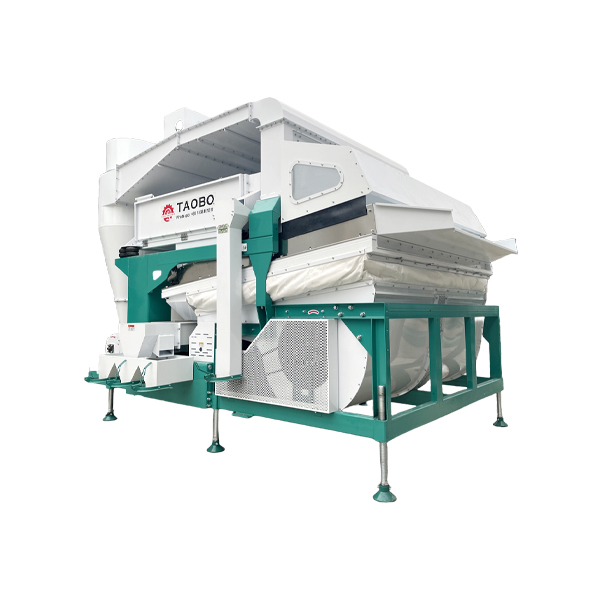
This machine integrates three physical separation methods—air separation, screening, and gravity separation—to classify and remove impurities from grain based on differences in size, weight, terminal velocity (suspension speed), and density. The process comprises four stages: feeding, air-screen pre-treatment, gravity-based precision separation, and discharge.
Material is uniformly conveyed to the feeding mechanism via a variable-frequency lift; a distributor spreads the material evenly before it enters the air-screen section. In the first stage (air separation), a fan generates negative pressure airflow to suction away lightweight impurities such as dust, broken husks, shriveled grains, and chaff, which are collected and discharged via a dust settlement chamber. Simultaneously, a vibrating screen box drives multi-layer screens in a reciprocating motion: the upper large-aperture screen retains coarse impurities (stalks, soil clods), while the lower small-aperture screen sifts out fine sand, soil, and broken kernels, yielding a preliminarily cleaned semi-finished product from the middle layer.
After the initial air-screen cleaning, the material drops onto the gravity separation deck. This deck is inclined and undergoes high-frequency reciprocating vibration, while a controlled upward airflow is supplied from beneath. Plump, dense kernels slide upward toward the high end of the deck due to the vibration; less dense materials—such as shriveled, moldy, or insect-damaged grains—are buoyed by the airflow, hovering above the material layer and flowing downward along the incline; the heaviest materials—such as stones and heavy impurities—remain in close contact with the deck surface and move toward the heavy-impurity discharge outlet. The separation of light and heavy materials is achieved through the coordinated interaction of vibration, deck inclination, and airflow.
By independently adjusting fan airflow, screen box amplitude, deck inclination, and feed rate, the system precisely controls material suspension and stratification for different crops. It ultimately separates the input into three categories—qualified finished product, light impurities, and heavy impurities (stones/moldy grains)—achieving high-precision cleaning with a finished product purity of up to 99.5%.
Post time: Sep-04-2026