
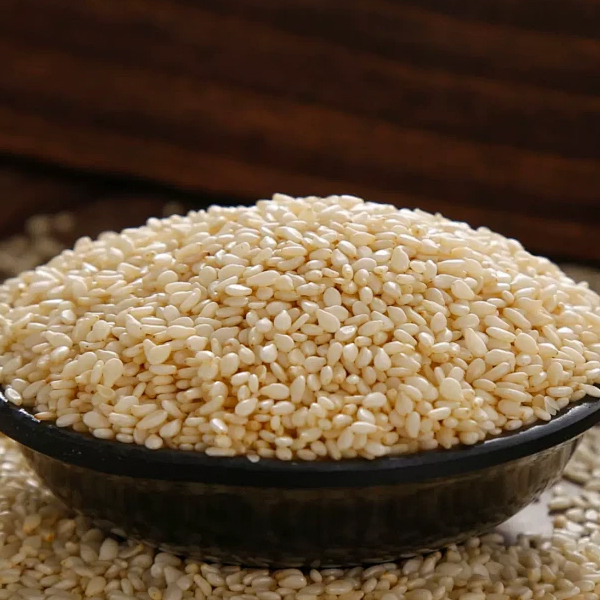
Classification of impurities in raw sesame (impurities present upon factory intake fall into four main categories: light impurities, heavy impurities, “side-by-side” impurities, and foreign grains/seeds):
I. Light, suspended impurities (removable via air separation/winnowing)
Stem and leaf fragments: Sesame stalks, broken leaf stalks, dried pod shells, and empty sesame hulls (most commonly introduced during harvesting and threshing);
Dust and fine ash: Field soil dust and fine sand (introduced during storage and transport);
Shriveled or immature seeds: Underdeveloped, hollow, or shriveled seeds; low specific gravity allows them to be easily lifted by airflow;
Fuzz and grass fragments: Field weed debris, plastic mulch shreds, and plant fibers.
II. Heavy “side-by-side” impurities (requiring destoners and specific gravity separators)
1. Stones and soil clods (primary heavy impurities)
Small soil clods, gravel, crushed red brick fragments, and hard soil lumps; particle sizes are similar to sesame seeds, making them impossible to remove via air separation alone—gravity destoners are required;
2. Gravel particles, sintered soil pellets, and hard, small soil balls.
III. Foreign grains and weed seeds (impurities of similar size; removed via gravity separator + color sorter)
Weed seeds: Seeds of goosefoot (lamb’s quarters), amaranth, sedge, and various other small field weeds; particle size and specific gravity are very close to those of sesame, making them difficult to separate;
Other oilseeds and grains: Small broken soybean fragments, millet, foxtail millet, proso millet, rapeseed, castor seeds, and broken buckwheat;
Moldy, clumped sesame: Damp, sticky moldy seeds, black mold clusters, and oil-clumped masses containing soil particles.
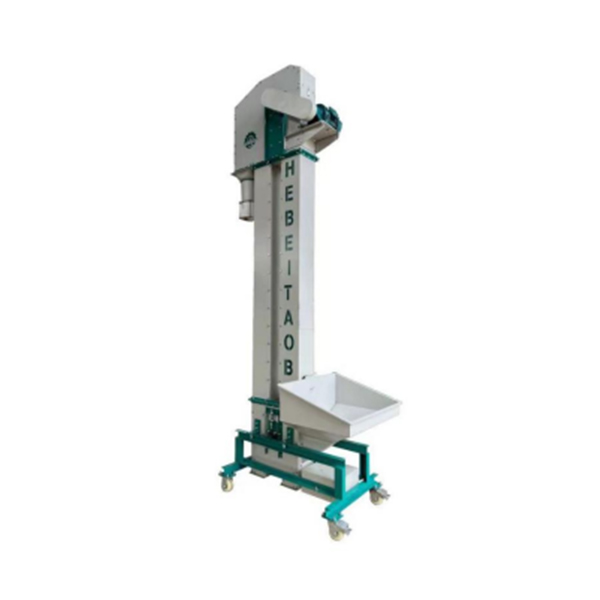
Bucket elevator designed specifically for sesame processing lines
I. Model Selection: Bucket elevators are the standard choice for sesame
1. Structural Components
Inlet, base, casing, head section, rubber/PU traction belt, food-grade plastic buckets, drive motor and gearbox, tensioning device, discharge outlet, and inspection hatch. The entire unit is typically constructed from 304 stainless steel to prevent sticking and rusting.
Round-link or plate-link chain bucket elevators are unsuitable for sesame: chains trap oil and accumulate material, causing seeds to jam, mold, and clump, while oily residues are difficult to clean.
2. Working Principle
The belt circulates continuously; buckets at the bottom scoop up raw sesame, lift it vertically to the head section, and discharge the material via centrifugal force into the inlet of the next piece of equipment.
II. Key Configuration for Sesame Bucket Elevators (Adapted to sesame’s tendency to stick and break)
Buckets: Shallow PP plastic buckets with smooth, rounded edges to minimize sesame breakage or skin damage; matte-finish inner walls prevent oil adhesion.
Belt: Oil-resistant rubber or food-grade PU belt; resistant to swelling or delamination caused by sesame oil.
Sealed Casing: Fully enclosed housing to prevent dust and sesame spillage/loss; compatible with dust extraction piping.
Low-Speed Operation: Linear speed of 1.2–1.8 m/s; slower than standard wheat elevators to reduce breakage rates.
III. Application Stages (Sesame Cleaning Line Layout)
Transfer/feeding between the pre-cleaning screen and the destoner/air separator;
Transfer after gravity separation; for the stage preceding color sorting, a Z-type bucket elevator is preferred over a standard bucket elevator (which causes higher breakage).
IV. Pros and Cons
Pros
Small footprint; vertical lifting saves factory space; enclosed design minimizes dust; lower cost compared to Z-type elevators.
Cons
Discharge at the head section causes minor breakage; unsuitable for hulled sesame or high-quality finished products (Z-type pivoting-bucket elevators are used for finished product lifting).
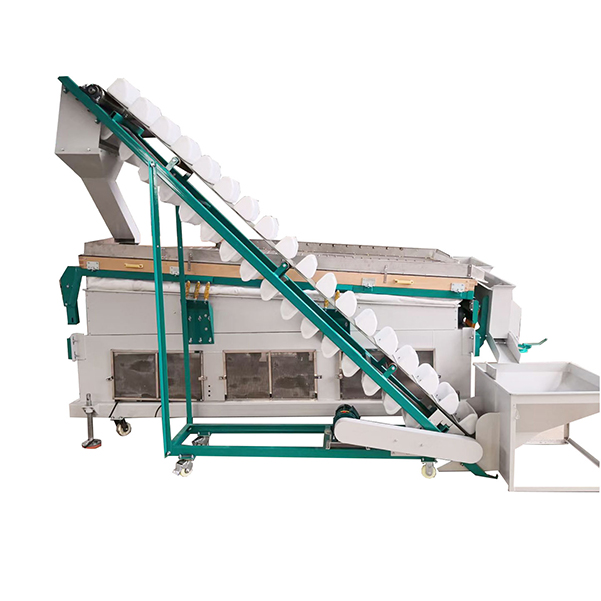
While bucket elevators are the most widely used type, the other two types of elevators described below are also extensively utilized.
1. Belt-Type Bucket Elevator
(Belt Bucket Elevator)
Applicable Stations: Vertical conveying between Raw Material Infeed → Preliminary Cleaning Screen → Destoner → Air-Screen Cleaner.
Features a food-grade, oil-resistant rubber or PU belt for traction; utilizes shallow plastic buckets with high-speed centrifugal discharge, ensuring smooth material flow without sesame adhesion.
Crushing rate ≤ 0.1%; suitable for conveying dry raw sesame seeds. Single-unit lifting height ranges from 3 to 35 meters, with an hourly output of 500 kg to 15 tons; it is the standard configuration for high-volume sesame cleaning operations.
The entire machine features a 304 stainless steel body with a sealed, dust-proof design, effectively minimizing material loss caused by airborne dust.
Note: The use of ring-chain or plate-chain bucket elevators is *not recommended* for this application. The gaps within the chains are highly prone to trapping oil-rich sesame seeds, accumulating dust and forming clumps, or jamming with seeds—resulting in high cleaning and maintenance costs.
2. Z-Type Pivoting Bucket Elevator (Preferred for Color Sorter Feeding and Fine Cleaning Stages)
Applicable Stations: Post-fine cleaning, feeding into color sorters, and conveying finished products into storage.
Features low-speed gravity discharge (0.2–0.4 m/s) via bucket inversion; ensures zero spillage and zero crushing throughout the entire process. Ideal for conveying high-value materials such as hulled sesame seeds and finely cleaned white sesame seeds.
Capable of multi-point conveying with horizontal-to-vertical-to-horizontal transitions; a single unit can link multiple color sorters, allowing for single-point feeding and multi-point discharge to facilitate flexible production line layouts.
The inner walls of the food-grade PP buckets feature a non-stick surface treatment, effectively resolving the common issue of oil-rich sesame seeds adhering to the buckets. This unit is a frequently specified component in complete sesame cleaning lines designed for export markets.
Post time: Jun-05-2026