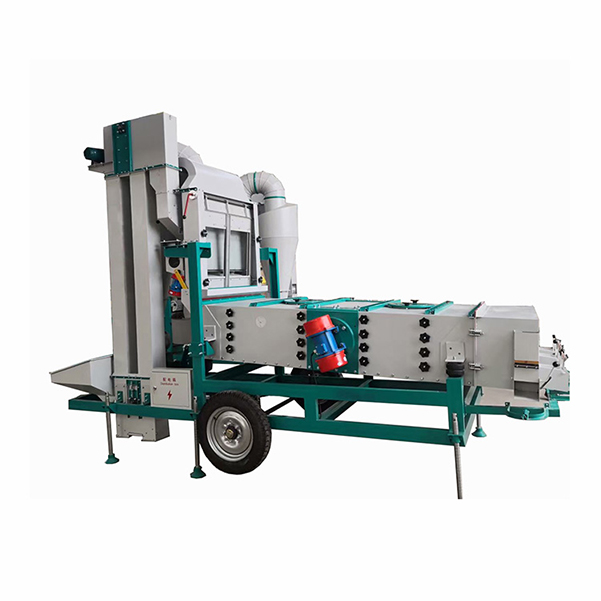
The air-screen cleaning machine is an integrated air-separation and screening device for cleaning grains, oilseeds, and miscellaneous grains. It primarily relies on the weight, particle size, and shape differences between materials and impurities. Through the coordination of airflow and vibrating screen plates, it achieves impurity removal, de-shriveling, grading, and cleaning of materials. It is widely used in the processing of agricultural products such as sesame, soybeans, peanuts, corn, wheat, and rapeseed.
I. Working Principle
The equipment mainly consists of a feeding mechanism, air-separation system, vibrating screen box, discharge port, blower, and frame.
Feeding: The material enters evenly, forming a thin layer to ensure the full effect of air separation and screening.
Air Separation: The blower generates a stable airflow, utilizing the difference in specific gravity to suck away or blow away light impurities such as shriveled grains, broken shells, dust, and straw.
Screening: The vibrating screen box drives multiple layers of screen plates to move, utilizing the particle size difference:
Upper Screen: Removes large impurities larger than grains, such as straw, clods of earth, and pods.
Lower Screen: Removes small impurities smaller than grains, such as fine sand, broken particles, and soil powder. Graded discharge: Light impurities, large impurities, and small impurities are discharged separately, ultimately yielding clean, plump, and uniform finished material.
II. Structural Features: Employs double- or multi-layer screens that can be quickly replaced to adapt to different materials.
Airflow, vibration amplitude, and inclination angle are all adjustable, ensuring high cleaning accuracy.
Continuous operation, high throughput, and high efficiency.
Gentle vibration minimizes damage to grains, preventing breakage and peeling.
Compact structure, stable operation, low noise, and easy maintenance.
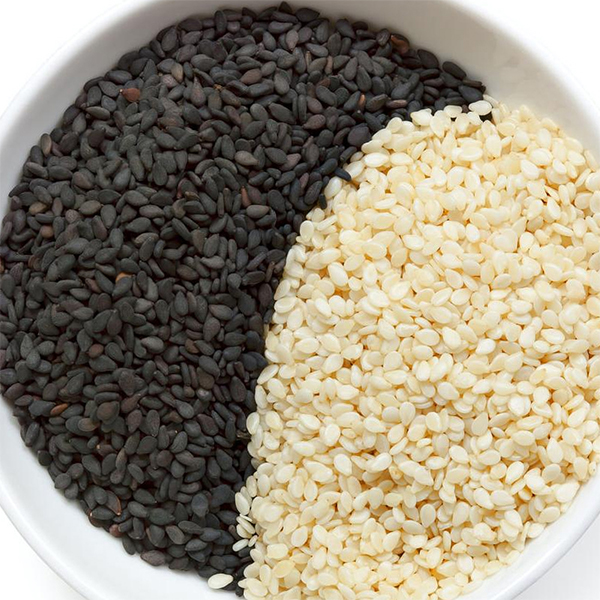
When using an air-screen cleaner to clean sesame seeds, soybeans, and peanuts, the core principles for screen selection are: layered configuration based on seed size, aperture slightly larger than the target seeds, balancing impurity removal and leakage prevention, and matching the air-screening parameters.
I. General Selection Principles
Layered Configuration: Air-screen cleaners typically use double-layer or multi-layer screens. The upper layer removes large impurities, while the lower layer removes small impurities and broken particles. The target seeds pass through both layers of screen holes and fall into the finished product area.
Aperture Matching: The screen hole diameter should be slightly larger than the minimum lateral dimension of the target seeds to ensure smooth passage while blocking corresponding impurities.
Screen Hole Shape: Round-hole screens are used for sesame seeds and soybeans; long-hole or square-hole screens can be used for peanuts (with shells/kernels) to accommodate their irregular shapes.
Material: 304 stainless steel is preferred (wear-resistant, rust-proof, food-grade), followed by food-grade nylon to avoid contamination.
Mesh Count Conversion: The number of holes within 1 inch (25.4mm) of length; the higher the mesh count, the smaller the aperture.
II. Selection of Sieve Plates for Different Crops (Aperture/Mesh Size + Combination)
1. Sesame (Smallest grain size, prone to leakage and clogging)
Grain Characteristics: Grain size approximately 1.5–2.0 mm, light, fine, easily mixed with shriveled grains, husks, and fine sand.
Sieve Plate Combination (Double Layer)
Upper Sieve (Removes Large Impurities): Round holes, 1.8–2.2 mm (approximately 10–12 mesh), removes straw, clods of earth, and large stones.
Lower Sieve (Removes Small Impurities + Grading): Round holes, 1.2–1.5 mm (approximately 16–20 mesh), removes fine sand, broken sesame seeds, and dust; small sesame seeds can be reduced to 1.0–1.2 mm (20–24 mesh).
Key Points: The lower sieve aperture should be slightly smaller than that of plump sesame seeds to prevent grain leakage; use a strong suction system to remove light impurities (shriveled grains, husks).
2. Soybeans (medium-sized, regular kernels)
Kernel characteristics: Kernel diameter approximately 5–8 mm (depending on variety), impurities mainly include pods, broken beans, small stones, and weed seeds.
Sieve assembly (double layer)
Upper sieve (removes large impurities): Round holes, 8–10 mm (approximately 2–3 mesh), removes pods, large stalks, and clods of mud.
Lower sieve (removes small impurities + grading): Round holes, 4.5–6 mm (approximately 4–6 mesh), removes broken beans, small stones, and weed seeds; 4–5 mm for small soybeans, 6–7 mm for large soybeans.
Key points: The ratio of upper to lower layer apertures should be approximately 0.6–0.7 to ensure clear grading; use a moderate airflow to remove shriveled beans and bean skins.
3. Peanuts (large, irregular kernels)
Kernel characteristics: Kernel diameter 8–15 mm, impurities include broken kernels, seed coats, fine sand, and small stones.
Screen Assembly (Double Layer)
Upper Screen (Removes Large Impurities): 16–18mm round holes (approx. 1–2 mesh), removes large pieces and unshelled kernels.
Lower Screen (Removes Small Impurities + Grading): 8–12mm round holes (approx. 2–3 mesh), removes broken kernels, fine sand, and small stones; 7–9mm for small kernels, 10–12mm for large kernels.
Key Points: Use a long-hole screen suitable for peanut shape; use a high-volume airflow to remove empty shells, seed coats, and other light impurities.
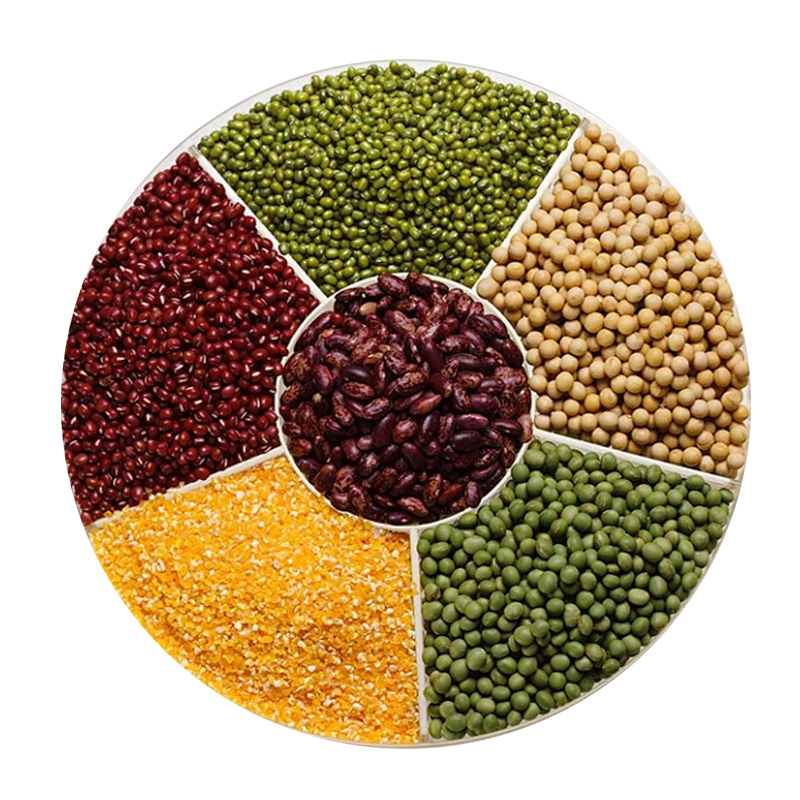
Advantages of using an air-screen cleaner for cleaning sesame seeds, soybeans, and peanuts:
1. Dual cleaning: air separation + screening for significantly higher purity than single cleaning methods. The air-screen cleaner utilizes both gravity difference (air separation) and particle size difference (screening) to remove light impurities (shriveled grains, broken skins, dust, empty shells), as well as larger impurities (straw, clods of earth, pods) and small impurities (fine sand, broken grains, small stones). A high level of purity is achieved in a single cleaning cycle, eliminating the need for secondary processing.
2. High adaptability, multi-purpose, and lower cost. Simply changing the screen plates and adjusting the airflow allows for the separate cleaning of various grains such as sesame seeds, soybeans, peanuts, corn, and rapeseed. No separate dedicated cleaner is required, making it suitable for various processing scenarios including purchasing points, processing plants, cooperatives, and export processing. 3. Continuous cleaning, stable output, and high efficiency: Continuous feeding and discharging, with a high degree of automation, requires only manual monitoring, screen changing, and airflow adjustment. It is several to ten times more efficient than manual screening, drum screens, and simple vibrating screens, making it suitable for batch processing.
4. Minimal damage to grains, preserving commercial value: Utilizing gentle vibration and airflow assistance, without strong compression or impact, it is less likely to cause grain breakage, peeling, or cracking. This is crucial for protecting the appearance of high-value oil crops (sesame, soybeans) and nuts (peanuts).
Post time: Feb-26-2026