
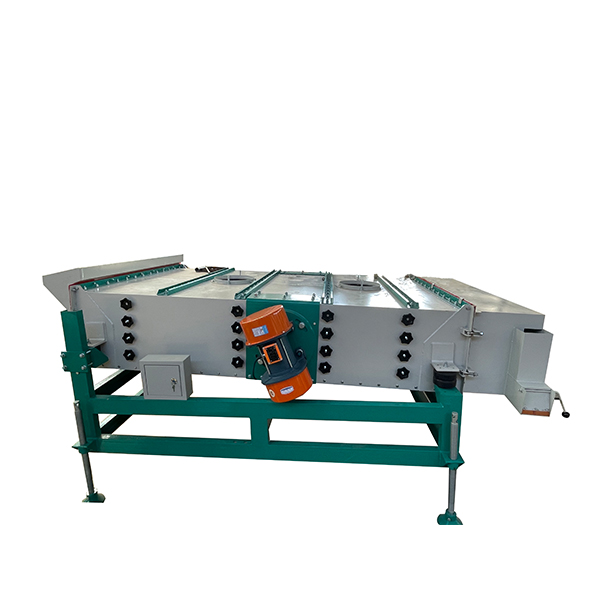
In a soybean processing line, the grading sieve sorts the beans by size and removes both large and small impurities, while the polishing machine performs surface finishing—removing dust and enhancing luster. Working in tandem, these two machines transform the soybeans from merely “clean” into a product of “superior appearance and high commercial grade.”
I. Grading Sieve (Vibrating Grading Sieve Specialized for Soybeans)
1. Workflow (Position within the Production Line)
Typically positioned as follows: Initial Cleaning / Air-Screening → Grading Sieve → Gravity Destoner → Polishing → Color Sorting → Packaging
Feeding: Material is fed uniformly into the feed hopper via an elevator;
Layered Screening: The material spreads across multiple vibrating sieve decks and flows downward from top to bottom;
Graded Discharge:
Upper Deck (Large Mesh): Retains large impurities (straw, soil clumps, large stones);
Middle Deck (Medium Mesh): Retains intact, high-quality beans;
Lower Deck (Small Mesh): Allows broken beans, split halves, small seeds, and fine sand to pass through;
Integrated Air Separation: A fan positioned above the sieve decks blows away light impurities (bean hulls, grass clippings, dust);
Discharge: Materials of different particle sizes are discharged through their respective outlets, completing the grading and impurity removal process.
2. Working Principle
Vibrating Screening Principle: A vibrating motor drives the sieve body to perform high-frequency, low-amplitude linear vibrations; the material bounces and slides across the sieve decks, stratifying according to particle size;
Mesh Size Matching: The mesh apertures of the three sieve decks decrease in size from top to bottom, allowing only particles that match the specific dimensions to pass through;
Combined Air-Screening: An airflow passes through the layer of material; light impurities float upward and are suctioned away, while heavier impurities sink to contact the sieve surface, thereby enhancing grading precision.
3. Primary Functions
Grading by Size: Sorts soybeans into large, medium, and small sizes to meet diverse market and processing requirements (e.g., food-grade beans, seed beans, oil-extraction beans);
Impurity Removal: Simultaneously eliminates large impurities, small impurities, light impurities, and broken beans in a single pass, thereby reducing the workload on downstream equipment;
Optimization of Subsequent Processes: By ensuring uniform particle size, the grading sieve allows the soybeans to proceed to the gravity destoner, polishing machine, and color sorter with greater efficiency and minimal material loss.
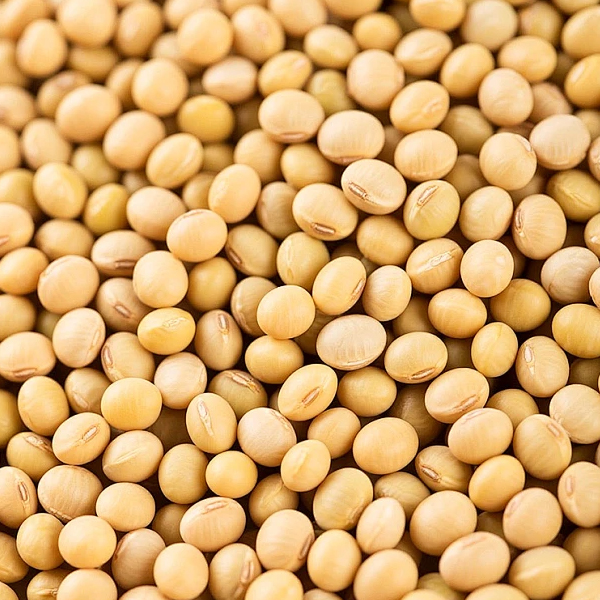
II. Polishing Machine
1. Workflow (Position within the Production Line)
Typically positioned after grading and destoning, but before color sorting:
Feeding:Clean, graded soybeans are fed uniformly into the polishing machine.
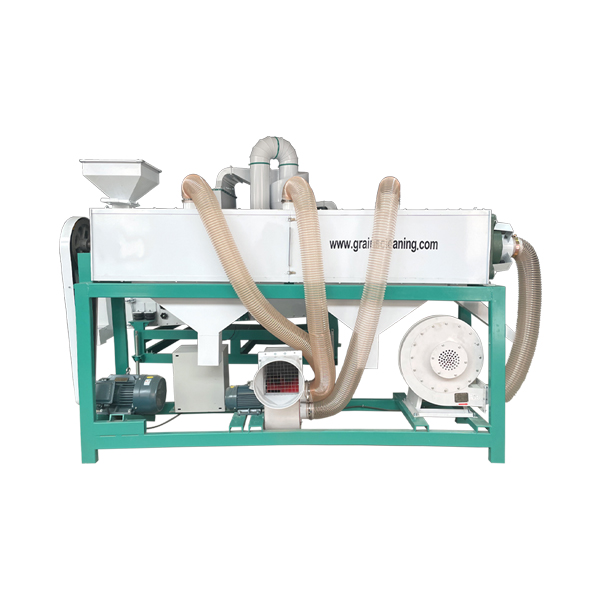
Gentle Polishing: Inside the machine, the soybeans are rubbed and tumbled via a spiral arrangement of cotton cloth or brushes.
Dust & Stain Removal: Surface dust, mud spots, mold patches, and residual husks are abraded away.
Air Separation & Dust Extraction: An integrated fan extracts and collects the removed dust and husks.
Discharging:Clean, bright-surfaced soybeans are discharged, ready to proceed to color sorting or packaging.
2. Working Principle
Spiral Friction Polishing: The main shaft is fitted with a spiral assembly featuring pure cotton belts or food-grade brushes; as it rotates, it fluidizes the material flow, causing the soybeans to tumble and rub against one another as well as against the belts.
Gentle Abrasion:The cotton belts or brushes make soft contact with the beans, abrading only the surface without damaging the kernels, resulting in a very low breakage rate.
Airflow Dust Extraction: An internal fan generates negative pressure to instantly extract dust and husks, thereby preventing secondary contamination.
3. Key Functions
Surface Cleaning & Brightening: Removes mud spots, mold patches, loose husks, and dust, giving the soybeans a uniform, bright, and lustrous appearance—significantly enhancing their commercial grade and market value.
Elimination of “Spotted Beans”: Resolves issues regarding surface discoloration and dirt, resulting in a more consistent and uniform product appearance.
Enhanced Color Sorting Accuracy:Polishing reduces surface color variations and impurities, allowing color sorters to identify defects more precisely and lowering the rate of false rejections.
Improved Storability:Removes surface mold spores and insect eggs, thereby reducing the risk of spoilage and pest infestation during storage.
III. Coordination and Distinctions Between the Two Within the Processing Line
Grading Screen: Performs size classification and impurity removal—sorting the beans by size and eliminating both oversized and undersized foreign matter.
Polishing Machine: Performs surface refinement and brightening—cleaning the exterior of the beans to give them a clean, lustrous finish.
Grading First, Then Polishing: First, the beans are sorted by size; then, their aesthetic appearance is enhanced. The result is a finished product that is both uniform in specification and highly appealing in appearance.
Post time: May-27-2026