
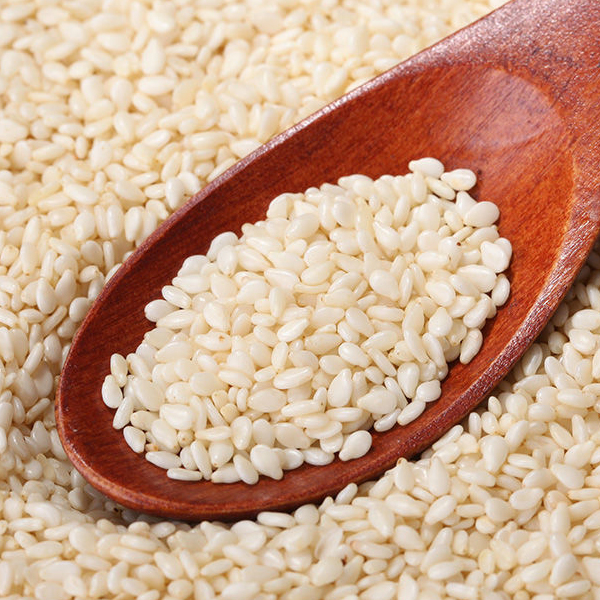
Sesame is an oil crop with fine particles and light specific gravity. During the harvesting process, a large number of different types of impurities are contained, including plant impurities, soil, sand and gravel, broken seeds, etc. The presence of impurities will directly affect sesame storage, oil processing quality and finished product oil yield. The air screen cleaner is the core equipment for primary cleaning of sesame. It relies on the combination of wind power and multi-layer screens to achieve grading and impurity removal, and is used with a bucket elevator to complete material transfer and loading. The two cooperate with each other to form the basic unit of the sesame pretreatment production line. The following describes in detail the types of impurities that the air screen cleaner can remove, the working principle of the equipment, and the functions of the elevator.
When the air screen cleaner processes sesame raw materials, the impurities that can be removed can be divided into four categories according to their physical characteristics: light impurities, large impurities, small impurities, and side-by-side impurities. The first category is light impurities, which mainly include sesame straw fragments, dry leaves, chaff, shriveled sesame seeds, insect-eaten empty shell seeds, dust and fine grass clippings. The density of this kind of material is much lower than that of full sesame seeds, and the suspension speed is small. It is the main separation object in the air separation process. Broken grass and dried seed husks mixed in during harvesting and drying are mixed inside the raw materials. If not removed in advance, they will carbonize and turn black during subsequent processing, contaminating the sesame oil and causing the finished oil to deepen in color. Deflated and insect-eaten sesame seeds lose internal nutrients, have low oil content, and are prone to moisture absorption and mold. Bringing them into the finished product will reduce the overall quality, and the storage phase will also accelerate the deterioration of the entire batch of materials.
The second category is large impurities, including caked soil, coarse straw, branches, twine, weed clumps, large soil particles, and other crop grains that are significantly larger than sesame seeds. Sesame seeds are very small in size, mostly 2-3 mm in diameter. The geometric size of large grains is much larger than sesame grains, and they can be intercepted by sieving. Such large impurities not only have no processing value, but hard clods of soil and branches will also wear out the spirals, grinding discs and other components of subsequent equipment. In serious cases, they can cause screen clogging, disrupt the material flow of the entire production line, and cause feed jams.
The third category is small impurities, mainly fine sand, fine stone powder, broken sesame seeds, and small grass seeds. The particle size of this type of impurities is smaller than normal sesame seeds and can be discharged downward through the mesh holes. During the field harvesting and drying process, sesame seeds inevitably adhere to soil dust. Fine sediment is mixed into the sesame seeds, which will cause sludge precipitation during oil extraction, increasing the burden of oil filtration and giving the oil an earthy smell. Broken sesame seeds have a large surface area and are easily oxidized and rancid, shortening the storage period of sesame seeds.
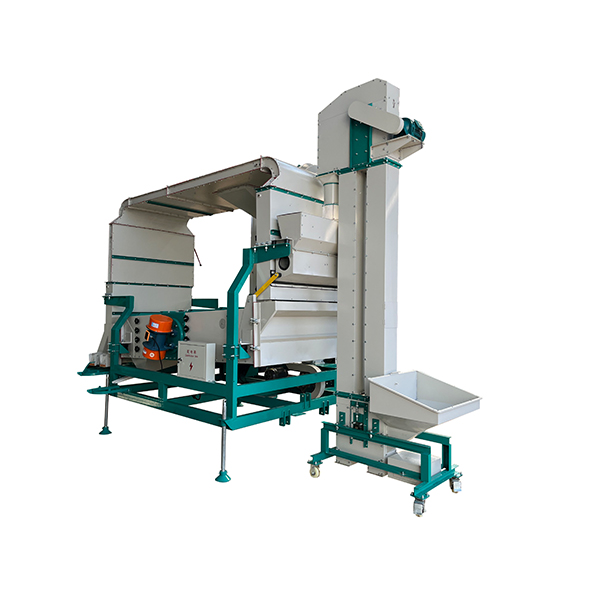
The fourth category consists of “co-sized” impurities—impurities that are similar in size to sesame seeds but differ in weight—such as certain weed seeds of similar dimensions and broken oilseed fragments. These impurities cannot be separated solely by sieve aperture size; instead, separation relies on differences in aerodynamic properties and specific gravity, making them particularly challenging to remove during the sesame cleaning process. It should be noted that air-screen cleaners have limited effectiveness in removing stones that closely match sesame seeds in both size and specific gravity; such stones require further processing using a gravity-based destoner.
The air-screen cleaner operates by combining aerodynamic air separation with mechanical vibration screening, utilizing airflow generated by a fan, multi-layered screens of varying specifications, and a vibration mechanism to remove impurities from the sesame. Material enters the machine through the inlet and passes through a distribution mechanism; a spreader plate breaks up and thins out the accumulated sesame, ensuring an even spread across the first screen layer. This prevents localized piling and ensures that both the airflow and the screen surface effectively act upon every single sesame seed.
A vibration motor drives the entire screen assembly in a reciprocating motion. With the screens installed at a specific incline, the sesame flows slowly downward along the surface under the influence of the vibration. The first layer acts as a coarse impurity screen; its apertures are larger than the sesame seeds, allowing plump seeds to pass through while retaining larger items—such as stalks, clods of soil, and weed clumps—on the surface, which are then discharged via the coarse impurity outlet. The material then drops onto the second layer, which serves as the primary precision screen; its apertures are slightly smaller than the sesame seeds, so intact, plump seeds remain on the surface and continue moving forward, while finer particles—such as sand, broken sesame fragments, and dust—pass through the apertures to the lower section and are discharged through the fine impurity outlet.
As the material moves across the screen surfaces, a centrifugal fan continuously generates a transverse or vertical separation airflow that passes through the flowing layer of sesame seeds. Utilizing differences in suspension velocities, lighter materials—such as husks, shriveled seeds, straw fragments, and dust—are entrained by the airflow and transported to a settling chamber; here, the light impurities settle and are collected as the airflow velocity drops, while dust is captured and processed via an external dust collection system connected to the exhaust port. Plump sesame seeds, possessing higher suspension velocities, remain unaffected by the wind and continue to move along the screen surface. By adjusting parameters such as fan airflow, screen vibration frequency, and screen inclination angle, the process can be optimized for the specific characteristics of the sesame material; excessive airflow risks blowing away good seeds, while insufficient airflow fails to separate light impurities. The screen inclination angle influences material flow velocity: if the flow is too fast, impurity removal is incomplete, whereas if it is too slow, material accumulates and causes blockages on the screen. Following this combined air-and-screen treatment, clean sesame—freed from light, large, and small impurities—discharges from the finished product outlet, completing the cleaning process. This integrated system combines air separation and screening, overcoming the limitations of using either method alone—specifically, the inability of screening to separate impurities based on specific gravity differences and the inability of air separation to separate impurities based on particle size differences—thereby enabling the simultaneous removal of various types of impurities.
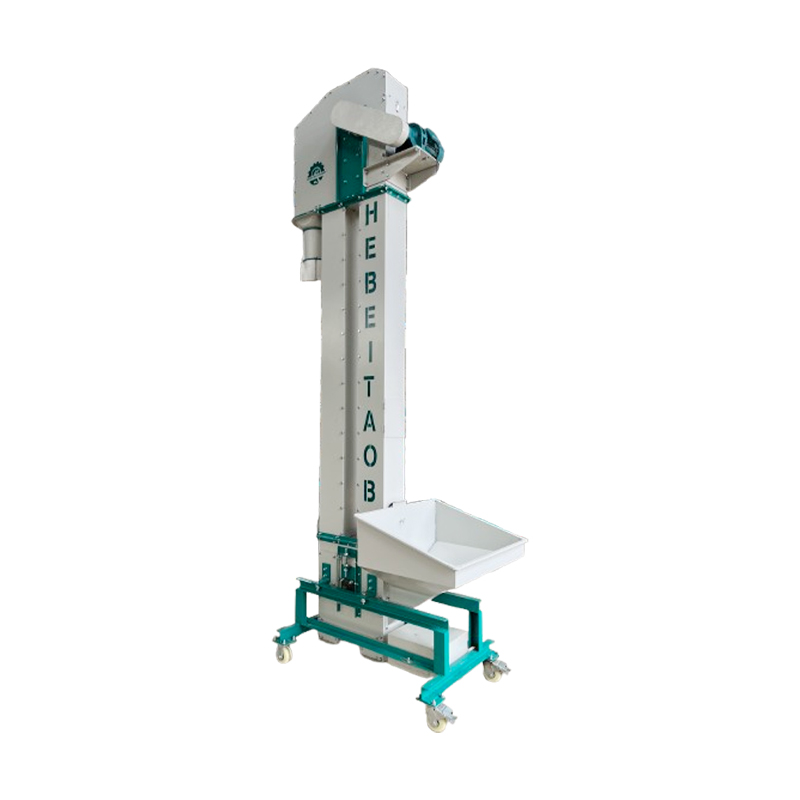
As a key piece of auxiliary equipment in the sesame cleaning production line, the bucket elevator plays a crucial role in material transfer, acting as the link between the upstream raw material storage bin and the air-screen cleaner. First, it enables enclosed material feeding; sesame seeds are tiny, and manual dumping or feeding generates significant dust, which pollutes the workshop environment and causes raw material loss. The bucket elevator features a fully enclosed casing; buckets scoop up raw sesame from the bottom bin and are lifted vertically by a chain or belt mechanism to deliver the material smoothly to the air-screen cleaner’s inlet. Since the material is transported entirely within the casing, dust leakage is minimized, raw material loss is reduced, and the workshop working environment is improved.
Second, it ensures a stable material flow rate. The elevator can be equipped with a variable-speed mechanism to adjust the conveying volume, providing a continuous and uniform feed to the air-screen cleaner. Air-screen cleaners require high feed uniformity; fluctuations in volume—causing the thickness of the material layer on the screen to vary—can compromise air-separation performance, leading to incomplete removal of light impurities or the accidental loss of good product due to the airflow. By providing a stable feed, the elevator maintains the material layer thickness within an optimal range, keeping the air-screen cleaner operating at peak efficiency and ensuring consistent cleaning purity.
At the same time, the elevator reduces manual labor intensity. Handling large batches of raw sesame manually is labor-intensive and inefficient, often resulting in uneven feeding. The elevator connects to the raw material storage area, enabling the continuous, high-volume transport of material suitable for large-scale, continuous production, thereby increasing the automation level of the entire pre-processing line. Furthermore, the elevator can be used to transfer cleaned sesame from the air-screen cleaner to the next stage—such as color sorting, oil pressing, or packaging silos—facilitating material flow between processes. Its enclosed structure also prevents the introduction of secondary impurities during transport, protecting the cleaned sesame from re-contamination by external dust.
Post time: Sep-29-2026