
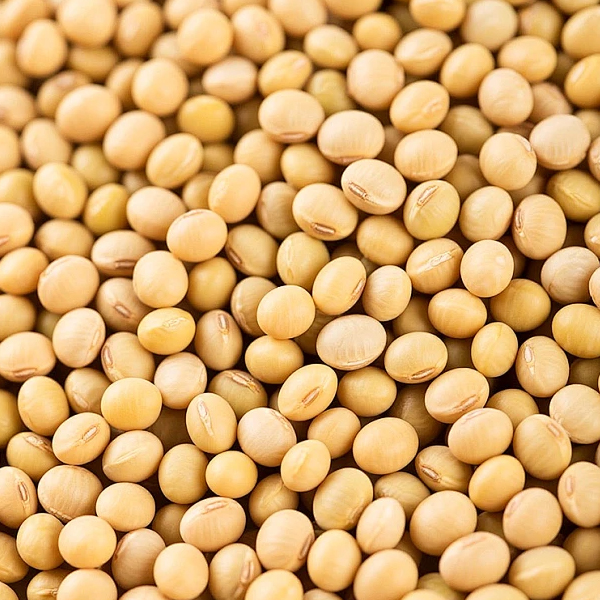
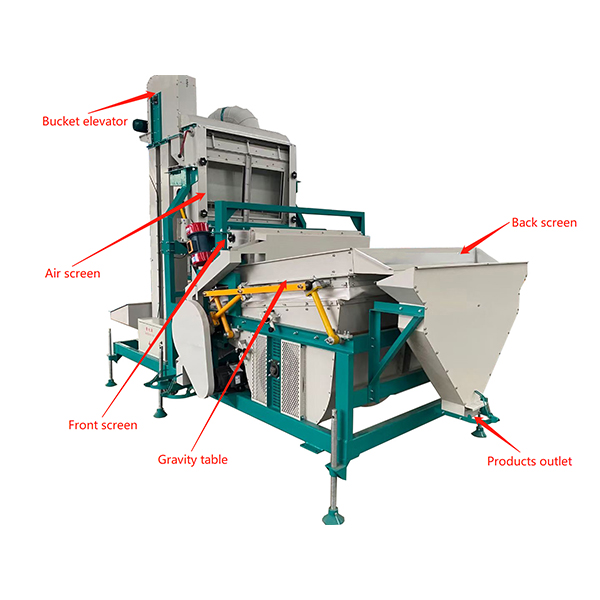
When processing raw soybeans using an air-screen gravity cleaner, the machine separates various types of impurities through the combined action of air separation, screening, and gravity-based stratification. Lightweight impurities—such as soybean stalks, pod fragments, dried leaves, broken seed coats, dust and grass clippings, empty or shriveled green beans, insect-damaged hollow beans, and lightweight moldy beans—are removed by the airflow in the air duct. Large debris—including clods of soil, stones, coarse stalks, twigs, and woven bag fragments—is intercepted and discharged by the upper screen with large apertures, while fine particles like sand, soil, broken bean fragments, and tiny weed seeds are removed through the lower fine-mesh screen. Heavy impurities—such as stones, soil pellets, severely moldy/blackened beans, and metal particles—which are similar in size to soybeans but differ in specific gravity, are precisely sorted via air-suspension stratification on the gravity table. Additionally, the machine simultaneously removes foreign seeds (such as weed seeds, corn, sorghum, and other legumes) and defective beans (such as sprouted beans or beans clumped with mud), ultimately yielding clean, high-quality soybeans.
When the overall impurity content of the raw soybeans is low, the material spreads evenly and thinly across the screen surface and gravity table; airflow from the fan remains stable, allowing for effective separation of light impurities without clogging the screens. The material layers on the gravity table are distinct, enabling stable operation at the rated feed rate with thorough impurity removal, minimal product loss, and standard processing efficiency. Conversely, if impurity levels are high, the accumulation of mixed light impurities, large debris, fine soil, and stones creates an excessively thick material layer that airflow cannot penetrate; this hinders the removal of light impurities—such as hulls, shriveled beans, and chaff—drastically reducing separation efficiency. Large amounts of soil and broken bean fragments easily clog the screen apertures, obstructing flow paths and preventing proper screening or retention of impurities, which degrades grading performance and necessitates frequent shutdowns for cleaning, thereby shortening effective operating time. Simultaneously, an accumulation of stones and soil clumps on the gravity table surface disrupts the material’s suspension and stratification, preventing heavy impurities from sinking and discharging; this leads to stones and moldy beans mixing into the finished product and reduces sorting precision. High impurity loads also increase the strain on fans and vibrating motors, accelerate dust buildup and blockages in air ducts, and cause vibrational imbalance; to maintain cleaning quality, the feed rate must be reduced, significantly lowering hourly throughput. Furthermore, an excessive proportion of light impurities and dust overloads the dust collection system, causing dust leakage and duct blockages that further impair air separation performance. Finally, excessive heavy stones and soil clumps accelerate wear on the gravity table and increase equipment failure rates, continuously dragging down overall processing efficiency and the yield of qualified product.
Factors Affecting the Performance of Air-Screen Gravity Cleaners in Removing Impurities from Soybeans
I. Material Characteristics of the Raw Soybeans
Soybean moisture content: Excessive moisture causes beans to become sticky, leading to clumps of broken beans and hulls that resist air separation and hinder gravity-based stratification; conversely, low moisture makes hulls brittle, increasing the volume of light impurities and placing a heavier load on the airflow system.
Impurity types and proportions: Varying ratios of soil, straw fragments, shriveled beans, stones, moldy beans, and insect-damaged beans significantly alter cleaning difficulty; a high stone content overloads the gravity separation deck, while excessive light impurities can lead to good beans being carried away if airflow is insufficient.
Soybean kernel uniformity: Uneven sizing and a high proportion of broken beans reduce the effectiveness of screen matching; good beans may be discharged along with debris, and the reduced density difference between shriveled and sound beans impairs stratification performance.
II. Equipment Airflow and Velocity Regulation (Core of Air Separation)
Main fan airflow: Insufficient airflow fails to remove hulls, dust, and shriveled beans; excessive airflow sucks up plump beans, resulting in product loss.
Air duct direction and pressure balance: Blockages or misaligned outlets cause uneven airflow, resulting in clean separation on one side and impurity carry-over on the other.
Light impurity suction inlet opening: The opening size controls the volume of light impurity removal; improper adjustment leads to incomplete removal of shriveled beans or the loss of good soybeans.
III. Vibrating Screen System Parameters
Screen aperture configuration: The upper large-mesh screen removes straw and soil clods, while the lower small-mesh screen removes fragments and fine soil; apertures that are too large allow impurities to pass through, while those that are too small cause clogging, directly reducing impurity removal efficiency.
Screen inclination, vibration frequency, and amplitude: Insufficient inclination causes slow material flow and accumulation, leading to screen clogging; excessive inclination causes material to flow too quickly for effective screening; insufficient vibration frequency or amplitude results in poor material bouncing and stratification, preventing impurities from passing through the screen. Screen clogging: Soil and sticky bean skins block the screen apertures, rendering the screening channels ineffective and preventing the separation of impurities of various sizes.
IV. Gravity Separator Operating Conditions (Crucial for removing stones and moldy/shriveled beans)
Gravity separator vibration amplitude and frequency: Insufficient vibration prevents beans from stratifying by specific gravity, causing heavy stones and moldy beans to remain mixed with good beans; excessive vibration causes chaotic material tumbling, leading to a failure in stratification.
Gravity separator bottom airflow volume: Airflow from below lifts the soybeans to create a suspended, stratified layer; insufficient airflow prevents stratification, while excessive airflow mixes light and heavy materials, preventing stones from sinking and separating.
Gravity separator deck inclination angle: An improper angle hinders the discharge of heavy impurities, causing them to accumulate on the deck and continuously contaminate the finished soybeans.
V. Feeding and Overall Machine Operating Conditions
Feed flow uniformity: Fluctuating feed rates and unstable material layer thickness cause issues; thin layers allow airflow to carry away good soybeans, while thick layers result in inadequate stratification (affecting airflow, screening, and gravity separation) and incomplete impurity removal.
Feed distribution uniformity: Material piling up on one side creates uneven loads on the screen surface and gravity separator deck, significantly reducing impurity removal effectiveness in specific areas.
Equipment sealing: Air leaks in the machine body disrupt internal air pressure and velocity, reducing air separation efficiency and causing dust leakage while failing to meet standards for light impurity separation.
Equipment maintenance status: Dust accumulation on the fan, blocked air ducts, damaged screens, and aging vibration-damping components (causing unstable vibration) all continuously degrade the overall cleaning performance.
After undergoing a comprehensive sorting process—integrating air separation, multi-layer screening, and gravity-based stratification—soybean raw materials are thoroughly cleansed of impurities such as stalks, hulls, dust, shriveled beans, weed seeds, soil clods, gravel, and moldy or damaged beans. The system simultaneously discharges impurities and foreign matter of varying weights and sizes through multi-stage separation channels; this ensures thorough impurity removal with minimal loss of usable soybeans. The resulting clean soybeans achieve a stable purity level of 99.5%—free from stones, moldy grains, debris, and weed seeds—and consist of clean, plump kernels that fully meet the cleanliness standards required for oil pressing, specialty grain processing, and export markets.
Post time: Jul-09-2026