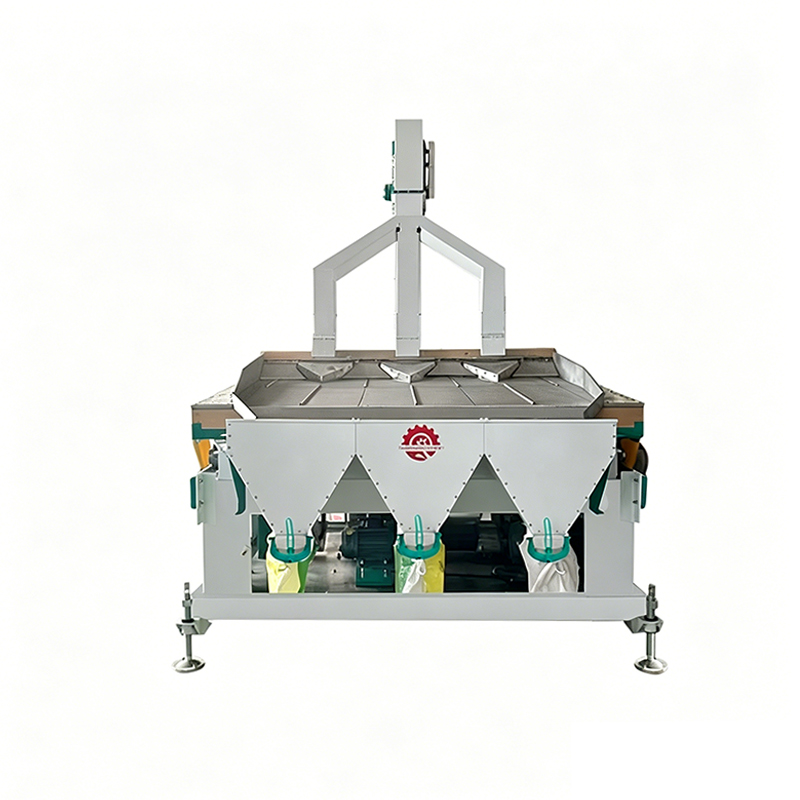
In the industries of soybean crushing, soy product processing, sesame oil extraction, and deep processing of sesame-based foods, impurities such as stones, clods of earth, and “companion stones” (stones similar in size to the product) pose a major threat to product quality and processing equipment. Standard vibrating screens rely solely on particle size for separation; while they can remove impurities that differ significantly in size, they are ineffective at removing companion stones that closely match the product’s dimensions. Gravity destoners, however, utilize a combination of specific gravity differences, vibration, and controlled airflow to separate heavy impurities. By accommodating the distinct characteristics of these materials—soybeans (large, high-density) versus sesame seeds (tiny, high oil content, prone to generating dust)—they serve as indispensable equipment in grain and oil pretreatment lines. Given the significant physical differences between soybeans and sesame seeds, a single destoner requires specific adjustments to airflow, vibration amplitude, screen inclination, and feed rate to ensure stable, efficient operation and the smooth functioning of the entire downstream production line.
The core separation principle of the gravity destoner relies on differences in specific gravity, suspension velocity, and friction coefficients between the product and impurities (stones and clods). The machine employs reciprocating directional vibration of the screen surface combined with a uniform upward airflow to fluidize the material, causing it to suspend and automatically stratify. Heavier stones and clods remain in contact with the screen surface and move toward the high end under the influence of vibrational inertia, eventually exiting through the stone discharge outlet. Meanwhile, sound seeds float in the upper layer, flowing down the slope of the screen toward the low end to exit via the clean material outlet. Light impurities—such as shriveled seeds, broken fragments, and dust—are carried away by the airflow and collected by the dust removal system, thereby achieving complete separation of the product from heavy impurities. Because soybeans and sesame seeds differ significantly in particle size, specific gravity, flowability, and dust generation, the entire processing workflow—including feeding and material distribution, parameter settings, stratification and separation, and impurity/dust removal—must be tailored and adjusted accordingly.
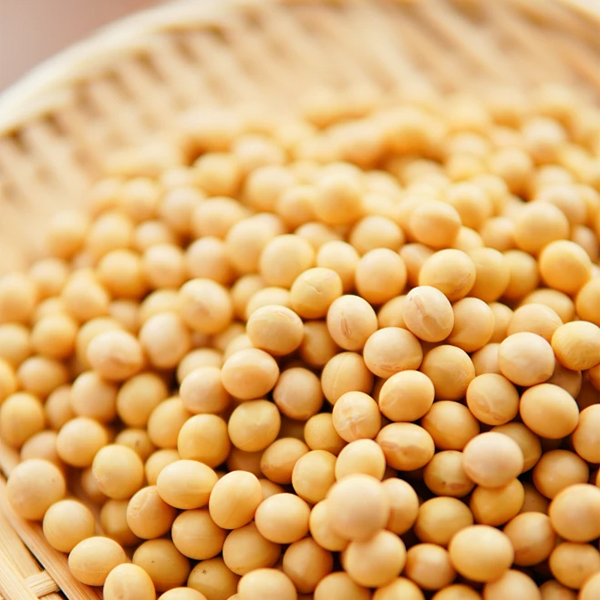
The complete workflow for processing raw soybeans comprises several stages: feeding and material distribution, fluidization and stratification, counter-flow separation of heavy impurities, discharge of light impurities, and final product discharge. Soybean raw material is fed into the destoner’s inlet hopper via a bucket elevator and distributed across the full width of the screen surface by a feed-spreading baffle. Strict control of the feed rate ensures a uniform and stable material layer thickness, preventing localized piling or gaps in the material flow; an excessively thick layer impedes airflow penetration, impairing stratification, while an overly thin layer allows air to blow straight through, disrupting the material’s fluidized state and directly reducing destoning efficiency. Given the large size and specific gravity (approx. 1.2–1.4) of soybeans, the screen is set at an inclination of 5–8° and a vibration frequency of 12–16 Hz, with airflow adjusted to induce moderate suspension without blowing the beans away. Upon spreading onto the fish-scale destoning screen, the material undergoes stratification driven by the combined action of vibration and upward airflow: stones and soil clumps (specific gravity > 2.0) sink rapidly to the screen surface; plump, intact soybeans occupy the middle layer; and shriveled, insect-damaged, or broken beans—having lower specific gravity—remain suspended in the upper layer. Inertial thrust from the screen’s directional vibration drives the stones (resting against the screen) toward the stone-collection zone at the high end, where they are continuously discharged. Meanwhile, the suspended shriveled grains, hulls, and dust are extracted by the aspiration system and sent to a dust collector, while the plump, intact soybeans flow down the inclined screen toward the low-end outlet, proceeding to the next stage of flaking, crushing, or packaging. In soybean processing facilities, raw materials are often contaminated with soil clumps and gravel; if these impurities are not removed before entering flaking or crushing machines, they cause roller wear and impact damage to components, shortening equipment lifespan and potentially triggering breakdowns and downtime. Consequently, the destoning process is a critical factor determining the operational cycle of the entire pretreatment production line.
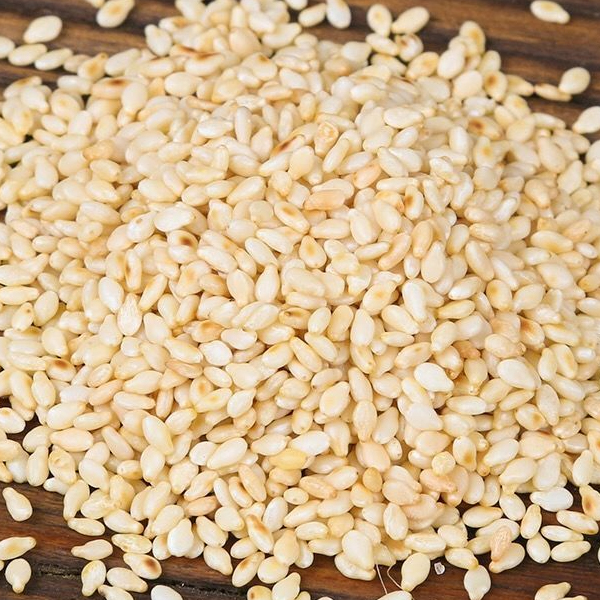
The processing workflow for sesame seeds is more complex than that for soybeans. Sesame seeds are tiny and lightweight, with a specific gravity of 0.9–1.0 and high oil content; the material tends to clump and stick together, and the production process generates significant fine dust. Furthermore, the particle size of small stones and grit is very similar to that of sesame seeds, making separation far more difficult than with soybeans. Upon entering the equipment, the material is first evenly distributed by the feeding mechanism; the feed rate must be set low to prevent the small particles from surging or spilling over. The screen deck angle is adjusted to 3–5°, and the vibration frequency is increased to 16–20 Hz. Airflow requires precise control: excessive airflow can blow away intact sesame seeds, causing material loss, while insufficient airflow prevents proper fluidization and stratification, meaning stones and grit fail to sink effectively, resulting in finished products that exceed stone-content limits. The material is spread across a specialized, highly permeable screen deck. An upward airflow passes through the sesame layer, loosening the seeds to break up clumps and facilitate stratification. Stones and fine grit, being denser, rapidly settle to the bottom of the screen and—driven by vibration—move in the opposite direction toward the stone discharge outlet. Plump sesame seeds remain suspended in the middle layer, flowing toward the discharge end, while shriveled seeds, seed coat fragments, and fine dust float in the uppermost layer; these are extracted by a sealed suction system and sent to dust collection equipment for centralized processing, preventing dust from escaping and contaminating the workshop environment. The destoned sesame seeds exit through the clean material outlet, ready for immediate roasting or pressing. In sesame export trade, the presence of even a single stone in the finished product can lead to the rejection of the entire shipment; consequently, sesame destoning demands extremely high standards regarding separation precision, minimal material loss, and dust control, making the gravity destoner an essential piece of equipment for sesame export processing lines.
When processing soybeans and sesame seeds, the gravity destoner offers the core advantage of high separation precision, specifically addressing the challenge of removing “companion stones” (stones similar in size to the product). Standard screening equipment relies on particle size and can only remove impurities with distinct size differences, proving ineffective against companion stones that are similar in size to the material itself. The gravity destoner separates materials based solely on specific gravity differences rather than particle size. It achieves a stone removal rate of over 95% for soybeans and over 98% for fine sesame seeds. The quantity of intact, high-quality seeds lost alongside the removed stones and grit is minimal, with material loss controlled to within 1%, thereby ensuring cleaning quality while minimizing raw material waste. Designed for both soybeans and sesame seeds, the equipment features multi-dimensional adjustability—including airflow, vibration amplitude, screen inclination, and feed rate. By simply swapping a few accessories, the machine can switch between processing large-grain soybeans and tiny sesame seeds; this high versatility allows a single unit to handle multiple raw materials, reducing equipment investment costs for processing plants.
Furthermore, the equipment protects the material well, minimizing seed damage and preserving the quality of the raw materials. Excessive soybean breakage during processing increases oil loss, while sesame seeds—being brittle and delicate—shatter easily under strong compression or impact; broken sesame seeds increase residual oil content in the resulting meal and reduce oil extraction efficiency. The gravity destoner utilizes airflow-induced fluidization and vibration for separation, eliminating mechanical actions like crushing or impact. Materials flow in a suspended state across the screen surface, maximizing the preservation of seed integrity by minimizing soybean skin splitting and sesame seed breakage, which ensures optimal subsequent oil yield and product quality. Additionally, the enclosed airflow system, paired with a dust collection unit, captures all dust—particularly important when processing dusty sesame seeds—preventing airborne dust in the workshop and improving the working environment. The design complies with food processing hygiene standards; parts in contact with the material can be made of stainless steel to meet food-grade production requirements, making it suitable for processing food-grade soybeans and edible sesame seeds.
Third, it protects downstream processing equipment, lowers operation and maintenance costs, and ensures continuous, stable production. If stones or clumps of soil in the soybeans enter the flaking or crushing machines, they can directly abrade the rollers, necessitating frequent component replacements and maintenance-related downtime. Similarly, if grit and stones are not thoroughly removed from sesame seeds before oil extraction, they can wear down press screws and grinding discs, accelerating equipment deterioration and increasing costs associated with spare parts and downtime. By removing the vast majority of heavy impurities at the initial pretreatment stage, the destoner prevents hard contaminants from entering downstream processes. This extends the service life of pressing and crushing equipment, reduces the frequency of breakdown-related stoppages, and ensures continuous production-line operations; for large-scale oil mills and specialty grain processing plants, this translates to significantly lower overall production costs over the long term.
Fourth, the equipment features a simple, easy-to-maintain structure, adapts to various production scales, and requires minimal operational expertise. The machine boasts a streamlined mechanical design with few wear parts and allows for the convenient removal and installation of screen plates; daily maintenance—such as clearing material blockages from the screen surface and checking fasteners—requires no complex technical skills. It accommodates a wide range of production capacities: compact, standalone units suit small-to-medium workshops, while larger models integrate seamlessly into complete soybean or sesame cleaning lines, linking with bucket elevators, air-screen cleaners, and packaging machines to form fully automated processing systems. With low energy consumption and minimal electricity usage per unit of material processed, the equipment offers excellent long-term economic efficiency. It is suitable for both domestic grain and oil processing and overseas facilities, requiring only motor parameter adjustments to match local power supply conditions for stable operation.
Finally, the equipment offers added value by combining impurity removal with preliminary grading; while eliminating stones, it also separates out shriveled, insect-damaged, and moldy grains. When processing soybeans, it separates low-density insect-damaged or moldy beans from the raw material, thereby reducing the proportion of defective beans. For sesame seeds, it removes shriveled grains, improving the overall plumpness of the raw material, which indirectly boosts oil yield and enhances the quality grade of the finished product. Many processing plants report a significant increase in the purity of their finished soybean and sesame products after using the destoner, resulting in greater market competitiveness for both domestic sales and export trade.
Post time: Sep-18-2026