
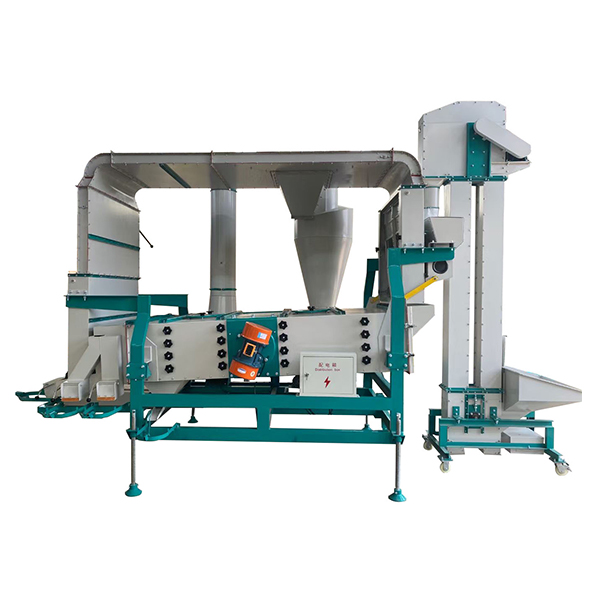
Sesame Cleaning
I. Workflow (Standard dual-stage air-and-screen process, tailored to sesame characteristics)
Utilizing a dual-separation principle combining airflow (air sifting) and vibration (screening) for continuous, multi-stage impurity removal. The complete process is as follows:
Inlet & Elevation
Raw sesame is fed into the intake via a bucket elevator; the material is distributed evenly to prevent clumping or uneven flow, ensuring stable separation.
Primary Air Sifting (Front-end vertical air sifter)
Adjustable upward airflow utilizes differences in suspension velocity to remove floating dust, outer skins, chaff, shriveled seeds, broken shells, and light weed debris; light impurities are directed to the dust collection system.
Multi-layer Vibrating Screening
Material enters a reciprocating vibrating screen box, utilizing screens with elongated holes specifically designed for sesame to perform layered separation:
Top screen: Retains large impurities such as stalks, large soil clods, and large weeds;
Middle screen: Retains the main body of high-quality sesame;
Bottom screen: Allows small impurities—such as fine sand/soil, broken sesame pieces, and tiny weed seeds—to pass through.
The vibrating mechanism is equipped with rubber cleaning balls to prevent small sesame seeds from sticking to and clogging the screen mesh.
Secondary Air Sifting (Rear-end vertical air sifter)
Screened sesame undergoes a final air-sifting stage to remove residual shriveled grains, loose skins, and dust, further enhancing purity.
Multi-channel Discharge & Separation
Clean finished sesame is discharged separately; large, small, and light impurities are discharged via independent outlets, ensuring no mixing between impurities and the finished product.
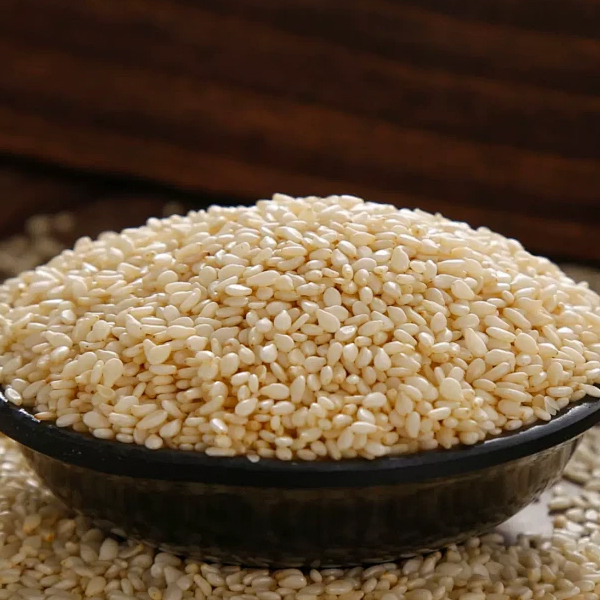
II. Core Functions (Addressing common impurities in raw sesame)
Removal of light impurities
Dust, sesame hulls, fuzz, leaf fragments, shriveled seeds, and insect-damaged (lightweight) grains.
Separation of oversized and irregularly shaped impurities
Stalks, large soil clods, weed seeds, fine sand, broken sesame pieces, and small mud pellets.
Material grading (with optional multi-layer screens)
Sorts sesame by grain size (large, medium, small) to meet requirements for graded sales and dehulling processes.
Pre-processing to reduce downstream load
Significantly reduces the workload on subsequent gravity separators, washers, and color sorters; minimizes equipment wear and tear; and boosts the processing efficiency of the entire line.
Improvement of processing quality
Removes moldy and shriveled seeds as well as dust; lowers the risk of rancidity; and enhances oil yield quality and the appearance of the finished product.
III. Equipment Advantages (Highlights for sesame processing applications)
Dual-stage air separation structure tailored to the lightweight, hull-rich nature of sesame
Features front and rear air-screening stages; offers superior capability in removing hull fragments and shriveled seeds compared to standard single-stage air separators; ideal for pre-processing African sesame, domestic white sesame, and black sesame.
Dry physical cleaning that preserves grain integrity
Water-free processing prevents increased moisture content, avoiding clumping or mold growth caused by dampness; suitable for pre-processing prior to storage, roasting, or oil extraction.
Quick-change screens for high versatility
Screens with specific aperture sizes can be swapped to handle white sesame, black sesame, or sesame kernels; airflow, vibration amplitude, and screen inclination are continuously adjustable to accommodate raw materials with varying impurity levels.
Integrated dust removal system for a clean production environment
Centralized dust collection minimizes airborne dust, meeting environmental standards for food processing plants.
Continuous automated operation with stable throughput
Can be integrated with elevators and hoppers to form a production line; single-unit capacity ranges to suit facilities from small/medium to large-scale sesame processors.
Reduction of losses in subsequent processes
Early separation of bulk impurities prevents clogging in gravity separators and reduces consumable usage in color sorters, lowering the overall operating costs of the production line. Stable cleaning performance
After air-screen pre-processing, the impurity content of the raw material is significantly reduced; combined with downstream equipment, the final product purity can exceed 99.5%.
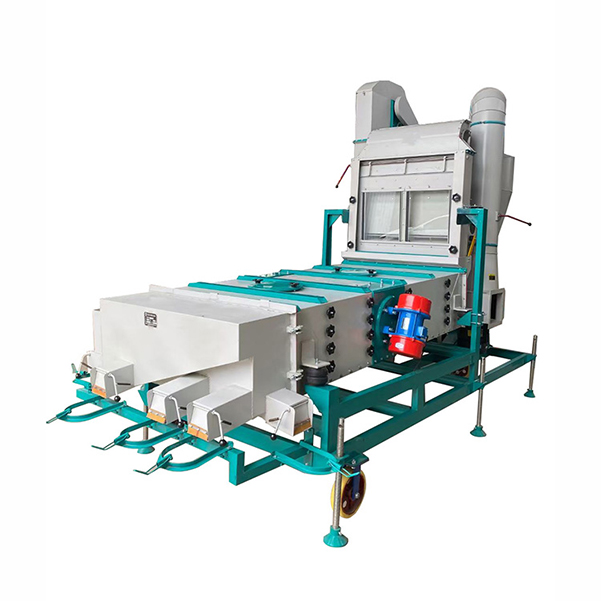
Materials Suitable for Air-Screen Cleaning Machines
Utilizing a combination of vibrating screening (separation by particle size) and air separation (separation by weight), these machines serve as versatile pre-processing equipment for grains, oils, and seeds. They are categorized into four main groups: oil crops, coarse grains and legumes, seeds, and specialty cash crops.
I. Oil Crops (Most widely applied)
White sesame, black sesame, sunflower seeds, peanuts, rapeseed, flaxseed, castor seeds, soybeans
II. Coarse Grains and Legumes
Wheat, corn, sorghum, paddy rice, millet, buckwheat, oats, mung beans, adzuki beans, kidney beans, pinto beans, pigeon peas, chickpeas, lentils
III. Various Seeds (For breeding and commercial seed cleaning)
Vegetable seeds, forage seeds, flower seeds, lawn seeds, corn seeds, wheat seeds
IV. Specialty Cash Crops
Coffee beans, cocoa beans, sesame, fennel seeds, cumin, black pepper, Sichuan peppercorns, and other spice granules
Post time: Jul-21-2026