
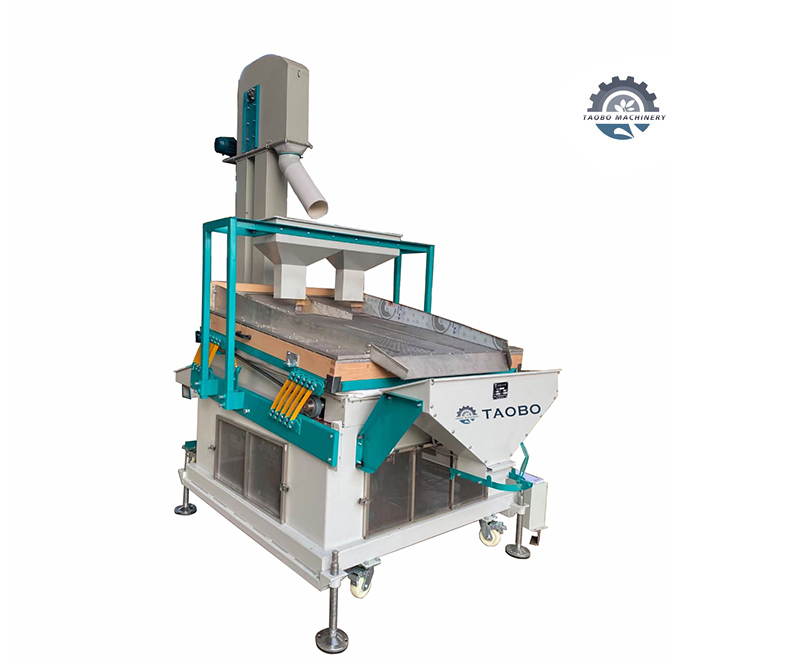
Working Principle and Operating Precautions of a Destoner A destoner is a cleaning device designed for sesame seeds due to their small size, light density, and presence of impurities (stones, mud, sand). It utilizes the principle of density difference + mechanical vibration + airflow assistance to separate sesame seeds from sand and gravel. It is a key piece of equipment in the sesame pretreatment process, effectively removing sand and gravel impurities denser than the sesame seeds themselves, improving the purity of the raw material, and preventing wear and tear on parts of subsequent processing equipment (such as grinders and oil presses).
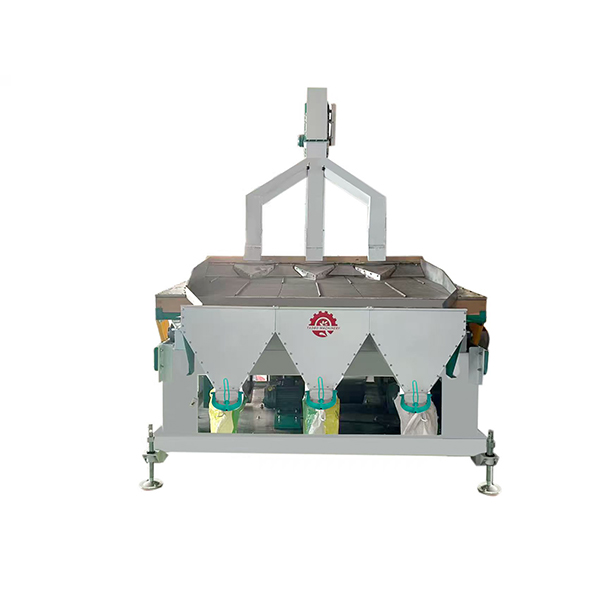
I. Core Working Principle The core structure of the destoner mainly includes a vibrating screen, an eccentric vibrating mechanism, a blower, discharge ports (sesame seed discharge, gravel discharge, and light impurities discharge), and a frame. The screen is mostly a perforated screen or a woven screen, with the screen aperture size adapted to sesame seed particles (slightly larger than the sesame seed particle size to prevent sesame seeds from falling through, allowing only sand/gravel to pass through or to separate on the screen surface). The overall operation consists of 3 key steps:
Vibration Separation: The eccentric vibrating mechanism drives the screen surface to reciprocate linearly, throwing and loosening the sesame seed and sand/gravel mixture fed into the screen. Due to the difference in specific gravity between sesame seeds and sand/gravel (sesame seeds have a specific gravity of approximately 0.8~0.9 g/cm³, while gravel/sand has a specific gravity of approximately 2.5~3.0 g/cm³), the heavier sand/gravel will settle to the lower layer of the screen surface under the vibration, while the lighter sesame seeds will remain on the upper layer, achieving initial stratified separation.
Airflow Assistance: A blower injects a uniform upward airflow from below the screen surface. The airflow passes through the gaps in the screen surface, generating upward buoyancy on the upper layer of sesame seeds, further loosening the material layer. Simultaneously, it counteracts the settling force of the sesame seeds, keeping them suspended and moving. Meanwhile, sand and gravel, due to their much greater density than the buoyancy of the airflow, remain stable in the lower layer of the screen, enhancing the stratification effect and preventing sesame seeds and sand from sticking together.
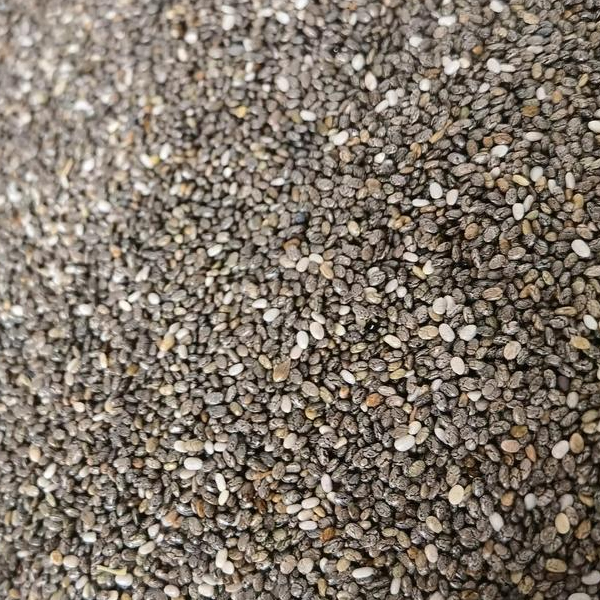
Directional Conveying and Separation: The screen surface is typically designed with a slight inclination angle (the feed end is slightly higher, the discharge end slightly lower, and the gravel discharge port is on the higher side of the screen surface). Under the combined action of vibration and airflow, the upper layer of sesame seeds moves towards the sesame seed discharge port along the inclined direction of the screen surface; the lower layer of sand and gravel moves towards the gravel discharge port (higher side) of the screen surface under the thrust of vibration; and light impurities in the sesame seeds (such as shriveled seeds, straw, and dust) are carried away by the upward airflow and collected from the light impurity discharge port, ultimately completing the three-way separation of sesame seeds, sand and gravel, and light impurities.
In simple terms, the whole process is **”heavy sand and gravel sink to the bottom and go to the high end, light sesame seeds float to the surface and go to the low end, and light impurities are separated by airflow”**, which is suitable for the characteristics of small sesame particles and easy suspension, and avoids the problems of incomplete cleaning and easy entrainment of sesame seeds by traditional screening equipment.
II. Operation and Usage Precautions Sesame seeds have unique physical characteristics (small particles, high oil content, easy to stick, and easily broken). The vibration, airflow, and feed rate of the destoner directly affect the cleaning effect. Operation requires consideration of cleaning efficiency, sesame seed integrity, and equipment stability, divided into three stages: before startup, during startup, and after shutdown. This also includes daily maintenance points:
(I) Pre-start Preparation: Basic inspection to avoid equipment failure and cleaning deviations.
Check the connections of all equipment components: Confirm that the screen surface is undamaged and loose, the screen holes are not blocked (sesame powder and dirt easily clog the screen holes), the bearings and belts of the eccentric vibration mechanism are not loose or making abnormal noises, the fan blades are not deformed or dusty, and all discharge ports are not blocked.
Calibrate the screen angle and amplitude: Adjust the screen tilt angle according to the moisture content and impurity content of the sesame seeds (normally 3~5°, can be appropriately increased if there are many stones). Control the amplitude at 3~5mm (too small an amplitude will result in insufficient material stratification, too large an amplitude will easily lead to sesame seed breakage and stone inclusion). Check the blower airflow adjustment device: Confirm that the damper can be adjusted flexibly. Before starting the machine, adjust the damper to a half-open position (to avoid excessive airflow blowing away sesame seeds at startup). Simultaneously check the air duct for leaks (leaks will cause uneven airflow on the screen surface and stratification failure).
(II) Operation during startup: Precise adjustment to control cleaning effect and material loss.
Follow the principle of “start the machine first, then feed; adjust the airflow first, then adjust the vibration”: First, start the blower. After the blower runs smoothly, slowly open the damper to the appropriate airflow, then start the vibration mechanism, and finally turn on the feeder to feed evenly (Key prohibition: prolonged vibration of an empty machine can easily damage the screen surface and bearings; turn on the blower before feeding to avoid material accumulation).
(III) Post-Shutdown Operations: Clean Promptly to Prevent Material Residue and Deterioration
Follow the principle of “stop feeding first, then vibration, and finally the blower”: First, turn off the feeder, allowing all remaining material on the screen to pass through completely (no residue). Then, turn off the vibration mechanism, and finally, turn off the blower. Use the remaining airflow to blow away sesame powder and dust from the screen and air ducts, preventing residue.
Clean the Equipment Promptly: Use a brush (do not wash directly with water to avoid water entering the motor and bearings, and sesame seeds tend to stick when wet) to clean sesame powder and dirt from the screen surface and unclog any blocked screen holes. Clean the dust accumulated on the blower’s air inlet filter and fan blades. Clean any remaining material from the discharge ports to prevent sesame seeds from oxidizing and molding due to prolonged residue (sesame seeds have a high oil content and are prone to rancidity).
Reset the Equipment: Adjust the airflow damper and screen angle to the default standby state, turn off the main power supply, and cover the equipment surface with a dustproof cover.
Post time: Jan-31-2026