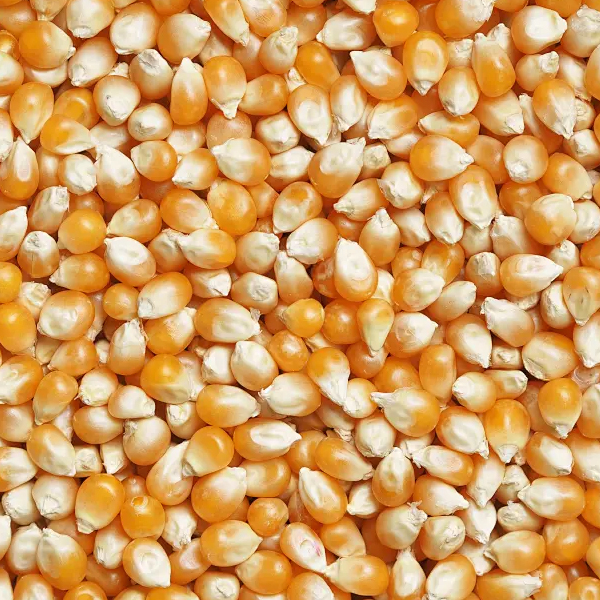
The core principle of seed coating machines for corn seeds is to form a uniform and firm film on the seed surface through precise metering, atomized coating, and mechanical mixing. The process encompasses pretreatment, metering, atomized coating, film formation, drying, quality inspection, and packaging to ensure the coating quality and effectiveness of each seed.
Working Principle: The seed coating machine consists of systems for supplying the coating agent, metering and dispensing, centrifugal atomization, mixing, drying, and electrical control. The core mechanism is as follows:
Seed Movement and Uniform Distribution: After metering, seeds enter the mixing chamber or drum, where rotating components propel them upwards along the wall and then downwards, forming a uniform “seed curtain” or parabolic surface, ensuring that each seed fully contacts the coating agent.
Coating Agent Atomization and Precise Adhesion: The seed coating agent is delivered by a metering pump to a high-speed rotating disc or atomizer, where it is atomized into fine droplets and evenly sprayed onto the surface of the moving seeds. Powder can be added to improve flowability or film formation.
Mixing, Film Formation, and Drying/Curing: A stirring device continuously tumbles the seeds, ensuring uniform distribution of the agent and the formation of a continuous film. Hot air drying or low-temperature drying then rapidly solidifies the film, preventing adhesion and enhancing its bonding strength.
Closed-Loop Control and Precise Proportioning: An electronic weighing scale and PLC control system monitor seed flow and agent dosage in real time, precisely controlling the seed-to-powder ratio (typically 1:25-1:300) to ensure coating consistency and stability.
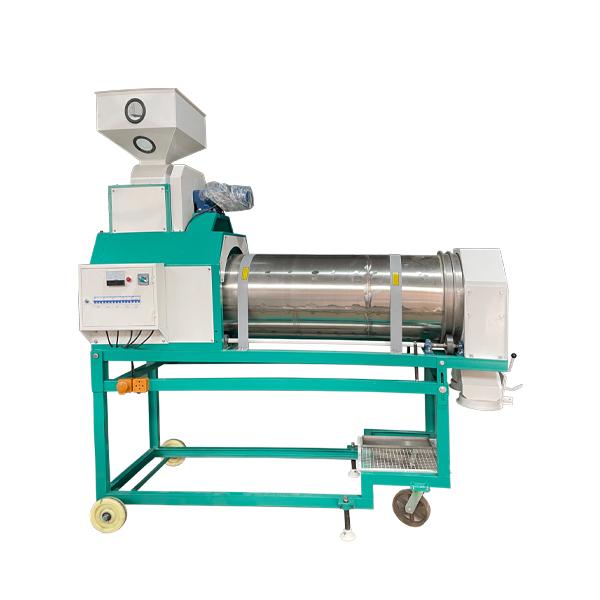
Detailed Process: Pretreatment and Preparation: First, clean the corn seeds, removing chaff, impurities, and damaged kernels to ensure plump and healthy seeds. Seed moisture content must be controlled below 13.0%, meeting NY/T 375 standards. Mix the seed coating agent with water, adhesive, film-forming agent, etc., according to the formula to prepare the coating solution. Run the coating machine idle for 5-10 minutes, checking for vibration, abnormal noise, and bearing temperature rise. Adjust the agent supply and infusion valve to ensure stable parameters.
Metering and Feeding: An electronic weighing scale accurately weighs the seeds, simultaneously metering the seed coating agent according to the set seed-to-pesticide ratio. The seeds and agent are then conveyed into the mixing chamber via a conveyor system, ensuring simultaneous arrival and contact.
Atomization Coating and Mixing: In the mixing chamber, the seeds form a uniform curtain or parabolic surface. A high-speed spinning disc atomizes the agent into fine droplets, spraying them evenly onto the seed surface. A stirring device continuously tumbles the seeds, ensuring thorough adhesion and initial film formation, typically taking 2-4 minutes (20-30℃).
Drying and Curing: The coated seeds enter a drying system. Hot air temperature is controlled at 43-45℃ (for chemical pesticide seed coating agents). Low-temperature drying avoids damage to the coating film. After drying, the seed moisture content remains within a safe range, and the coating film is firmly adhered and does not peel off.
Quality Inspection and Packaging: Sampling inspections are conducted to check the coating uniformity, adhesion, film integrity, and moisture content. After passing inspection, the seeds are quantitatively packaged, labeled with variety, coating ingredients, expiration date, and other information, and then stored for shipment.
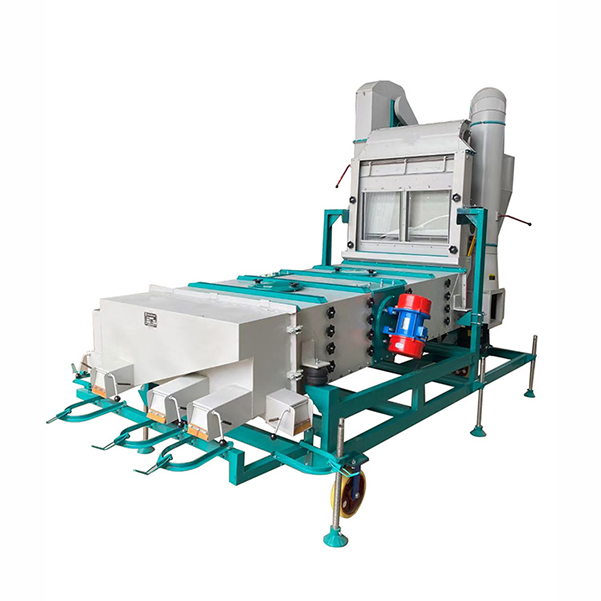
The core logic of using a coating machine and a cleaning machine together is to clean first, then coat, with auxiliary processes connected as needed. The cleaning machine provides qualified seed raw materials to the coating machine, preventing impurities and substandard seeds from affecting coating efficiency and quality from the source. The two operate in a streamlined manner: “Seed feeding → Cleaning and grading → Temporary storage and conveying → Coating processing → Subsequent finished product processes.”
Core pairing principles (basic premise, avoiding process disconnect):
1. Capacity matching: The actual hourly processing capacity of the cleaning machine should be slightly higher than that of the coating machine (10%-20% higher) to avoid insufficient cleaning material supply leading to idling of the coating machine or accumulation of cleaning material increasing temporary storage pressure; for example, if the coating machine has an hourly processing capacity of 5 tons, select a cleaning machine with a capacity of 6-7 tons/hour.
2. Material Compatibility: The particle size of the cleaning machine output matches the feed requirements of the coating machine (the corn seeds have uniform particle size after cleaning, with no broken or shriveled grains). The conveying process uses non-damaging, low-residue conveying equipment (belt conveyor, scraper conveyor, pneumatic conveyor) to prevent seed damage during transport and ensure subsequent coating adhesion.
3. Process Integration: Seeds requiring no additional treatment after cleaning are directly conveyed to the coating machine in a closed loop. For seeds requiring moisture adjustment, a moisture adjustment storage bin is added between cleaning and coating (the moisture content of corn seeds is controlled at 12%-13% before coating), without disrupting the overall process.
Post time: Feb-05-2026