
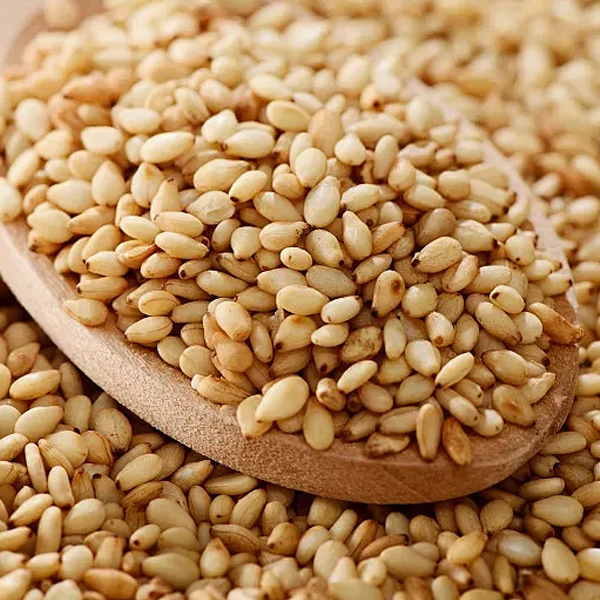
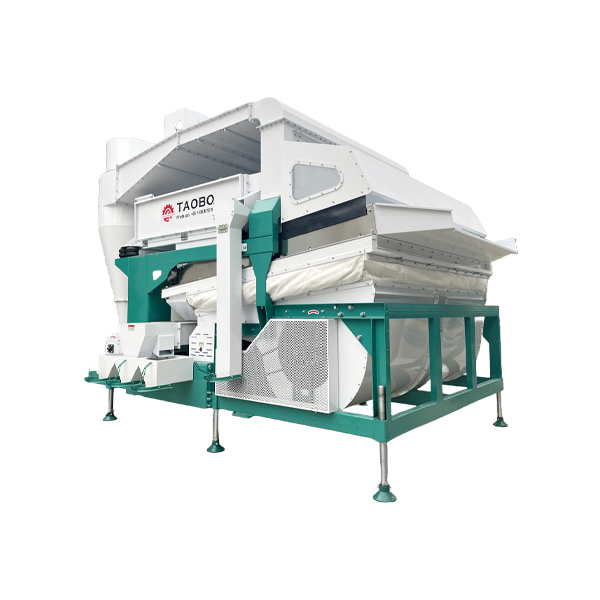
Both air-screen gravity separators and destoners for cleaning sesame seeds utilize differences in physical properties to separate impurities. However, the former emphasizes a combined cleaning process of air separation, sieving, and gravity separation, while the latter specializes in destoning and removing heavy impurities through gravity separation, airflow, and vibration.
I. Air-Screen Gravity Separator (Sesame Seed Cleaning)
Core Principle: The triple action of airflow, screen, and gravity vibration classifies sesame seeds according to size, weight, suspension velocity, and specific gravity, removing light impurities, large impurities, shriveled seeds, broken grains, and some heavy impurities.
1. Working Process and Principle
Feeding and Air Separation (Removal of Light Impurities)
Sesame seeds enter through the feed inlet and are evenly spread in the vertical air separation zone by a leveling device.
The fan generates vertical/inclined airflow. Light impurities (dust, shriveled seeds, straw, empty shells) are sucked away by the airflow and enter the dust collector; plump sesame seeds and heavy impurities fall into the sieving area.
Sieving (Removing Size Impurities)
Sesame seeds fall into a double/multi-layer vibrating screen (large holes on the upper screen, small holes on the lower screen).
The upper screen traps large impurities (straw, clods of earth, large particles); the lower screen removes broken sesame seeds and small impurities, while qualified sesame seeds remain on the screen surface and enter the gravity separation zone.
Gravity Cleaning (Removing Heavy Impurities/Sorting for Fullness)
Sesame seeds enter an inclined vibrating gravity screen surface with an upward airflow below.
The airflow causes the sesame seeds to be in a semi-suspended fluidized state, combined with vibration to achieve automatic grading:
Heavy, full sesame seeds: sink, adhere to the screen surface, and slide down the screen surface to the clean sesame seed outlet.
Light/Unfull sesame seeds, insect-damaged seeds: float and are discharged to one side by the airflow/vibration.
Pebble, mud, metal: have a higher density and rise in the opposite direction on the screen surface to the heavy impurity outlet.
Core Advantages
Multi-functional and Highly Versatile:** Can clean almost all grains, oilseeds, miscellaneous grains, and seeds, including wheat, rice, corn, soybeans, sesame, rapeseed, mung beans, red beans, vegetable seeds, and forage seeds.
Multi-stage Cleaning in One Operation, Extremely High Efficiency:** Combines air separation, sieving, and gravity separation in one operation.
Removes simultaneously in one pass:
Light impurities: dust, straw, chaff, empty husks
Large impurities: straw, clods of earth, debris
Small impurities: broken grains, fine sand
Damaged grains: insect-damaged grains, diseased grains, immature grains
No need for multiple machines in series, saving space, electricity, and labor.
High Cleanliness and Significant Quality Improvement:** Cleanliness easily reaches over 98%. Gravity separation thoroughly separates plump and immature grains, making it ideal for commercial grain, export grain, and seed selection.
High Cleanliness and Significant Quality Improvement:** Cleanliness easily reaches over 98%. Gravity separation thoroughly separates plump and immature grains, making it ideal for commercial grain, export grain, and seed selection. High output and stable continuous operation
Suitable for small-scale operations (a few tons/hour) to large-scale operations (20-30 tons/hour),
capable of 24-hour continuous operation with a low failure rate.
Easy to adjust and highly adaptable
Air volume, amplitude, tilt angle, and screen size are all adjustable.
Changing materials only requires minor parameter adjustments, without major equipment modifications.
Reasonable structure, easy to operate and maintain
Screen replacement is convenient.
Operation is simple; ordinary workers can learn to operate it after one lesson.
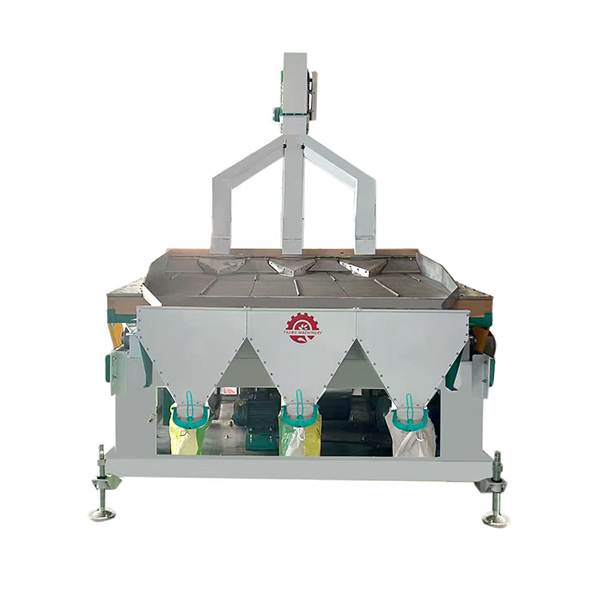
Destoning Machine (for cleaning sesame seeds)
Core Principle: Gravity difference + directional airflow + inclined reciprocating vibration, specifically designed to separate heavy impurities with a specific gravity much greater than sesame seeds, such as stones, sand, mud, and metal.
1. Working Process and Principle
Feeding and Distribution: Sesame seeds enter the distribution box and are evenly spread on the inclined destoning screen surface (usually 13°–18°).
Airflow Stratification (Core): The upward airflow from below the screen surface penetrates the material layer, causing the sesame seeds to semi-suspend, while stones/sand, due to their higher density (sesame seeds ≈ 0.9–1.0 g/cm³, stones ≈ 2.6–2.8 g/cm³), sink and adhere to the screen surface.
Vibration Separation (Directional Motion): The screen body undergoes small-amplitude, high-frequency reciprocating vibration:
Stones/Heavy Impurities: Adhere tightly to the screen surface and, under the action of vibration and friction, climb upwards along the screen surface to be discharged through the stone outlet.
Sesame Seeds: Semi-suspended, sliding downwards along the screen surface to the clean sesame seed outlet.
Main Applicable Materials:
1. Oil Crops (Sesame, which you often use, falls into this category)
Sesame, rapeseed, peanuts, sunflower seeds, flaxseed, sesame seeds, safflower seeds, etc.
2. Grains
Wheat, rice, corn, soybeans, sorghum, barley, oats, buckwheat, etc.
3. Legumes and Grains
Mung beans, red beans, black beans, kidney beans, broad beans, peas, chickpeas, lentils, etc.
4. Vegetable Seeds, Flower Seeds, Forage Seeds (Selected Seeds)
Cabbage seeds, radish seeds, coriander seeds, alfalfa seeds, Sudan grass seeds, and various other small-particle seeds.
Post time: Feb-11-2026