
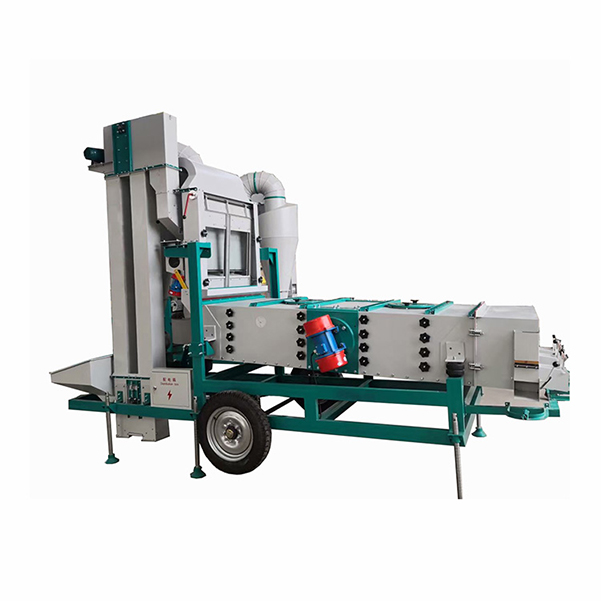
After sesame harvesting, impurities mainly fall into two categories: field contaminants and secondary impurities generated during processing. These impurities vary considerably in shape and density, and are therefore targeted for processing by winnowing machines. The specific classifications are as follows:
I. Natural Impurities from the Field
These impurities are directly introduced during the planting, harvesting, and drying processes of sesame, constitute the largest proportion, and are the core target of cleaning.
Lightweight Organic Impurities
Empty Sesame Shells: Empty shells from mature sesame seeds that have not yet filled with pulp. These are extremely lightweight and are the primary target for removal during winnowing.
Straw Fragments, Calyxes, and Leaves: Broken sesame stalks, branches, and leaves are mixed in during harvesting, and fine fragments also fall off during drying.
Weed Seeds and Grass Clippings: Seeds of weeds growing in the field (such as barnyard grass seeds and foxtail grass seeds), and fragments of weed stems. Some weed seeds are similar in size to sesame seeds and require fine separation using a sieve.
Heavy Inorganic Impurities:
Sand and Gravel: Sand, pebbles, and clods of earth brought up from the field during harvesting. These have a much higher density than sesame seeds, and some small stones require separation using sieves or destoning mechanisms.
Metal Scrap: Fine iron filings, screw fragments, etc., shed from agricultural machinery during field operations.
Seeds of Other Crops: Seeds of other crops introduced during mixed harvesting, such as millet, sorghum, and rapeseed. If their size or density is similar to sesame seeds, cleaning them is more difficult.
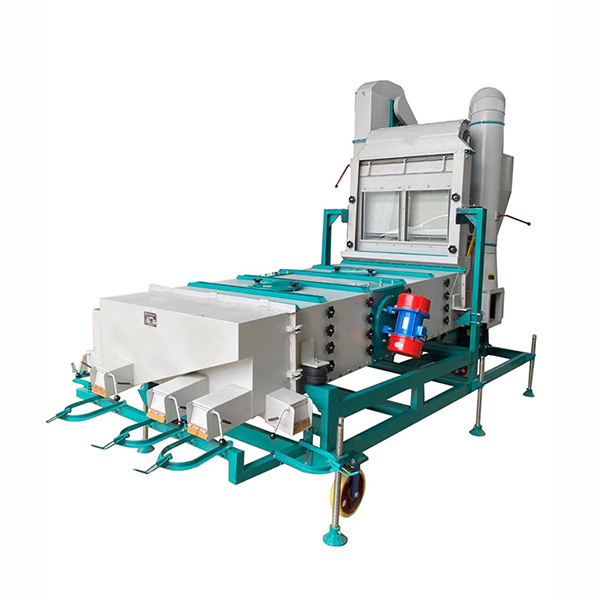
The core of the air-screen cleaning machine for sesame seeds lies in the synergy of air separation and screening. First, airflow removes light impurities based on aerodynamic characteristics. Then, a vibrating screen separates impurities by size. Some models also incorporate secondary air separation or stone removal to suit the small size and high impurity content of sesame seeds.
I. Core Working Mechanism
Air Separation Mechanism (Removal of Light Impurities): Based on the aerodynamic differences between sesame seeds and light impurities (empty shells, straw, dust), an adjustable airflow (typically 3–8 m/s) is generated by a fan. Light impurities, with their lower critical velocity, are carried away by the airflow, while sesame seeds, with their higher density and higher critical velocity, pass through the air separation zone, completing the initial separation.
Screening Mechanism (Separation of Large and Small Impurities): A vibrating motor drives the screen, selecting appropriate screen openings based on the sesame seed’s geometric size. The upper layer removes large impurities (stones, large straw), the middle layer retains qualified sesame seeds, and the lower layer removes small impurities (sand, broken seeds). Grading can also be achieved through the number of screen layers.
Optional Destoning: Some duplex models include a destoning mechanism that uses the friction of the fish-scale screen plate combined with vibration and airflow to separate heavy impurities such as sand and gravel, improving cleanliness.
II. Standard Operating Procedure (Taking a Duplex Air Screen Cleaner as an Example)
Feeding: The elevator or screw conveyor feeds the sesame seeds evenly to avoid clogging and ensure cleaning efficiency.
Primary Air Screening: Sesame seeds enter the vertical air screen. The fan generates airflow, drawing light impurities into the settling chamber/cyclone dust collector for centralized discharge. The sesame seeds then enter the vibrating screen.
Vibrating Screening: A three-layer vibrating screen processes the sesame seeds into grades. The upper layer removes large impurities, the middle layer retains the finished sesame seeds, and the lower layer removes small impurities. The screen plate specifications can be changed as needed.
Secondary Air Screening (Duplex Models): After the vibrating screen, the sesame seeds pass through a vertical air screen to remove residual light impurities and dust, improving cleanliness and brightness.
Destoning (Optional): The destoning mechanism separates sand and gravel. Sesame seeds are discharged from the grain outlet, while impurities are collected from their respective outlets.
Post time: Jan-06-2026