
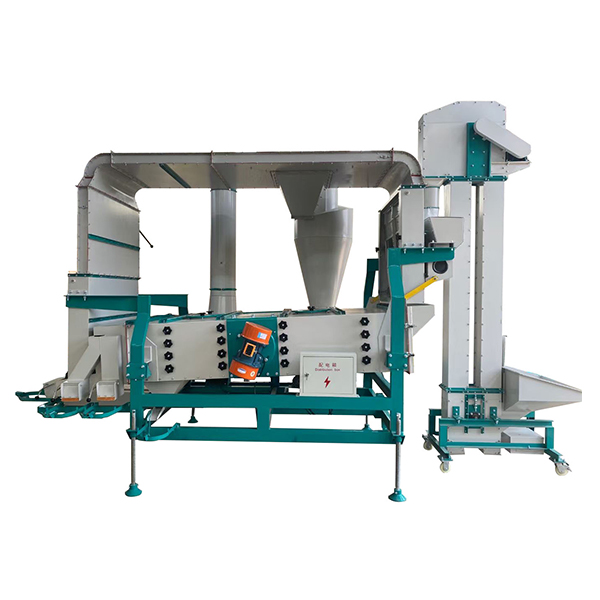
Complete Coffee Bean Cleaning and Processing Line Equipment
I. Feeding and Conveying Equipment
Feeding Hopper: Stores raw materials and ensures uniform feeding.
Bucket Elevator: Vertically conveys coffee beans without damaging the grains.
II. Preliminary Coarse Cleaning Equipment
Primary Cleaning Sieve: Removes branches, weeds, large clumps of soil, and large debris.
Vibrating Destoner: Precisely removes stones, mud lumps, and heavy gravel of similar size to the beans.
III. Hulling and Peeling Equipment
Coffee Huller: Removes the outer dry fruit skin, parchment, and silver skin from the coffee beans.
IV. Core Fine Cleaning Equipment
Air-Screen Cleaner: Uses airflow to remove light impurities and sieves out oversized/undersized debris, broken beans, and husks.
Gravity Separator: Sorts out moldy, insect-damaged, shriveled, and unripe beans based on density.
V. Appearance Optimization Equipment
Coffee Bean Polisher: Polishes away residual thin skins and stains, enhancing the surface luster of the beans.
VI. Grading and Sorting Equipment
Multi-Layer Grading Sieve: Sorts coffee beans into large, medium, and small grades based on grain size.
VII. High-Precision Sorting Equipment
Dedicated Coffee Color Sorter: Removes beans with black spots, mold, discoloration, or roast damage.
VIII. Auxiliary Support Equipment
Air-Lock Dust Collector: Collects dust and husks, ensuring eco-friendly dust removal.
Rotary Sieve: Performs secondary, fine-grain screening.
Buffer Bin: Provides stable storage and regulates the flow rate of the processing line.
IX. Finished Product Packaging Equipment
Quantitative Packaging Machine: Automatically weighs, seals, and bags the finished product.
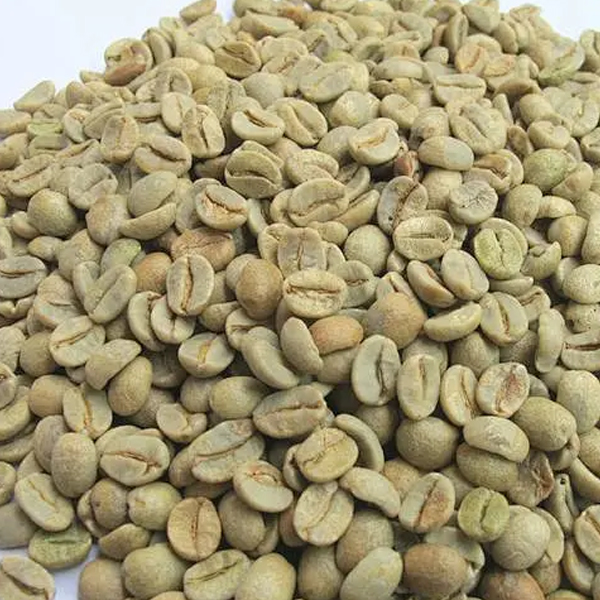
Coffee Bean Air Screen Cleaner: Working Principle + Complete Process
I. Core Principle
The machine relies on a dual combination of air separation (wind sifting) and multi-layer vibrating screening. By leveraging the differences in weight, volume, and suspension velocity between coffee beans and impurities, it stratifies and grades the materials to separate impurities, thereby completing a preliminary cleaning process.
II. Internal Structure
Feed Inlet, Material Spreading Plate, Air Supply Duct, Multi-layer Vibrating Screens, Light Impurity Air Outlet, Large Impurity Discharge Port, Small Impurity Discharge Port, Clean Bean Discharge Port, Blower Fan, and Vibrating Motor.
III. Complete Workflow
Uniform Feeding
Coffee beans are conveyed into the machine via an elevator; they pass over a material spreading plate to be evenly distributed and flattened, flowing at a steady rate onto the screening surface.
Stage 1: Air Separation for Light Impurity Removal
A bottom-mounted blower generates an adjustable, uniform upward airflow. Lighter-density materials—such as coffee husks, silver skin fragments, dust, broken twigs and leaves, and shriveled or broken beans—are lifted by the airflow and discharged directly through the light impurity air outlet.
Vibrating Screening and Grading
The entire machine undergoes high-frequency, low-amplitude vibration, causing the materials to flow downward along the inclined screening surface, passing through multiple layers of screens with varying mesh sizes:
Upper Coarse Screen: Retains large stones, thick stems, and bulky debris, which are discharged through the large impurity outlet.
Middle Standard Screen: Retains the qualified, intact coffee beans of standard particle size.
Lower Fine Screen: Allows fine sand, broken bean fragments, and fine dust to pass through, discharging them via the small impurity outlet.
Stage 2: Secondary Air Purification
As the materials descend, they pass through a secondary air duct, where a second blast of air removes any residual floating husks or light dust particles.
Clean Material Discharge
The thoroughly screened and qualified coffee beans flow out smoothly, ready to be conveyed to the next processing stage: the specific gravity separator.
IV. Main Impurities Removed
Bean husks, dust, twigs and leaves, sand and soil, large debris, small broken beans, light floating impurities, and large irregularly shaped foreign objects.
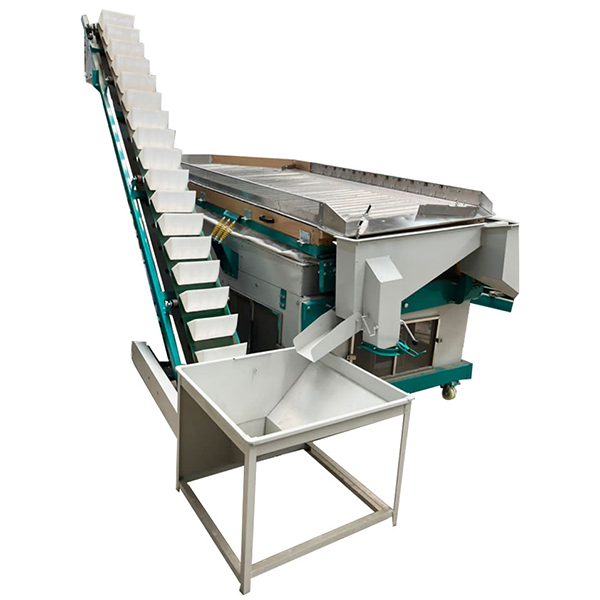
Advantages of the Coffee Bean Gravity Separator
1. Precise Separation of Materials with Density Differences
Unaffected by particle size, this machine specializes in separating coffee beans of identical dimensions but differing densities, precisely eliminating insect-damaged, moldy, shriveled, unripe, and hollow defective beans.
2. Efficient Removal of Co-mingled Stones and Grit
Thoroughly clears heavy impurities—such as stones and clumps of soil—that resemble coffee beans in appearance, thereby preventing hard objects from damaging downstream polishing and color-sorting equipment.
3. Preserves Coffee Bean Integrity
Utilizes an inclined vibrating deck combined with a gentle airflow mechanism; free from crushing or impact forces, the process avoids bean breakage and skin abrasion, fully preserving the original shape and appearance of the coffee beans.
4. Flexible Adjustment and High Adaptability
Air speed, deck inclination, and vibration frequency are all adjustable, allowing the machine to adapt to green coffee beans of various origins, moisture levels, and varieties.
5. Significantly Enhances Coffee Quality
By eliminating defective beans, the process reduces off-flavors and impurities during roasting, standardizes raw material quality, and ensures consistency in the coffee’s taste and aroma.
6. Reduces Production Line Operating Costs
By pre-screening and removing a large volume of defective beans, the machine alleviates the workload on subsequent color sorters, minimizes wear and tear on sorting equipment, and saves on manual sorting labor costs.
7. Multi-Grade Output Capability
Capable of simultaneously separating premium-grade, medium-grade, and defective beans; this automatic grading function allows for the direct classification of product grades, thereby boosting economic efficiency.
8、Continuous Production Line Operation
Features stable operation, high processing capacity, and a low failure rate; it can be seamlessly integrated into an entire coffee cleaning and processing line to achieve fully automated production.
Post time: May-19-2026